

Qatari PM calls Netanyahu ‘war criminal’, vows to continue mediation
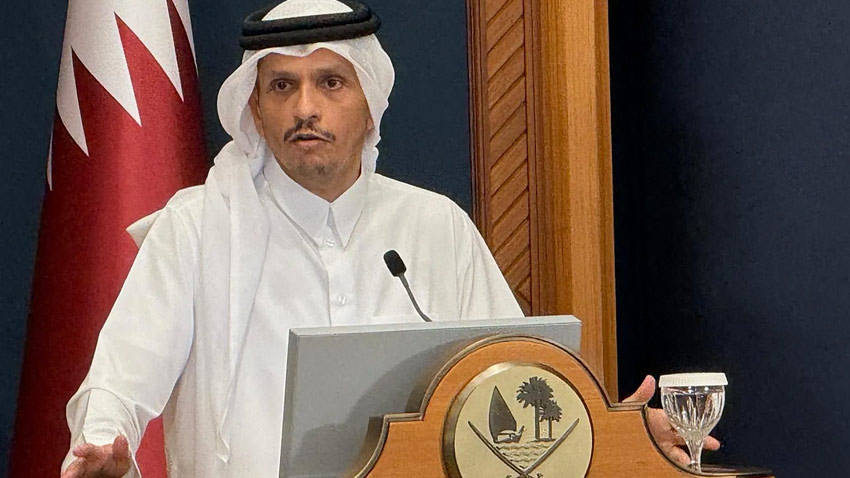
Speaking in an interview with British journalist Piers Morgan, Sheikh Mohammed was asked whether he considered Netanyahu a war criminal.
“Of course. What’s been committed in Gaza is war crimes, and whoever is responsible for this is a war criminal,” he said.
He also criticised Israel’s military actions in Gaza, saying hospitals and schools had been targeted.
“Hospitals have been targeted, schools have been targeted. Whatever the justifications and the arguments, nothing is justifying this,” he added.
Sheikh Mohammed also accused Netanyahu of attacking Qatar politically in an attempt to shift attention away from his own actions and those of his government.
The Qatari leader’s comments came amid continuing tensions across the Middle East and renewed diplomatic efforts to prevent the conflict from spreading further.
Qatar recalls 2025 Doha strike
Sheikh Mohammed also renewed his criticism of an Israeli strike on Doha in September 2025. The strike targeted Hamas officials in Qatar while Doha was involved in mediation efforts.
Five Hamas members and a Qatari security officer were killed in the attack, according to the Qatari account.
“We were attacked by Israel while we were mediating,” Sheikh Mohammed said, describing the incident as an unprecedented attack on a mediator.
“Netanyahu has crossed the line like he has crossed other lines before that.”
The strike raised concerns about the safety of diplomatic efforts and the role of countries that host negotiations between conflicting sides. Qatar has repeatedly positioned itself as a mediator in regional conflicts and has maintained communication channels with different parties.
Doha vows to continue mediation
Despite his criticism of Netanyahu, Sheikh Mohammed said Qatar would continue its diplomatic efforts. He said Doha believes behind-the-scenes communication remains an important way to make progress when direct negotiations are difficult.
“We are trying to do our best to give the best advice to the US government on how to reach a solution, as well as to the Iranians,” he said.
Qatar has continued to facilitate communication between Washington and Tehran as both sides seek ways to reduce tensions.
Qatari Foreign Ministry spokesman Majed Al-Ansari said the mediation effort remained focused on building common ground between the United States and Iran. He said meetings and exchanges of messages between the two sides were continuing and that there was no alternative to a peaceful solution.
Three issues highlighted for ending conflict
Sheikh Mohammed said three major issues needed to be addressed to help reduce the wider regional conflict.
The first is Iran’s nuclear programme and the sanctions imposed on Tehran. The second is freedom of navigation through the Strait of Hormuz, one of the world’s most important waterways for energy shipments.
The third is the creation of regional security arrangements involving Iran and the Gulf Cooperation Council states. He said any future regional security framework should be based on dialogue, non-interference, and non-aggression.
Also Read: Saudi Arabia denies reports of representatives at Israel-UAE meeting
He also called for greater economic cooperation among countries in the region. Qatar has repeatedly stressed the importance of keeping the Strait of Hormuz open and resolving disputes through negotiations rather than military action.
Strait of Hormuz remains a major concern
The Strait of Hormuz has become a key issue in the wider regional crisis.
The narrow waterway connects the Persian Gulf with the Gulf of Oman and is an important route for global energy shipments. Qatar has said restrictions on navigation through the strait have wider consequences for Gulf countries and the international economy.
The Qatari government has called for the restoration of normal navigation and continued diplomatic efforts to prevent further escalation. Sheikh Mohammed has also stressed that regional countries should not be forced to bear the wider effects of conflicts between other states.
Qatar continues US-Iran contacts
Qatar’s mediation role has become particularly important as Washington and Tehran remain involved in a prolonged confrontation. Doha has been carrying messages between the two sides and working to narrow their differences.
Recent Qatari statements show that the mediation process remains active, although major disagreements persist. The latest efforts include discussions over Iran’s nuclear programme, sanctions and the Strait of Hormuz.
A recent US response was conveyed to Iranian officials through Qatari mediators as part of efforts to revive negotiations. Qatar has said the purpose of mediation is to help the two sides find common ground and create conditions for a peaceful settlement.
Doha stresses diplomacy over escalation
Qatar has consistently called for dialogue as regional tensions have increased.
Its officials have said military escalation could create wider risks for countries across the Gulf and beyond. The country has also sought to keep communication channels open between countries that do not maintain direct or stable diplomatic relations.
Sheikh Mohammed said Qatar would continue working with international and regional partners to support diplomatic solutions. The Qatari government has also stressed that any regional security system should respect national sovereignty and avoid interference in the internal affairs of other countries.
Gaza remains central to Qatar’s position
The Gaza conflict remains a major issue in Qatar’s foreign policy and diplomatic efforts.
Doha has hosted Hamas officials and previously played a central role in negotiations involving Israel and Hamas. The country has also worked with international partners to facilitate communication over ceasefire and hostage-related issues.
Sheikh Mohammed’s latest remarks show that Qatar continues to view diplomacy as a key tool for dealing with the wider regional crisis. His criticism of Netanyahu, however, reflects the strong disagreement between Doha and the Israeli government over Israel’s military actions in Gaza.
Regional tensions continue
The Qatari prime minister’s comments come as the Middle East faces several overlapping security challenges.
The conflict involving Israel and Iran, tensions surrounding the Strait of Hormuz and disputes over Iran’s nuclear programme have increased pressure on Gulf states. At the same time, Qatar is trying to maintain its role as a mediator.
The country’s officials have repeatedly said that keeping communication channels open is necessary to reduce the risk of further escalation. Qatar has also supported efforts to restore negotiations between Washington and Tehran.


