

Iran's president says US bid to topple government 'failed'
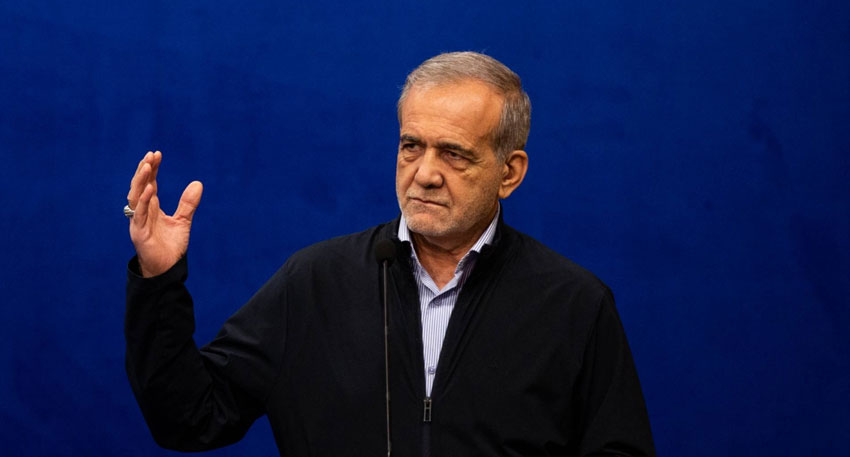
Iranian President Masoud Pezeshkian has claimed that US efforts to weaken and overthrow Iran's government through sanctions and conflict have failed, saying the country's unity and resilience prevented what he described as a foreign-backed plan to bring down the Islamic Republic.
The remarks come at a time of continued tensions between Iran and the United States, with both countries engaged in indirect diplomatic efforts while regional security concerns remain high. Pezeshkian's comments also follow renewed international attention on negotiations involving Iran and Oman aimed at reducing tensions in the Middle East.
Iran president says regime change plan did not succeed
Speaking in a public statement, Masoud Pezeshkian said Washington believed it could achieve in Iran what it claimed happened in Syria by combining military pressure with economic sanctions.
According to the Iranian president, opponents expected the Iranian government to collapse within 48 hours, but the plan failed because of the determination and unity of the Iranian people.
He said the country remained stable despite years of sanctions, political pressure and external challenges.
"The enemies believed they could overthrow the government in just two days, but the unity of the Iranian nation defeated those plans," Pezeshkian said.
Pezeshkian praises national unity and leadership
The Iranian president credited the country's leadership and public support for maintaining stability during periods of heightened pressure.
He said Iran remains united under its leadership and that the resilience of its people has enabled the country to withstand economic sanctions and political isolation imposed by Western powers.
Pezeshkian added that despite facing numerous challenges over the years, Iran continues to present itself as a strong and respected nation on the international stage.
Iranian officials have repeatedly argued that sanctions have failed to force political change, while insisting that the country has continued to strengthen its domestic industries and strategic capabilities.
Fresh criticism of the United States
During his remarks, the Iran president also criticised the United States, accusing Washington of targeting Iranian universities and research institutions.
He claimed the US opposes institutions that help develop an independent, educated and innovative Iranian society.
According to Pezeshkian, American policies are designed to prevent talented and capable Iranians from reaching positions of leadership.
He said Iran would continue investing in education, science and research despite international restrictions.
The United States has previously imposed sanctions on several Iranian institutions and individuals, arguing they are linked to activities that threaten regional security or violate international agreements. Tehran has consistently rejected those accusations.
Iran-US relations remain under global spotlight
Relations between Iran and the United States have remained strained for years, particularly since Washington withdrew from the 2015 nuclear agreement and reimposed sweeping economic sanctions.
The two countries continue to disagree over Iran's nuclear programme, regional influence and military activities, while indirect negotiations have taken place at various times to reduce tensions.
Recent diplomatic contacts involving Oman have raised cautious hopes that both sides could move towards a broader understanding, although no comprehensive agreement has yet been announced.
Analysts say any improvement in Iran-US relations could have significant implications not only for regional stability but also for global energy markets, where geopolitical tensions often influence oil prices.
Challenges remain despite diplomatic efforts
Political experts believe Iran still faces considerable economic difficulties, including inflation, currency pressures and the impact of international sanctions.
However, Iranian leaders continue to argue that the country has adapted to external pressure and remains committed to protecting its sovereignty and national interests.
Observers note that while diplomatic channels remain open through regional mediators, major disagreements between Tehran and Washington continue to limit prospects for a rapid breakthrough.
For now, Pezeshkian has reiterated that Iran will rely on national unity and resilience to confront what he described as continued foreign pressure, insisting that the country will not be forced into changing its political course through sanctions or external threats.


