

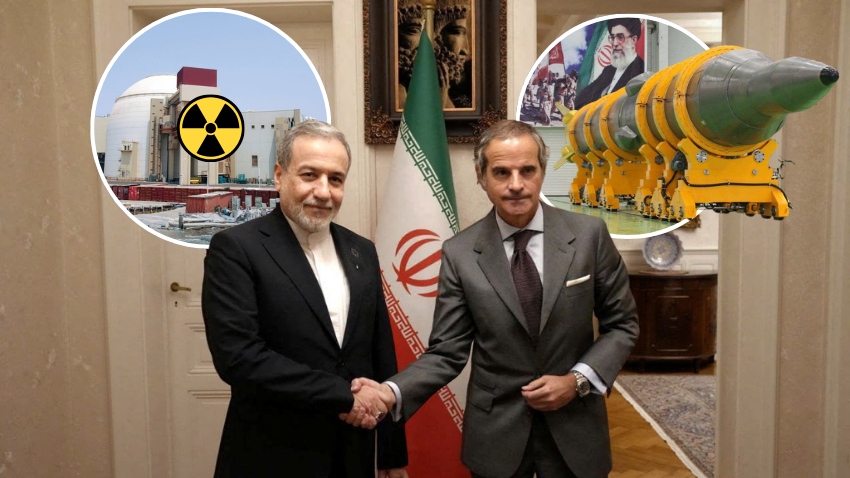
The meeting comes at a sensitive time, with rising military activity in the Middle East. The United States, which joined Israel in air strikes on Iranian targets in June, has deployed a second aircraft carrier (USS Gerald Ford) strike group to the region. Several US warships and aircraft are already stationed there.
At the same time, Iran began military drills in the Strait of Hormuz, a key global oil route. Gulf countries have called for diplomacy to prevent further escalation.
The United States and Iran restarted talks earlier this month to address concerns over Tehran’s nuclear program. Washington, Western nations, and Israel believe Iran is seeking nuclear weapons, but Tehran denies this and says its program is peaceful.
Washington wants the discussions to include Iran’s missile program as well. However, Tehran says it will only discuss limits on its nuclear activities in exchange for sanctions relief and refuses to accept zero uranium enrichment. It also says its missile capabilities are not open for negotiation.
Also Read: China announces ‘zero tariffs’ for 53 African countries
US Secretary of State Marco Rubio said reaching a deal would be difficult but added there is still a diplomatic opportunity.
Araqchi said he is working to “achieve a fair and equitable deal” and made it clear that “What is not on the table: submission before threats.”
Iran has repeatedly warned it could close the Strait of Hormuz if attacked. Such a move could disrupt nearly one-fifth of global oil supplies and sharply increase prices. The strait connects major oil producers like Saudi Arabia, Iran, Iraq, and the United Arab Emirates to global markets.
Iran’s Revolutionary Guards carried out naval drills named “Smart Control of the Strait of Hormuz” to test readiness in protecting the waterway. Officials said the aim was to use Iran’s geopolitical position in the Persian Gulf and Sea of Oman effectively.
Meanwhile, Iran’s civil defence body also conducted a chemical defence drill in the Pars Special Economic Energy Zone to prepare for possible emergencies.
Deputy Foreign Minister Majid Takht-Ravanchi said the ball was “in America’s court to prove that they want to do a deal”.
Also Read: India’s Reliance gets US approval to directly import Venezuelan oil
Before the recent air strikes, earlier talks had stalled over Washington’s demand that Iran stop enriching uranium on its soil. Iran insists its nuclear activities are for peaceful purposes and says it is ready to build trust that enrichment will remain civilian.
The IAEA has asked Iran to clarify what happened to 440kg of highly enriched uranium after the June strikes and to allow full inspections to resume at key sites including Natanz, Fordow, and Isfahan.
Israeli Prime Minister Benjamin Netanyahu has said any US deal must include dismantling Iran’s nuclear infrastructure completely, not just limiting enrichment. He stressed there should be “no enrichment capability” at all.


