

Iran sees no reason to be concerned about the Makkah Joint Defence Agreement
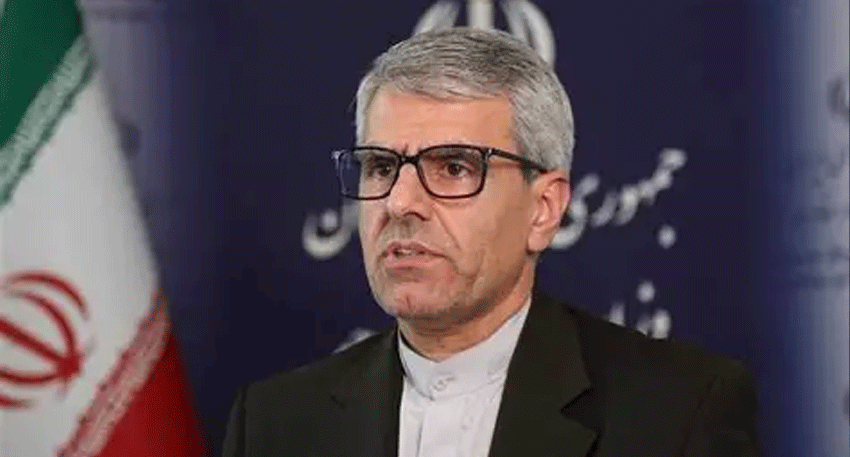
Iran says it is close to an agreement with Oman on new shipping routes through the Strait of Hormuz, but the waterway may remain closed until Washington meets several demands.
Iranian Foreign Minister Abbas Araghchi said discussions with Oman were in their final stages. However, he stressed that reopening the strategic waterway would depend on wider political and security conditions.
The Strait of Hormuz is one of the world’s most important energy routes. Any prolonged disruption could affect oil supplies, shipping costs and energy prices in many countries.
Iran sets conditions for Hormuz reopening
Iran has demanded compensation for damage caused during the conflict with the United States and Israel. Tehran has also called for an end to sanctions and military threats against Iran.
Other demands include stopping attacks against Iran and groups allied with Tehran, lifting the US naval blockade in the Gulf and releasing frozen Iranian assets.
Iran has also said it will not enter direct talks with Washington while accusing the United States of violating an interim agreement. Tehran says messages are currently being exchanged through intermediaries.
A US official said Iran and Oman were close to an arrangement that could help restore safe commercial shipping through the waterway. The official also indicated that the process would depend on Iran fulfilling its commitments.
The situation remains sensitive because Iran has previously restricted vessels crossing the strait without its permission. Shipping companies have also raised concerns about whether a system giving Tehran greater control over vessel movements would be practical.
BREAKING: Iran says the regional military alliance reflects growing awareness that the US cannot guarantee security and is itself a source of insecurity in the Middle East.
— Al Jazeera Breaking News (@AJENews) August 10, 2026
🔴 More on https://t.co/5H0QqpfIYw pic.twitter.com/94Y5RzKBRb
New changes inside Iran’s security leadership
At the same time, Iran has changed the leadership structure of its Supreme National Security Council. Former Islamic Revolutionary Guards Corps commander Mohsen Rezaei has been appointed as the council’s secretary.
Rezaei replaces Mohammad Bagher Zolqadr, who had taken the position only recently. No official reason was immediately given for the change, and it remains unclear whether the appointment will lead to any major policy shift.
Rezaei has extensive experience in Iran’s military and political institutions. He commanded the Islamic Revolutionary Guards Corps for many years and later served in senior government positions.
Iran’s Supreme National Security Council plays an important role in national security and foreign policy. It includes senior military, intelligence and government officials, while the country’s supreme leader has the final authority on major state matters.
The leadership change comes as Iran faces difficult decisions over the war, international pressure and the future of the Strait of Hormuz.
US and Israel face growing differences
The wider crisis has also created differences between the United States and Israel over how regional military operations should proceed.
Reports indicate that Washington is pushing Israel to reduce fighting across Gaza, Lebanon and Iran. US officials reportedly want progress toward “closing the three fronts”.
Israeli officials, however, have stressed that they want to maintain the ability to act against Iran if Tehran develops its nuclear programme or rebuilds its missile capabilities.
The disagreements show that Washington and Tel Aviv may not have identical views about how the regional conflict should end. The United States appears increasingly focused on reducing the number of active military fronts.
The issue is particularly important for Gulf countries, which have faced security threats while trying to protect oil exports and major economic projects.
Also Read:US Navy Diverts 55 Ships Amid Iran Blockade, CENTCOM Says
Saudi Arabia, Pakistan and Turkiye deepen security ties
Regional security concerns have also encouraged closer cooperation between Saudi Arabia, Pakistan and Turkiye.
The three countries recently signed a defence agreement aimed at strengthening security cooperation. Turkish Foreign Minister Hakan Fidan said the agreement was not directed against Iran or another specific country.
Pakistan has traditionally maintained defence ties with Saudi Arabia while also trying to avoid becoming directly involved in the conflict between Iran and the United States.
Saudi Arabia has faced security risks from several directions during the wider regional crisis. Any prolonged closure of the Strait of Hormuz could add further pressure because of its importance to global energy supplies.
Iranian-backed Houthi forces have also increased activity around another major shipping route in the Red Sea. The group has claimed attacks against Saudi interests, while Riyadh has rejected some of its accusations.
BREAKING: Iranian Foreign Ministry spokesperson Esmail Baghaei says Iran has demanded compensation for damage caused by the US-Israel war and that the Strait of Hormuz could reopen if no third party interferes.
— Al Jazeera Breaking News (@AJENews) August 10, 2026
🔴 More on https://t.co/5H0QqpfIYw pic.twitter.com/aCY3v1x8wS
Oil prices rise as uncertainty grows
Financial markets have reacted to uncertainty surrounding the Strait of Hormuz. Brent crude futures for October delivery rose 1.09% to $84.46 a barrel, while US West Texas Intermediate futures increased 0.84% to $78.84.
The price movement reflects concerns that the waterway could remain restricted for an extended period. Traders are closely watching developments between Iran, the United States and Oman.
The Strait of Hormuz normally carries a major share of global oil and liquefied natural gas shipments. Continued disruption could therefore increase transportation costs and put additional pressure on energy prices.
Asian stock markets nevertheless recorded gains, with Japan’s Nikkei 225 rising 2.1%, South Korea’s Kospi increasing 0.7% and Hong Kong’s Hang Seng gaining 0.6%.
US forces report vessel interceptions
The United States has also increased enforcement of its blockade against Iran.
US Central Command said American forces had redirected 55 commercial vessels, disabled two vessels and boarded two others while enforcing the blockade.
CENTCOM said US sailors were operating aboard the USS Ross, one of more than 20 American warships deployed in the Middle East.
The command did not provide further details about the vessels or explain the circumstances surrounding each action. The development adds another layer of uncertainty for commercial shipping companies operating near the region.