

Iran-Saudi relations may improve as Tehran seeks wider ties
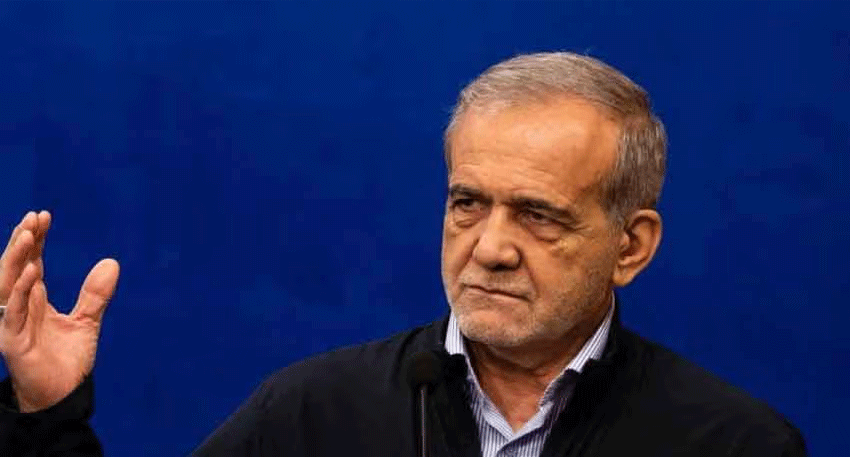
Iranian President Masoud Pezeshkian has signalled that Tehran wants to improve relations with neighbouring and Muslim countries, including Saudi Arabia, the United Arab Emirates and Pakistan.
Speaking in a televised interview, Pezeshkian said regional countries should sit together and resolve disagreements through dialogue instead of allowing tensions to grow.
He said Iran was ready to cooperate with several countries, including Afghanistan, Türkiye, Qatar, Oman, Egypt, Azerbaijan and Turkmenistan.
The comments come as the region faces several security and economic challenges. Tehran is also dealing with pressure from the United States, sanctions and uncertainty surrounding the strategic Strait of Hormuz.
Tehran seeks stronger ties with regional countries
Pezeshkian said Iran needs to change its approach towards neighbouring countries and find areas of common interest.
He argued that regional states should cooperate on security and stability while respecting each other’s independence.
“We are brothers and are not rulers over one another,” he said.
The Iranian president said countries should remain firm on their main principles but show flexibility on secondary issues when seeking agreements.
His comments point towards a more dialogue-focused approach to regional diplomacy. Better relations with Gulf states could also create opportunities for trade, investment and wider economic cooperation.
Iran and Saudi Arabia have already taken steps towards improving relations after years of tensions. Tehran’s latest comments suggest that Iran wants to build on that wider regional engagement.
The UAE and Qatar are also important to Iran because of their economic links and their role in regional diplomacy.
Hormuz reopening tied to US commitments
Pezeshkian also spoke about the Strait of Hormuz, one of the world’s most important energy routes.
He said Iran could consider reopening the waterway if the United States fulfils commitments linked to the Islamabad understanding.
According to the president, those conditions include lifting sanctions and blockades, releasing frozen Iranian assets and meeting other agreed obligations.
He also connected the reopening issue with developments in Lebanon and called for an end to military operations there.
The Strait of Hormuz carries a major share of global oil and gas shipments. Any prolonged disruption there can therefore create concerns about energy supplies, shipping costs and international oil prices.
Pezeshkian said Iran is working on a revised plan for managing maritime traffic through the strait.
The plan was reportedly prepared by the Islamic Revolutionary Guard Corps, military officials and Iran’s diplomatic negotiating team, with approval from Iran’s top leadership.
Oman plays role in maritime discussions
Oman has also been involved in discussions about reopening the strategic waterway.
Pezeshkian said talks with Oman had initially faced some reservations but later resulted in an understanding about a coordinated approach.
Iran would continue monitoring developments if the route is reopened, he said.
The Iranian government wants guarantees that the United States will meet its commitments before Tehran takes reciprocal steps.
Pezeshkian said these commitments also include releasing Iranian funds connected to the oil and petrochemical sectors and allowing investment to resume.
He further said Israel should respect international boundaries as part of the wider conditions mentioned by Tehran.
The remarks show that Iran is linking the future of the Strait of Hormuz with broader political and economic issues rather than treating the waterway separately.
Islamabad understanding described as collective decision
Pezeshkian defended the Islamabad understanding and described it as the result of extensive discussions among senior Iranian officials.
He said military commanders, judiciary and parliamentary officials, cabinet members and other experts were involved in discussions surrounding the agreement.
According to Pezeshkian, the Supreme National Security Council approved the decision with 12 of its 13 members voting in favour.
He said the agreement contained nine clauses outlining US commitments, along with several joint provisions and another nuclear-related issue that required further negotiations.
Pezeshkian claimed that the initial implementation produced some results, including progress on sanctions, blockades, the Lebanon conflict and frozen Iranian assets.
However, he said the arrangement later broke down because the other side did not follow the agreed framework.
He also said Iran had been preparing for a potential investment package worth up to $300 billion.
According to his account, preliminary discussions had taken place with Qatar and the UAE, but regional conflicts interrupted those plans.
Iran highlights economic resilience
Despite continuing sanctions, Pezeshkian said Iran had managed to maintain economic activity.
He claimed Iran sold around 90 million barrels of oil during the implementation period of the interim agreement.
The president also said Iran benefited from some relief involving banking and petrochemical sanctions and made progress on recovering frozen funds.
However, he claimed that continued US sanctions and restrictions connected with the Strait of Hormuz had reduced Iran’s imports and exports by as much as 35%.
Pezeshkian said economic problems, inflation and unemployment remained serious challenges, but national unity had helped Iran withstand outside pressure.
He argued that military strength alone cannot protect a country if its people and institutions are divided.
For that reason, he said his government would avoid language that could deepen internal divisions and would instead focus on common national interests.
Also Read:Trump orders Lake Ontario renamed ‘Lake America’ after US-Canada talks collapse
Tehran keeps door open to negotiations
Pezeshkian said Iran remains willing to negotiate but does not want an approach based entirely on either accepting everything or rejecting everything.
He called for gradual and reciprocal steps, saying Tehran would honour its commitments if the other side also followed its obligations.
At the same time, he made clear that Iran does not fully trust its negotiating partners.
He said Tehran would respond according to its national interests if any agreement was violated.
This cautious position reflects the difficult relationship between Iran and the United States. Tehran wants sanctions relief and economic opportunities, but it also wants guarantees before making major concessions.
Energy shortages remain another challenge
Pezeshkian also discussed problems inside Iran, particularly the country’s electricity sector.
He said Iran faced an electricity shortage of around 25,000 megawatts when his administration came to power.
According to the president, damaged power infrastructure and lower hydropower generation caused by reduced water levels in dams made the problem worse.
His government is working on structural reforms to improve efficiency and better manage energy resources, he said.
The issue is important because electricity shortages can affect households, industries and economic growth.


