

Iran missile strikes spark fears of wider Middle East conflict
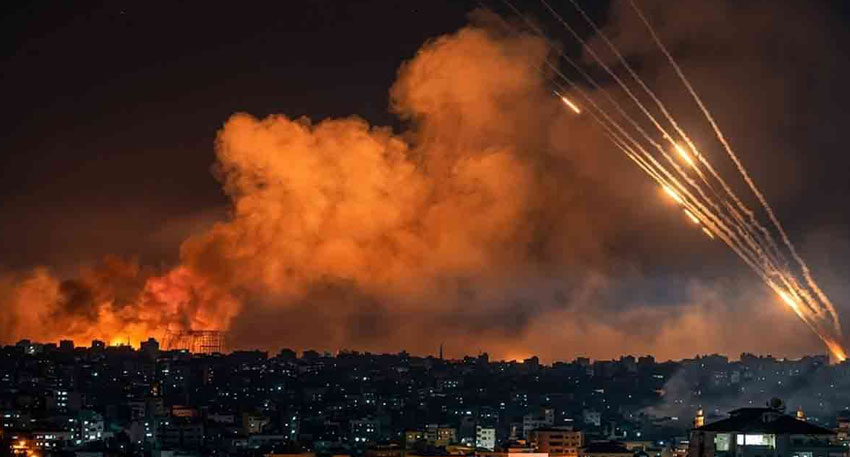
Iran’s missile attacks on Israel have renewed fears of a major conflict in the Middle East, with both sides exchanging warnings and military threats.
The Israeli military claimed that all missiles fired from Iran were successfully intercepted by its air defense systems before reaching their targets. According to Israeli officials, no significant damage was reported from the attacks.
Following the missile launches, Israel placed the country on high alert. Warning sirens were activated across several areas, while some regions in neighboring Jordan also reported emergency alerts due to the security situation.
Meanwhile, Iran’s Islamic Revolutionary Guard Corps (IRGC) accepted responsibility for the strikes, saying that Israeli military targets were hit with ballistic missiles. Iranian officials described the operation as a response to what they called repeated violations of a ceasefire understanding and continued Israeli military actions in Lebanon.
The IRGC warned that if Israel continues its attacks on Lebanon, future responses could be more severe and destructive. Iranian authorities argued that any ceasefire agreement required an end to military operations on all fronts, accusing both Israel and the United States of failing to honor previous commitments.
Mohsen Rezaei, an adviser to Iran’s Supreme Leader, said Tehran had already warned of consequences if ceasefire violations and attacks on Lebanon continued. He described the latest missile operation as a direct response to those actions.
Reports also suggest that Israel may be preparing retaliatory measures against Iran. Senior Iranian sources warned that any direct attack on Iran could place US military bases across the region at risk.
Amid growing tensions, Iran, Iraq and Syria temporarily closed parts of their airspace, while operations at Damascus airport were suspended. US President Donald Trump was briefed on the situation and urged Iran to return to negotiations instead of escalating the crisis further.


