
Iran attacks US installations in Bahrain as regional tensions rise again
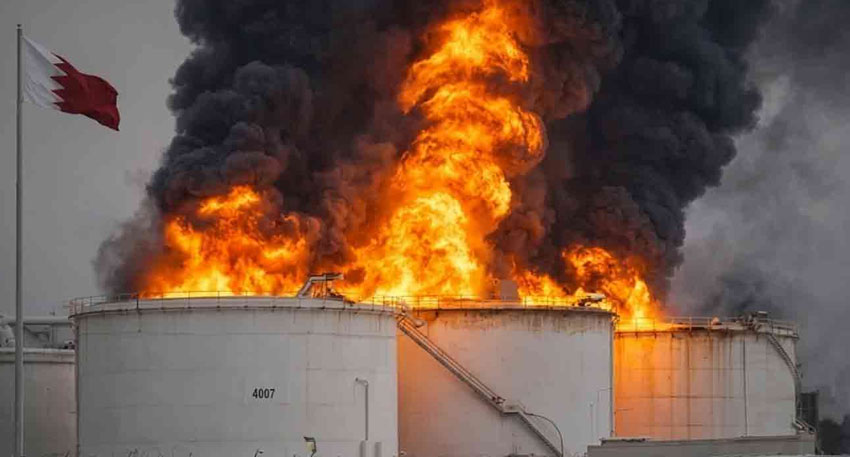
Regional tensions have increased again after Bahrain accused Iran of launching several drone attacks targeting US military installations on its territory. The alleged attacks came shortly after the recent ceasefire between Iran and the United States.
According to the Bahraini government, the drones were aimed at American military facilities in the country. Bahrain described the incident as a serious violation of its sovereignty and national security.
Bahrain hosts the headquarters of the US Navy’s Fifth Fleet. Because of this, the country is considered one of the most important centres for American military operations in the Gulf region.
Meanwhile, the United States confirmed that it carried out airstrikes on missile sites, drone storage facilities and radar installations in southern Iran. US officials said the strikes targeted military infrastructure linked to recent security threats.
Also read: US strikes Iran after drone attack on commercial ship in Strait of Hormuz
The latest tensions reportedly began after US President Donald Trump accused Iran’s Islamic Revolutionary Guard Corps of targeting a large commercial ship in the Strait of Hormuz. According to the allegations, Iran launched missiles at four ships, with the US claiming that three missiles were intercepted while one struck a vessel.
Following those claims, US fighter jets launched attacks on missile and drone storage centres as well as coastal radar and surveillance facilities in southern Iran. The US military has officially confirmed these operations.
On the other hand, Iranian state media claimed that the country’s air defence system destroyed US missiles and drones before they reached their targets. However, reports also said that a projectile landed in the southern coastal city of Sirik.
Iran’s Foreign Ministry condemned the US airstrikes, calling them a violation of international law and the ceasefire. It said Iran reserves the right to defend its sovereignty and will respond appropriately.
Defence and diplomatic experts believe the renewed tensions could increase risks for the Gulf region, global energy markets and international trade. They warn that if the conflict grows further, regional security could once again face serious challenges.
The claims and counterclaims from both sides show that tensions remain high despite the ceasefire. If the situation worsens, it could affect regional stability, oil markets and global shipping routes.