

Houthi attack on Yemen training camp leaves 58 dead, over 200 injured
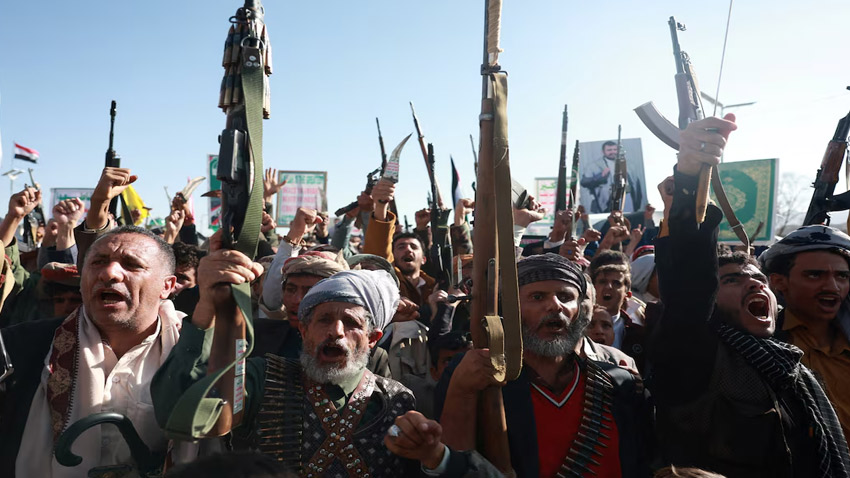
58 people were killed and more than 200 injured in a Houthi attack on a government security forces training camp in Yemen, according to Shabwa Governor Awad al-Wazir.
The attack took place on Monday at the Al-Alam camp in Shabwa province. The governor said 14 people were still missing after the bombardment.
Local authority sources, speaking anonymously, said the Houthis fired three ballistic missiles at security forces during a training exercise.
The attack caused heavy casualties among those at the camp. Video from the province, verified by Reuters, showed injured people and bodies scattered across the ground.
The incident is among the latest deadly developments in Yemen’s renewed fighting. It has raised further concerns about the safety of security personnel as clashes between the Houthis and government forces intensify.
Houthis claim responsibility for the strike
Houthi military spokesperson Yahya Saree said the group had targeted the training camp.
He claimed the facility was operated by Saudi forces. However, Saudi authorities had not immediately responded to a request for comment, and the claim about the camp’s operation was not independently confirmed in the available reporting.
The Houthis are aligned with Iran and have been fighting Yemen’s internationally recognised government, which is backed by a Saudi-led coalition.
The latest attack comes as both sides continue military operations in different parts of the country. The fighting has increased pressure on communities already struggling with years of conflict, economic hardship and limited access to basic services.
Fighting spreads near key Red Sea shipping route
The attack comes amid growing clashes near the Bab el-Mandeb Strait, a narrow but important shipping route linking the Red Sea with the Gulf of Aden. The Houthis have advanced towards areas near the strait, increasing concern over the security of this important maritime passage.
The route is used by commercial vessels travelling between Europe, Asia and other international markets. Any major disruption could affect shipping schedules and raise concerns about regional trade. The latest fighting has also increased tensions between the Houthis and forces supporting Yemen’s internationally recognised government.
Shabwa, where the attack occurred, is an energy-rich province in south-central Yemen. It overlooks the Gulf of Aden and is home to the Balhaf liquefied natural gas facility, described as Yemen’s largest industrial investment.
The province’s location and energy resources add to its strategic importance as fighting continues.
Government forces launch campaign against Houthis
Government forces began a campaign this month to recover areas controlled by the Houthis, according to the supplied report.
The campaign has focused on regaining territory near the Bab el-Mandeb Strait. The Houthis, meanwhile, have continued to pressure Taiz, a major urban centre and stronghold of anti-Houthi forces in Yemen’s southern highlands.
The competing military operations have increased fears that the conflict could spread further and cause additional casualties.
Also Read: Iran reports explosion as oil supertanker hit naval mine in Strait of Hormuz
The latest attack on the training camp also highlights the risks faced by security personnel during training and other activities away from active front lines. The full impact of the attack, including the final number of casualties, may become clearer as authorities continue searching for missing people.
Yemen’s conflict enters another dangerous phase
Yemen’s civil war began in 2014 when the Houthis seized the capital, Sanaa, forcing the internationally recognised government to move south. A Saudi-led military intervention followed in 2015, but years of fighting failed to produce a lasting political settlement.
The two sides agreed to a truce in 2022. However, the relative calm did not resolve the main political and military disputes, and fighting has since intensified again. The current escalation has brought fresh attention to Yemen’s strategic position and the wider regional tensions involving Iran and Saudi Arabia.
Houthi attacks on Saudi targets have also added to concerns about the conflict spreading beyond Yemen’s borders. Such developments could create further risks for regional security and important trade routes.
Humanitarian crisis deepens as violence continues
Yemen was already facing one of the world’s most serious humanitarian crises before the latest attack. Years of conflict have damaged infrastructure, weakened public services and left many families struggling to access food, healthcare and clean water.
The United Nations Office for the Coordination of Humanitarian Affairs said in its 2026 humanitarian plan that more than 22 million people in Yemen would need humanitarian assistance and protection services during the year. The plan also highlighted widespread food insecurity and severe pressure on the country’s health services.
The latest violence adds to these challenges. A large number of injured people can put further pressure on hospitals and medical staff, particularly in areas where healthcare services are already limited.
Continued fighting can also make it harder for aid organisations to reach people who need urgent assistance.
International concerns grow over renewed fighting
The rising death toll at the Al-Alam camp has drawn attention to the renewed intensity of Yemen’s conflict. The attack also raises questions about the security of military facilities and the ability of authorities to protect personnel during training activities.
At the same time, the conflict near the Bab el-Mandeb Strait has wider importance because the passage is a key route for international shipping. Further escalation could increase security risks for the region and make humanitarian work more difficult.
For civilians, the most immediate concerns remain safety, access to medical care, and the availability of essential supplies. A lasting reduction in violence would require efforts to address the conflict’s political and security causes, alongside continued support for people affected by years of fighting.


