

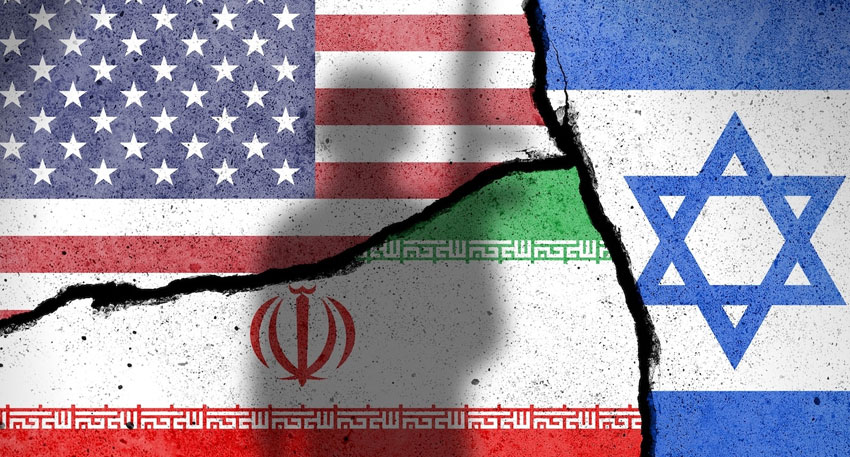
The conflict began at mid-morning on February 28, 2026, when the United States and Israel launched a massive coordinated air and missile campaign known as Operation Epic Fury (U.S.) and Operation Roaring Lion (Israel). The first 12 hours saw nearly 900 precision strikes across Iran, aimed at dismantling the regime’s command-and-control hierarchy and its nuclear infrastructure.
Assassination of the Supreme Leader:
In the most significant "decapitation" strike in modern history, a joint Israeli-U.S. airstrike targeted the official residence of Supreme Leader Ali Khamenei in Tehran. His death was confirmed by the Iranian government on March 1, 2026. The strike also claimed the lives of his inner circle, including Ali Shamkhani (Secretary of the National Defense Council) and Mohammad Pakpour (IRGC Ground Force Commander).
Strategic Targets:
Beyond leadership, the first wave focused on the "crown jewels" of Iran’s defense. This included the hardened uranium enrichment facilities at Natanz and Fordow, which were hit by multiple bunker-busting munitions, as well as the Isfahan missile production plants.
The Hormuz Response:
Within hours of the strikes, the IRGC activated its "Chokehold" strategy. Iran officially declared the Strait of Hormuz closed and began a rapid deployment of Maham-series sea mines and drone swarms to block the 21-mile-wide waterway.
Early March 2026: Infrastructure Warfare and Urban Escalation
The Water War: On March 3, a major desalination plant on Qeshm Island was destroyed in an aerial strike. The loss of fresh water for nearly 200,000 residents marked a shift toward targeting civilian-sustaining infrastructure. Iran retaliated by targeting UAE and Bahraini oil and gas fields, forcing Iraq and Kuwait to halt production as exports became impossible.
Also Read: Iran energy sites attacked power outages hit Tehran and Karaj
Urban Warfare:
As U.S. and Israeli jets expanded their target lists to include IRGC barracks hidden within city limits, residential neighborhoods in Tehran, Mashhad, and Shiraz suffered collateral damage. In response, Iran launched Operation True Promise-4, firing hundreds of ballistic missiles and "suicide" drones at Tel Aviv, Haifa, and U.S. bases across the Gulf.
Energy Market Collapse:
By March 9, Brent Crude oil prices surged to $119.50 per barrel, the highest since 2022. Global shipping giants, including Maersk, suspended all transits through the region, rerouting vessels around the Cape of Good Hope.
March 8 to March 17: Succession and the Death of Ali Larijani
On March 8, 2026, the Assembly of Experts met in emergency session and elected Mojtaba Khamenei, the son of the late leader, as the third Supreme Leader. His first decree was to reject all Western calls for surrender, vowing a "war of a thousand cuts."
Assassination of Ali Larijani:
On March 17, another devastating blow hit the Iranian establishment. An Israeli airstrike in Tehran killed Ali Larijani, the Secretary of the Supreme National Security Council and the regime’s most seasoned political strategist. The strike also killed his son, Morteza, and the head of the Basij Force, Gholamreza Soleimani.
Economic Attrition:
Following the Larijani strike, U.S. forces concentrated fire on the Kharg Island oil terminal—Iran’s primary export hub—successfully "demolishing" much of its loading capacity and cutting off the regime's last remaining revenue stream.
March 19 to March 25: The Trump Ultimatum and the "Pakistan Gambit"
The Ultimatum: On March 22, President Donald Trump issued a 48-hour ultimatum on Truth Social, demanding the immediate reopening of the Strait of Hormuz. He warned that if the mines were not cleared, the U.S. would target Iran’s civilian power grid and domestic refineries, potentially leaving 80 million people without electricity.
Mediation in Islamabad:
With the world on the brink of a humanitarian disaster, Pakistan stepped in as the primary diplomatic bridge. Prime Minister Shehbaz Sharif and Foreign Minister Ishaq Dar utilized Pakistan’s unique ties to both Tehran and Washington to establish a backchannel.
Also Read: Oil prices surge sparks global energy fears
The 15-Point Peace Proposal:
Delivered via Pakistani intermediaries on March 25, the U.S.-backed plan proposed:
1. A phased ceasefire and 10-day "pause" in airstrikes.
2. Total rollback of Iran’s nuclear program and IAEA access.
3. Guarantees for the permanent reopening of the Strait of Hormuz.
4. Limited sanctions relief and civilian nuclear cooperation as a reward for compliance.
Iranian Resistance:
While the proposal reached Tehran, Mojtaba Khamenei’s government initially scoffed at the terms, demanding war reparations and the withdrawal of all U.S. naval assets from the Gulf as a prerequisite for talks.
Late March 2026: Naval Escalation and the Current Deadlock
Sinking of the Dena: On March 26, the U.S. Navy’s 5th Fleet engaged and sank the Iranian frigate Dena after it attempted to interfere with minesweeping operations in the Strait of Hormuz. This was the most significant naval loss for Iran during the conflict.
Also Read: Israel may invite US bases shift from Gulf under discussion
The Islamabad Summit:
On March 29, a high-level diplomatic summit convened in Islamabad. Foreign ministers from Turkey, Egypt, and Saudi Arabia arrived to join the Pakistani mediation effort, signaling a united regional push to end the hostilities.
Current Situation (March 30):
As of today, the conflict remains a volatile stalemate. President Trump has extended the deadline for infrastructure strikes until April 6 to allow the Islamabad talks a final window. While oil prices have dipped slightly to $106, the Strait remains functionally closed to large tankers, and both sides continue to exchange fire along the Lebanese and Syrian fronts.


