

Spanish scientists uncover first evidence of Diplodocus in Europe
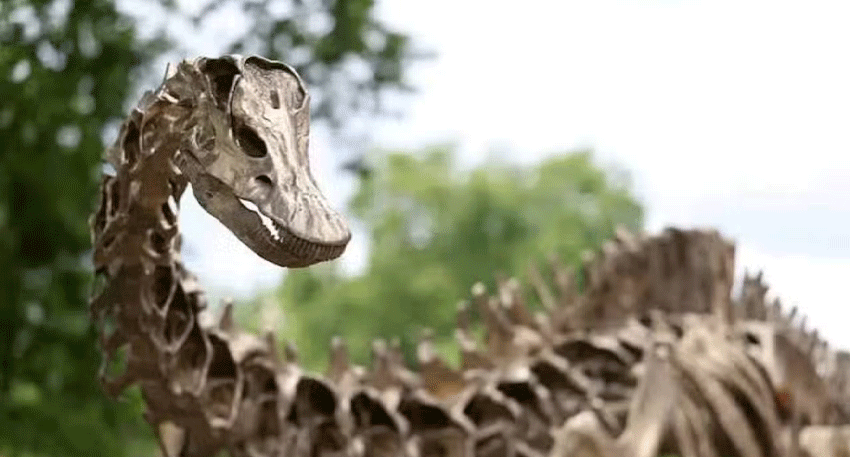
Spanish paleontologists say they have discovered the first known evidence of Diplodocus in Europe. The findings could add a new chapter to the history of one of the world’s most recognisable dinosaurs.
The research was published on Tuesday in the Journal of Vertebrate Paleontology. Scientists from the Dinopolis Foundation in Teruel, eastern Spain, examined fossils recovered from ancient rock deposits.
The discovery is important because Diplodocus has traditionally been associated with North America. The newly identified remains suggest the dinosaur’s range may have extended much farther than previously confirmed.
Fossils found in 150-million-year-old rocks
The fossils were recovered from sediments dating back around 150 million years. They include 14 caudal vertebrae, which are bones from the tail, along with several chevron bones.
Chevron bones are small structures connected to the underside of some vertebrae. They helped researchers examine the specimen’s anatomy and compare it with known dinosaur species.
The remains came from a single specimen found in the El Castellar area of Teruel. Researchers studied the shape and structure of the bones to determine which dinosaur group they belonged to.
The age of the fossils places the animal in the Late Jurassic period. This was a time when large dinosaurs lived across different parts of the world.
Study identifies Diplodocus genus
Lead author Sergio Sanchez Fenollosa said the research team used anatomical and evolutionary analysis to identify the specimen.
“The anatomical study and evolutionary analyses we conducted have allowed us to identify the El Castellar specimen as belonging to the genus Diplodocus. It is one of the most complete diplodocids discovered to date in Europe and represents the first evidence of this genus outside North America,” he wrote.
The statement makes clear that the discovery concerns the genus Diplodocus, rather than necessarily identifying a particular species.
Diplodocus belonged to a group of long-necked, plant-eating dinosaurs known as diplodocids. These animals had long tails, extended necks and relatively small heads compared with their enormous bodies.
Also Read:Saudi Arabia discover 110 million tons of rock containing uranium
Dinosaur may have measured 25 metres
Alberto Cobos, managing director of the Dinopolis Foundation and a co-author of the study, said the specimen was likely around 25 metres long.
That size would have made it a very large animal, although estimates based on incomplete fossil remains can carry some uncertainty.
Diplodocus is known for its long, slender body shape and whip-like tail. Its fossils have been particularly associated with the western United States, where several important specimens have been discovered.
The Spanish remains now provide researchers with an opportunity to examine how these dinosaurs may have spread between regions during the Jurassic period.


