

Portugal enacts full-face veil ban after far-right support
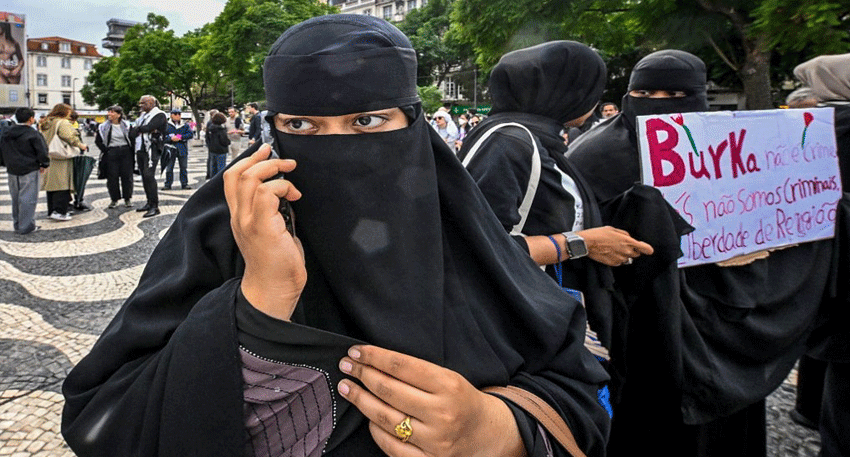
The law was signed by President Antonio Jose Seguro after being approved by parliament in July. It received support from the right-wing governing coalition and far-right parties, while left-wing lawmakers opposed it.
The measure has been widely described by Portuguese media as the “burqa law”, referring to clothing worn by some Muslim women that covers the face and body.
What Portugal’s new law says
Under the new rules, people can be fined for wearing clothing designed to hide their faces or prevent identification in public places.
The law also prohibits forcing another person to cover their face because of their gender, religion, age or origin. Supporters say the measure is linked to identification and communication in public spaces.
“The face must be considered a central element of human identity and communication,” President Seguro said in a statement.
The president also acknowledged that the issue is highly sensitive because it involves social, cultural and religious questions.
The restrictions do not apply in every situation. The law provides exemptions where face coverings are required for health, professional, artistic or weather-related reasons.
Face coverings will also be permitted in places of worship, diplomatic missions and on airplanes.
Muslim women at centre of debate
Although the law applies generally to face-covering garments, critics argue that its practical effect will fall mainly on Muslim women who wear full-face veils.
Rights campaigners have opposed similar restrictions in other European countries. They argue that such measures can interfere with women’s freedom to decide how they dress.
Critics also say governments should be careful when creating laws involving religious clothing. They believe restrictions can create pressure on minority communities while being presented as general public-safety measures.
Supporters, however, argue that people should be identifiable in public spaces when necessary. They also point to the importance of facial expressions and communication in everyday social interaction.
The disagreement has made the law part of a wider European debate about secularism, religious freedom, security and individual rights.
Far-right parties support the measure
The legislation passed through parliament with backing from Portugal’s right-wing governing coalition and far-right lawmakers.
Left-wing parties voted against the measure, highlighting the political divide surrounding the issue.
The law therefore represents more than a change to clothing regulations. It also reflects growing political arguments in Europe over immigration, integration, religion and national identity.
Portugal has historically been less associated with full-face veil restrictions than some other European countries. The new legislation places it among countries where governments have introduced limits on face coverings in public.
Also Read:UAE halts trade, financial transactions with Iran after missile attack
Fines and exemptions under the law
People who violate the new restrictions can face fines ranging from €150 to €3,000, depending on the circumstances.
The rules include several exemptions designed to prevent the ban from affecting legitimate situations. These include medical requirements, professional activities, artistic performances and protection from weather conditions.
Religious places are also exempt, meaning the restrictions do not apply in places of worship. Diplomatic missions and aircraft are similarly excluded from the rules.
The government has presented the exemptions as part of the law’s effort to balance identification requirements with practical needs.


