

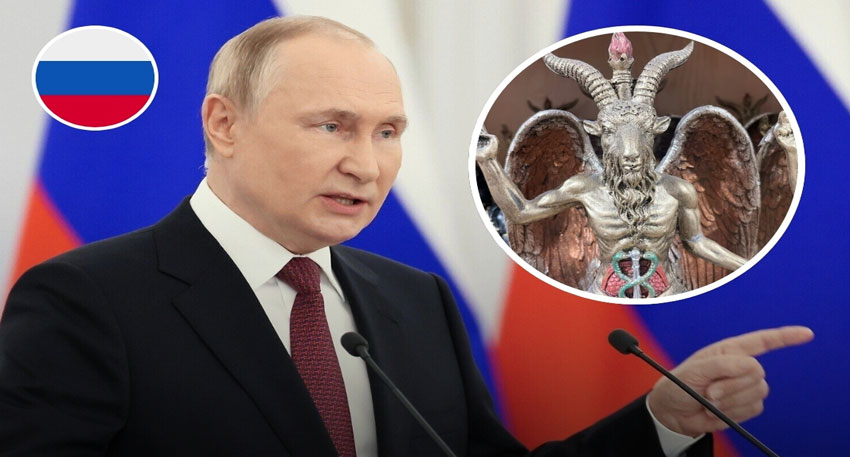
Russia’s Supreme Court has officially banned all activities linked to the so-called “International Movement of Satanists,” declaring it extremist and hostile to traditional faiths. The decision follows a petition filed by the country’s top prosecutor.
According to the Prosecutor General’s Office, the court accepted the request submitted by Igor Krasnov and ordered a complete ban on the movement’s operations across Russia. Authorities said the group promotes extremist ideology and fuels hatred against established religious communities.
Read more: Iran arrests over 260 in raid for promoting ‘Satanism’
The official statement said the movement encourages hostility toward traditional religious confessions and undermines social harmony. Prosecutors also accused it of inciting violence against religious institutions and involvement in acts such as destruction and desecration of Orthodox churches.
However, independent reports suggest the group may not exist as an organized entity. Latvia-based outlet Meduza noted that similar unnamed or unclear movements have been banned in the past and later used to justify action against individuals or artistic expression.
Russian officials further linked the alleged movement to radical nationalism and neo-Nazi ideas. Deputy Justice Minister Oleg Sviridenko said the ban reflects joint efforts by law enforcement and courts to protect national interests and public safety.
Read more: Muslims urged to protect themselves from deceptions, whispers of Satan
For years, the Russian Orthodox Church and conservative politicians have demanded a ban on Satanist ideology. In April, the lower house of parliament held discussions on countering Satanism and other beliefs seen as a danger to the state.
The ruling adds to a long list of groups targeted under Russia’s 2002 extremism law, which critics say is frequently used to silence dissent and restrict ideological diversity.
This decision shows how broadly Russia applies its extremism laws. Critics fear vague bans can be used beyond their stated purpose. Supporters say the move protects social order and national values.


