
Nepal Prime Minister urges calm after unrest leaves 3 dead in a hindu-muslim clash
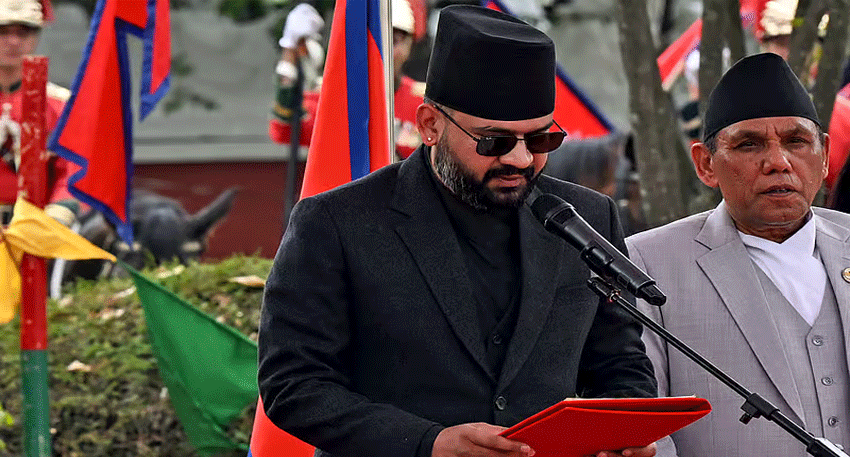
Nepal’s Prime Minister Balendra Shah has appealed for peace after clashes between Hindu and Muslim groups left three people dead in the country’s southern region.
The violence has forced authorities to impose curfews in several areas as police try to prevent further clashes between communities.
Shah also promised a fair investigation into the deaths and said anyone found responsible would face justice.
The prime minister made the appeal during his first major address to the nation since taking office in March.
His public appearance came as tension continued to grow following several days of unrest in southern Nepal.
How the Nepal unrest began
The violence began on Sunday in a village in Sunsari district near Nepal’s border with India.
According to officials, the trouble started after a disagreement between members of Hindu and Muslim communities.
The dispute reportedly involved loud music and religious flags during a Hindu procession.
The situation later became violent, forcing police to intervene and try to control the crowd.
Police spokesman Abi Narayan Kafle said officers opened fire while attempting to disperse the gathering.
Two men were killed during the incident, according to police.
The violence did not end there, however, as tensions spread to another nearby area.
A third man died on Thursday during a protest in Siraha district despite authorities already having a curfew in place.
The additional death raised concerns that the unrest could spread beyond the original area and create further tension between religious communities.
Curfews imposed to prevent more clashes
Authorities have imposed curfews across Sunsari and neighbouring districts as part of efforts to restore order.
The restrictions are intended to prevent large gatherings and reduce the possibility of further confrontations.
Police have also increased their presence in affected areas.
Kafle said officers had been placed on alert and were working to protect public property while trying to prevent another violent situation.
“We have kept all police officials in the field on alert and are trying to protect public property and prevent any conflicting situation with minimal use of force,” he told AFP.
The police response is now being closely watched because the initial deaths occurred after officers opened fire to disperse a crowd.
The authorities face pressure to maintain public safety while also ensuring that force is used carefully.
PM Balendra Shah makes an appeal
Prime Minister Shah urged people across the country to remain patient and avoid actions that could increase tensions.
The prime minister said citizens, civil society groups, religious communities, political leaders and the media all had a role in maintaining peace.
“I, on behalf of the government, sincerely appeal to the citizens, civil society, religious communities, all respected leaders, all political parties and responsible media, to exercise patience and restraint and maintain peace, harmony, brotherhood and national unity,” Shah said.
He also called on people to act responsibly and help “remove the clouds of unrest”.
The speech was notable because Shah has rarely appeared publicly since becoming prime minister in March.
Also Read: Al Jazeera cuts contracts with 24 Gaza journalists after years of frontline reporting
Along with calling for calm, Shah promised that the government would investigate the violence.
He described the planned investigation as “completely fair and transparent”.
The prime minister also said those responsible for the violence would be brought to justice.
The promise could become important as authorities investigate how the dispute over a religious procession developed into deadly clashes.
It will also be important to determine the circumstances surrounding the deaths of the three people.
An independent and transparent process could help reduce anger among affected communities and provide answers to families of those who died.
The government is also under pressure to make sure that future protests do not turn violent.
Religious tensions remain a concern
Nepal is a country where Hindus make up the large majority of the population.
Around 80 percent of the population is Hindu, while Muslim communities are also present, particularly in parts of southern Nepal.
The country’s southern region has sizeable Muslim populations, making relations between religious communities especially important for local stability.
Disagreements involving religious processions, loud music, flags or public gatherings can become sensitive when community tensions are already high.
The latest violence shows how quickly a local dispute can develop into a wider security problem.
Authorities will therefore need to manage the situation carefully to prevent rumours, anger or further confrontations from spreading.