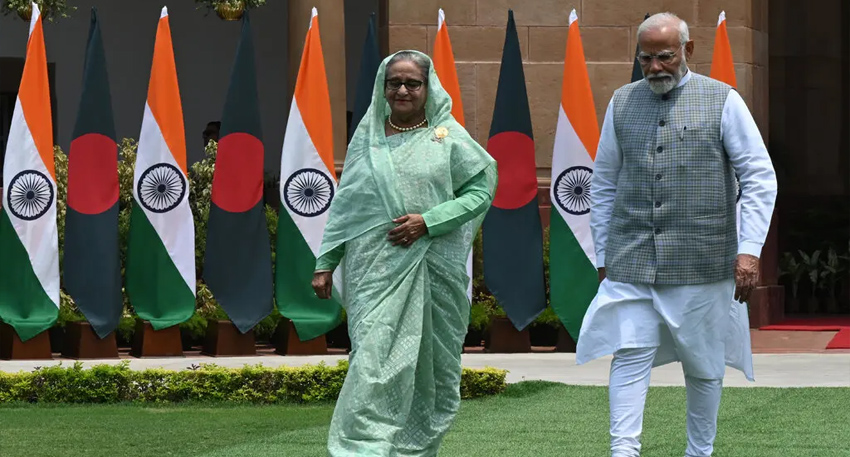
Relations between India and Bangladesh have entered a volatile phase as elections loom in both countries, with diplomatic, trade, and even sports ties deteriorating sharply, according to a report by The New York Times.
The crisis has been building for over a year but escalated rapidly following the 2024 overthrow of Sheikh Hasina, Bangladesh’s long-serving leader who enjoyed strong backing from New Delhi. After being ousted by mass protests, Hasina fled to India, triggering widespread anger in Bangladesh over India’s refusal to extradite her to face trial.
Diplomatic Fallout and Visa Suspensions
Tensions worsened as India protested hostile rhetoric from political factions in Dhaka and raised concerns over violence targeting Bangladesh’s Hindu minority. In response to mob attacks on its diplomatic mission, India suspended visa services in Chattogram. Bangladesh retaliated by halting visas for Indian nationals after its embassy in New Delhi faced protests by right-wing Hindu groups.
Sports Boycott Deepens the Rift
Political tensions spilled into sports after India’s cricket authorities blocked a Bangladeshi player from participating in the Indian Premier League (IPL). Bangladesh responded by refusing to send its team to India for the upcoming cricket World Cup, urging international cricket officials to shift matches to a neutral venue.
Also Read: Bangladesh court sentences former PM Sheikh Hasina Wajid to death
Elections Fuel Political Hostility
Diplomatic efforts to ease tensions are complicated by domestic politics, as hostility toward each other has become a rallying point in upcoming elections in both nations. In India, the issue has gained prominence in West Bengal and Assam, key border states heading to polls.
A senior leader of India’s ruling Bharatiya Janata Party (BJP) even marched on the Bangladeshi consulate in West Bengal, urging New Delhi to take punitive action against Dhaka.
Bangladesh’s Political Transition and Identity Crisis
Bangladesh’s interim administration, led by Muhammad Yunus, faces mounting challenges amid weak law enforcement and rising extremist activity. Yunus has sought to balance domestic political forces while maintaining working ties with India, but New Delhi has rejected his requests to return Sheikh Hasina or curb political activities by her allies sheltering in India.
Indian pro-government media have accused Yunus of sympathizing with extremist groups and failing to protect religious minorities—claims Bangladeshi leaders deny, arguing violence stems from broader lawlessness rather than targeted persecution.
Also Read: Pakistan, Bangladesh deepen defense ties as top military chiefs meet
Trade Ties and Historical Context
India has long held influence in Bangladesh, dating back to its role in the 1971 independence war. However, recent years saw growing resentment among Bangladeshi youth, who viewed India as an enabler of human rights abuses during Hasina’s 15-year rule, which included mass arrests, enforced disappearances, and a crackdown that reportedly killed around 1,400 people.
Economic relations have also suffered, with India discontinuing a transshipment agreement that allowed Bangladeshi goods to pass through Indian ports.
India Reassesses Its Bangladesh Strategy
Analysts say New Delhi is now cautiously engaging with opposition forces, particularly the Bangladesh Nationalist Party (BNP), which is expected to perform strongly in February’s elections. India’s Foreign Minister S. Jaishankar recently visited Dhaka to attend the funeral of former Prime Minister Khaleda Zia and met her son, Tarique Rahman, a potential future leader.
However, India faces uncertainty over the rise of Jamaat-e-Islami, an Islamist party gaining influence among younger voters. Experts warn that India must rethink its long-term Bangladesh policy amid shifting political dynamics and growing regional competition, including China’s expanding influence.
As elections approach, analysts believe both nations are quietly seeking ways to contain the fallout—yet political realities may delay any meaningful reset in India-Bangladesh relations.