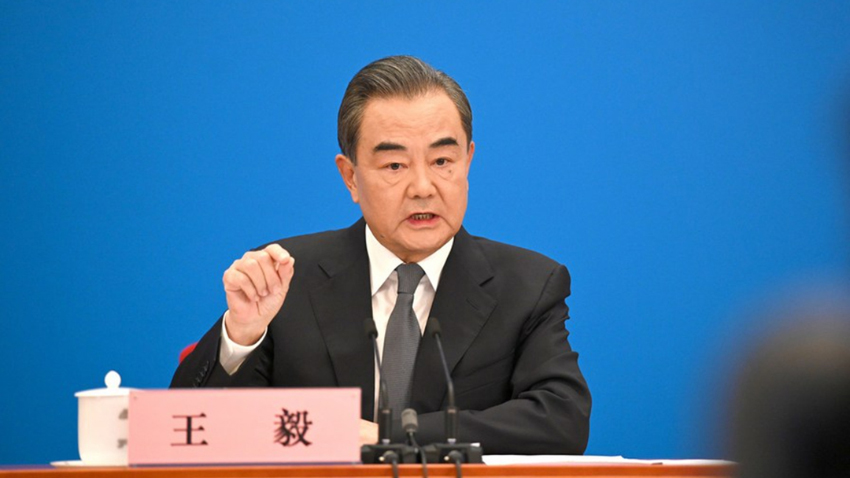
Chinese Foreign Minister Wang Yi spoke with Iran’s Foreign Minister Abbas Araghchi and urged all sides to use every opportunity for peace.
He stressed that disputes should be resolved through dialogue, not force. The call, held at Iran’s request, highlighted China’s strong push for immediate negotiations. In response, Araghchi said Iran wants a complete end to the conflict rather than a temporary ceasefire.
He also thanked China for its support and said ships can still pass through the Strait of Hormuz, except those from countries involved in the conflict. At the same time, diplomatic efforts increased worldwide. Egypt’s Foreign Minister Badr Abdelatty held talks with US envoy Steve Witkoff on possible negotiations.
He also contacted officials from Turkey, Pakistan, Oman, Saudi Arabia, the UAE, France, and Cyprus. Leaders believe diplomacy is the only way to prevent a wider regional crisis. Turkey’s President Recep Tayyip Erdogan also warned that Israel’s “uncompromising, maximalist, radical stance” could harm peace efforts.
In the United States, President Donald Trump said his administration is in contact with the “right people” in Iran and claimed Tehran wants a deal. However, Iran has strongly denied that any negotiations are taking place. Trump said officials, including JD Vance and Marco Rubio, are involved in talks and that Iran’s nuclear programme is a key issue.
He repeated that Iran “cannot have a nuclear weapon.”
Meanwhile, tensions on the ground remain high.
Must Read: Iran rejects Trump’s negotiation claims, vows no concessions
Iran has launched attacks on targets linked to US forces and disrupted activity in the Strait of Hormuz, a key global oil route. Fighting has also spread across several countries. In Bahrain, one civilian was killed, and several others were injured during an attack.
In Iraq, airstrikes killed at least 15 people, while another missile strike in Irbil left six dead and around 30 injured. Israel reported multiple missile attacks, causing injuries and damage in several areas. The conflict has also affected infrastructure, including data centers in Bahrain. Despite diplomatic efforts, Iran says it will continue fighting “until complete victory.”
At the same time, Iran has appointed Mohammad Bagher Zolghadr as its new national security council secretary. Reports also say Iran has tightened control over shipping in the Strait of Hormuz, introducing a special “pay-to-pass” route. As the conflict continues, the human cost is rising sharply. More than 1,500 people have been reported dead in Iran, over 1,000 in Lebanon, 16 in Israel, and 13 US military personnel.