

How far can Pakistan strike now? Army launches Fatah-3 supersonic cruise missile
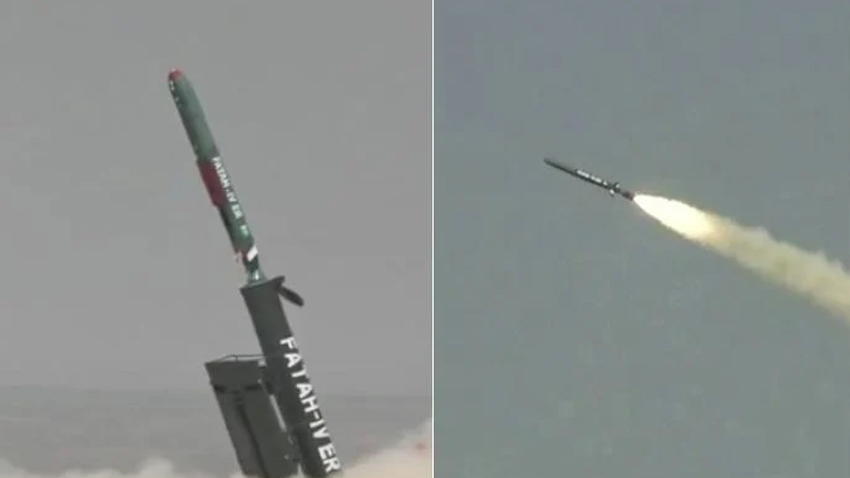
According to the military’s media wing, the launch took place on Wednesday. Inter-Services Public Relations (ISPR) stated, “The Pakistan Army successfully conducted the launch of the Fatah-3 supersonic cruise missile, marking another significant milestone in strengthening Pakistan’s national defence capabilities.”
Advanced Speed and Precision
The newly tested weapon brings modern guidance and speed to the battlefield. ISPR explained, “The weapon system is equipped with advanced navigation and propulsion systems and is capable of engaging targets at long range with high precision and lethality at supersonic speed.”
Military officials noted that this upgrade directly supports the army’s ground-based strike units. They added that the missile would “significantly enhance the operational flexibility and strike range of the Pakistan Army’s Rocket Force Command, further strengthening the country’s overall conventional deterrence and defence posture”.
Top Leadership Applauds the Team
Senior officials gathered at the test site to observe the missile’s flight firsthand. The Army Rocket Force Command commander, top armed forces officers, scientists, and engineers witnessed the launch.
President Asif Ali Zardari, Prime Minister Shehbaz Sharif, Chief of Defence Forces and Chief of the Army Staff Field Marshal Syed Asim Munir, and the services chiefs praised the team for the achievement. They commended the hard work and dedication of every expert involved in advancing Pakistan’s defence technology.
Interior Minister Hails Defence Progress
Interior Minister Mohsin Naqvi also extended warm congratulations to the nation over the successful test. According to the interior ministry, he remarked that the launch represented a “significant advancement in the defence sector”.
He emphasized how crucial such local developments are for national security. Naqvi added, “The successful test of the Fatah-3 supersonic cruise missile marks a major milestone in the country’s defence capabilities.”
A String of Recent Missile Milestones
This test follows a series of rapid breakthroughs by Pakistan’s armed forces in recent weeks. Earlier this month, the Pakistan Air Force successfully tested Fa’az, the country’s first locally built air-to-air missile, which ISPR called “another significant milestone in the advancement of national aerospace and defence capabilities”.
Back in October, the military also completed two separate missile launches within a single week. Teams tested the extended version of the Fatah-IV ground-launched cruise missile on Oct 6, followed by the Fatah-2 extended-range hypersonic ballistic missile on Oct 13.
Testing four different missiles in just over a month sends a clear message about Pakistan’s defence focus. Local scientists and engineers are working fast to build reliable, homegrown weapons across land and air. Supersonic cruise missiles like the Fatah-3 are tough for enemy air defences to stop because they fly low and fast. This steady pace of testing shows that Pakistan wants to keep its conventional military strength sharp and self-reliant.
Also read: NASA’s Voyager 1 probe crosses one light-day from Earth after 49 years


