

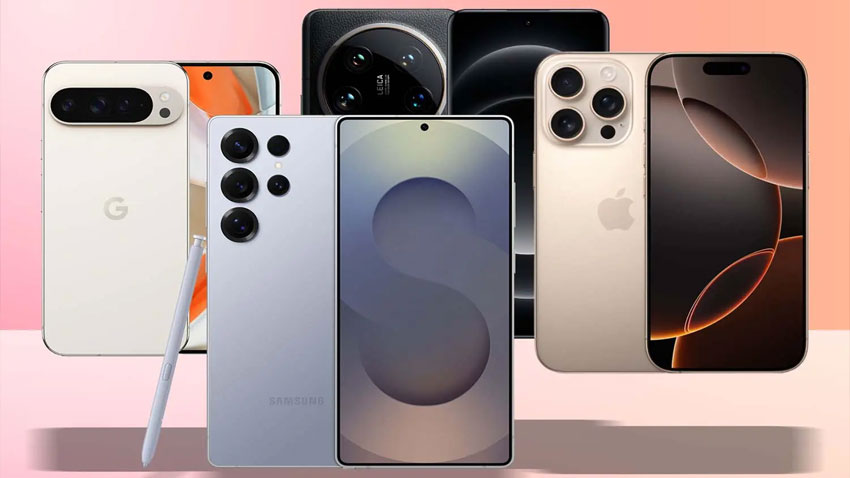
A Simple Guide to the Smartest Mobiles
AI now sits at the heart of nearly every modern smartphone. From writing messages to improving photos, these tools work quietly in the background and make daily tasks easier. Testing AI phones means checking how well these smart features blend into real use rather than scoring AI separately.
Below is a clear look at the top AI phones of 2025 and what makes each of them stand out.
Samsung Galaxy Z Flip7 – Small size, big AI push
The Z Flip7 folds into a tiny shape yet opens to a large 6.9-inch screen. Its Now Bar brings AI tools to the outer display so you can check quick updates without opening the phone. A dedicated Gemini button lets you start voice commands instantly.
Its folding design helps with hands-free AI camera tricks like outfit suggestions based on weather. The Now Brief feature needs improvement, but the Flip7 remains one of the most compact AI-focused phones.
Google Pixel 10 – AI that feels one step ahead
The Pixel 10 delivers deep, system-wide integration with Google Gemini. Magic Cue pops up the right information at the right moment, such as reservation details or flight times when someone asks.
It sometimes misses older info and lacks a few tools found in the Pixel 10 Pro, but at its price, it offers powerful AI skills in a simple and friendly form.
Samsung Galaxy Z Fold7 – A tablet-like AI experience
The Z Fold7 opens like a book and gives you a large internal screen that makes AI features easier to use. Gemini Live works in full view, real-time translation is smooth, and tools like Circle to Search, Drawing Assist and Audio Eraser feel natural on the bigger display.
It shares most AI features with the Flip7 but costs far more. The stronger camera and bigger battery, however, make it a complete powerhouse.
Samsung Galaxy S25+ – Big screen, smarter AI
The S25+ improves on the standard model with better battery life and a bigger display. AI tools include real-time call translation, instant summaries, strong photo editing and on-device processing for faster results.
Its suggestions could be more personal, but Samsung promises long software support, giving time for upgrades.
Apple iPhone Air – Slim design, strong Apple Intelligence
The iPhone Air packs the A19 Pro chip with neural accelerators that handle AI with laptop-like speed. Apple Intelligence helps screen calls, summarise text, translate conversations and recognise objects.
Siri still awaits its full AI upgrade, and some tasks rely on ChatGPT, but the phone’s slim build and smooth software give it a polished AI experience.
Google Pixel 10 Pro XL – Bigger screen, bigger AI power
The Pixel 10 Pro XL includes advanced tools like Veo 3 Fast text-to-video generation and deep Gemini Pro integration for Gmail and Docs. A one-year Google AI Pro subscription is included, but renewal costs extra.
Even without Pro-level tools, its camera quality and smooth software make it one of Google’s strongest AI phones yet.
Samsung Galaxy S25 Ultra – AI with the S Pen advantage
The S25 Ultra blends powerful hardware with AI in nearly every function. The S Pen adds unique benefits, letting you draw circles for search, edit photos naturally, and convert handwriting into clean text.
Now Brief needs refining, but the Ultra sets a high bar for how AI should feel inside a premium phone.
Apple iPhone 17 Pro Max – The most complete AI phone
Apple combines top-tier design with iOS 26’s clear and playful AI. Image Playground creates visuals instantly, Genmoji adds fun character designs, and the phone’s powerful processor handles AI with ease.
Read more: Samsung launches new Galaxy Z Trifold
The interface looks like liquid glass, which can sometimes be confusing, and the new Siri is still missing. But with the best cameras and refined software, the 17 Pro Max sits confidently at the top.
These phones show how fast AI is improving. Many tools now work in the background and quietly help with tasks. Some brands offer fun AI, others focus on serious features. Each phone has its strengths, and updates will keep making them better. For most people, choosing the right AI phone depends on design, camera needs and how much help they want from smart features.