

Google tests future of space-based AI with four powerful chips in orbit
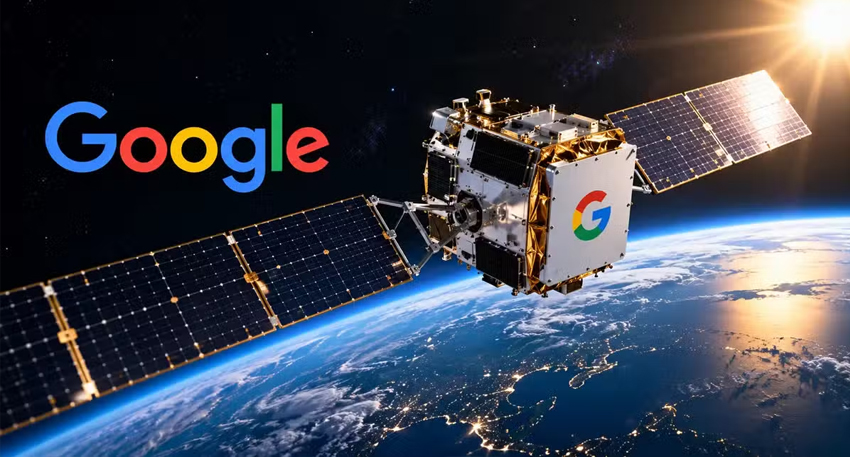
Google’s AI satellite reaches orbit
The refrigerator-sized spacecraft is part of Google Project Suncatcher, a research project exploring the possibility of building AI data centers in orbit.
The Google AI satellite was developed with Planet and launched aboard a SpaceX rocket. It carries four Tensor Processing Units, or TPUs, which are special chips designed to run AI tasks.
The satellite will test Google Gemma AI in short sessions of around 15 minutes. The limited operating time is linked to the challenge of controlling heat in space.
Why does Google want data centers in space?
Google’s bigger goal is to explore whether groups of satellites could one day work together as space data centers.
These future satellites could use solar energy to power AI computing. They may also communicate with each other and Earth through laser links.
Google Project Suncatcher is still at an early research stage. The company wants to understand how its chips respond to the conditions of space before developing a larger system.
The current Google AI satellite is a test model, not a fully working orbital data centre. Its four Tensor Processing Units will help researchers study how AI hardware performs outside Earth.
Major challenges remain
One of the biggest problems is heat. On Earth, data centers use air and water systems to cool their equipment. These methods do not work in the same way in the vacuum of space.
Google is testing pipes and radiators to move heat away from the chips. The 15-minute operating limit shows how difficult it may be to keep powerful hardware cool.
Read Also: Bill Gates warns AI could become a deadly threat
The satellite is also testing how Tensor Processing Units handle radiation, extreme temperatures and the physical stress of a rocket launch.
Google Gemma AI will be used to check whether AI models can operate under these conditions. However, repairs would be much harder than they are at a data center on Earth.
Launching and maintaining equipment in orbit is also expensive. Google has said space data centers are unlikely to become cheaper than Earth-based facilities within the next five years.
What happens next?
Google plans to launch two more satellites in 2027 to test communication through laser links. These tests could help researchers understand how multiple spacecraft might work together.
Other companies are exploring similar ideas. Starcloud has previously sent an Nvidia H100 chip into orbit, while SpaceX has discussed plans for AI computing satellites.
The future of space data centers will depend on whether companies can solve the problems of heat, cost and maintenance.


