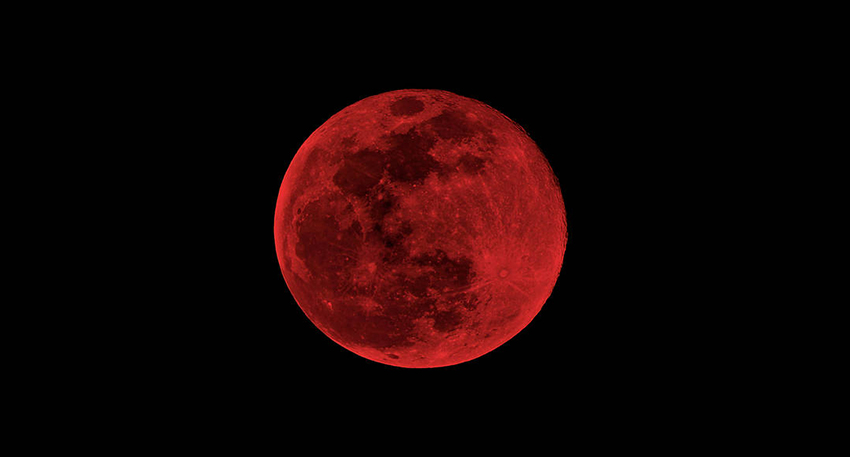
The first total lunar eclipse of 2026, commonly known as the Blood Moon, will occur on March 3. According to the Pakistan Meteorological Department (PMD), the celestial event will be partially visible in Pakistan, with the peak occurring at 4:34 PM Pakistan Standard Time (PST).
Astronomers explain that a total lunar eclipse happens when the Earth moves directly between the Sun and the Moon, casting its shadow on the lunar surface and turning it a deep reddish color.
Lunar Eclipse 2026 Timings in Pakistan (PST)
As per PMD officials, the eclipse will follow this schedule:
- 1:44 PM – Eclipse begins
- 2:50 PM – Partial eclipse starts
- 4:05 PM – Total lunar eclipse begins
- 4:34 PM – Peak of eclipse
- 5:03 PM – Total phase ends
- 7:23 PM – Eclipse concludes
However, due to daylight hours in Pakistan, only partial visibility will be possible in different cities. Some reports suggest limited or no clear visibility because the peak occurs before sunset in several areas.
Why Is It Called a Blood Moon?
The dramatic red color during a total lunar eclipse is caused by Rayleigh scattering, the same phenomenon responsible for red sunsets.
As Earth blocks direct sunlight, some light passes through Earth’s atmosphere. Shorter blue wavelengths scatter away, while longer red wavelengths bend toward the Moon, giving it a crimson glow.
Experts stress that the Blood Moon is a natural astronomical event, not linked to any supernatural or dangerous occurrence.
Also Read: Total lunar eclipse to be visible in Pakistan on March 3
Global Visibility of March 3 Blood Moon
While Pakistan will experience partial visibility, clearer views are expected in:
- Central and North America
- Northeast Asia
- Australia
- Central Pacific regions
- Parts of South America
- Eastern Europe
In some regions, this will be the only total lunar eclipse of 2026, making it a rare astronomical highlight. The next comparable major eclipse is expected around New Year’s Eve 2028.
Scientific and Educational Significance
Lunar eclipses provide valuable opportunities for:
- Astronomical observation
- Public skywatching events
- Academic and space science research
Unlike solar eclipses, no special eye protection is required to observe a lunar eclipse. Experts recommend watching from open areas and using binoculars or telescopes for better clarity.
For those unable to see it directly, live streams and online broadcasts by global space agencies will offer real-time coverage.