The Pakistan Meteorological Department (PMD) has confirmed that the first solar eclipse of the year is taking place today, though it will not be visible in Pakistan. The celestial event will instead be observed across parts of Africa and South America, with partial visibility over major oceans.
Where Will the Solar Eclipse Be Visible?
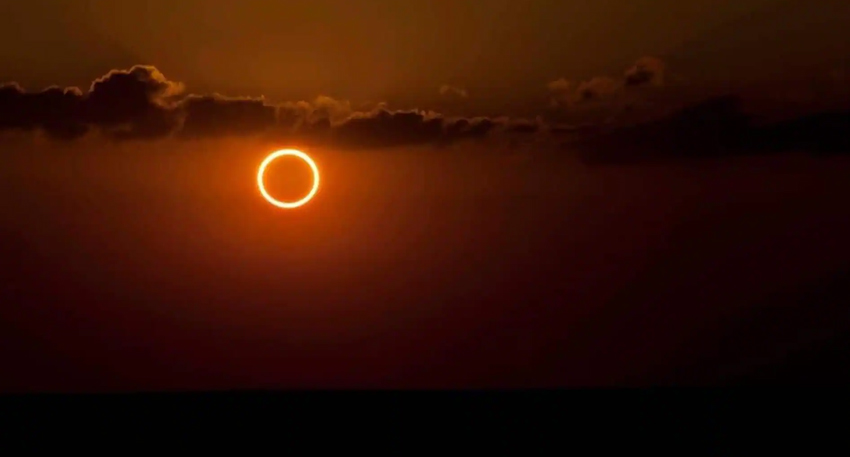
According to PMD officials, the partial solar eclipse will be visible over the Atlantic Ocean, Pacific Ocean, and Indian Ocean. Meanwhile, the dramatic “Ring of Fire” annular eclipse—where the Moon covers the Sun’s center leaving a bright ring—will be visible only from parts of Antarctica.
The Pakistan Meteorological Department (PMD) has confirmed that the first solar eclipse of the year is taking place today, though it will not be visible in Pakistan. The celestial event will instead be observed across parts of Africa and South America, with partial visibility over major oceans.
Where Will the Solar Eclipse Be Visible?
According to PMD officials, the partial solar eclipse will be visible over the Atlantic Ocean, Pacific Ocean, and Indian Ocean. Meanwhile, the dramatic “Ring of Fire” annular eclipse—where the Moon covers the Sun’s center leaving a bright ring—will be visible only from parts of Antarctica.
Also Read: Rain, thunderstorms likely in parts of Punjab, KP, Balochistan
Eclipse Timings (Pakistan Standard Time)
The meteorological department shared the following timeline for today’s solar eclipse:
- Start: 2:56 PM PST
- Peak: 5:12 PM PST
- End: 7:28 PM PST
Despite the timing aligning with evening hours in Pakistan, no phase of the eclipse will be visible locally.
More Eclipses Expected This Year
Astronomers note that 2026 will feature four major eclipse events, including two solar eclipses and two lunar eclipses, offering multiple viewing opportunities worldwide later in the year.
How to Watch from Pakistan
Since the annular phase will be visible to only a small population globally, eclipse enthusiasts in Pakistan are encouraged to watch live broadcasts or online streams provided by international observatories and space agencies.
Experts advise against viewing solar eclipses directly without certified protective equipment, even during partial phases visible elsewhere.