

Wheat crisis deepens as Punjab, Sindh reject imported stocks
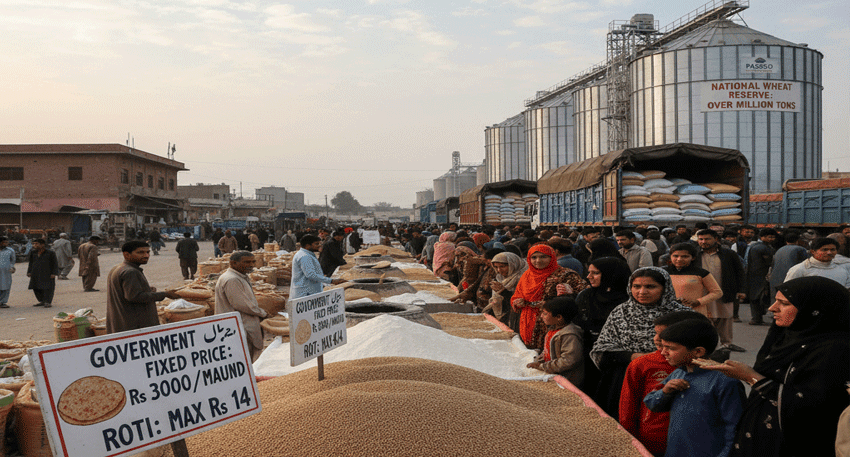
Provinces change their position
Pakistan’s federal government is facing a fresh challenge over its plan to import one million metric tonnes of wheat. Punjab and Sindh, two major wheat-consuming provinces, have now shown reluctance to purchase the imported commodity.
Government officials said the provinces had earlier discussed their requirements but later indicated that they preferred wheat from federal reserves instead. The change has created uncertainty about how the government will arrange enough supplies for the domestic market.
The federal government had planned the import to control rising wheat prices and maintain sufficient strategic stocks. However, officials now have to decide whether the Centre should finance the imports itself or reconsider the plan.
A senior government official said the provinces had again been asked to clearly state their wheat requirements. The government wants firm commitments before moving ahead with the import programme.
The issue has become more important because federal wheat stocks are also limited. Officials believe additional wheat may still be required to protect supplies and prevent further price increases.
Punjab reduces its wheat demand
Punjab had initially committed to purchasing around 1 million tonnes of imported wheat but later reduced its requirement to 800,000 tonnes. During a recent meeting, however, a provincial representative said Punjab did not currently require imported wheat.
Punjab said it was in a relatively comfortable position after receiving 800,000 tonnes from federal stocks. Around 533,000 tonnes of this allocation was reportedly still available at Pakistan Agriculture Storage and Services Corporation facilities.
The province has also procured around 500,000 tonnes directly from farmers. This figure remains significantly below its earlier procurement target of 3 million tonnes.
The changing position has raised concerns within the federal government because Punjab is the country’s largest wheat-producing and consuming province. Any major shortage there could quickly affect flour prices across the country.
The situation is also being closely watched by other provinces. Khyber-Pakhtunkhwa, for example, has maintained its demand for 200,000 tonnes of imported wheat along with another 200,000 tonnes of locally sourced wheat.
Sindh also refuses imported wheat
Sindh has also shown reluctance to purchase imported wheat despite previously seeking a substantial allocation. The province had earlier demanded 720,000 tonnes, including 500,000 tonnes from imports.
During a steering committee meeting, Sindh representatives reportedly maintained that they did not need imported wheat at this stage. The position has added further pressure on the federal government to clarify who will finance and manage the planned imports.
The federal government has already decided to import one million tonnes. Deputy Prime Minister Ishaq Dar’s office said the committee had reaffirmed the decision to meet domestic requirements, reduce price pressure and provide relief to consumers.
However, the provinces’ latest positions have complicated the implementation process. The government now needs clear provincial commitments before finalising the financial and operational arrangements.
Flour prices remain a major concern
The wheat dispute comes as consumers continue to face higher flour prices. According to the Pakistan Bureau of Statistics data cited in the report, the average price of wheat flour reached Rs132.5 per kilogram, compared with Rs75 a year earlier.
That represents an increase of around 77.5 percent. The sharp rise has increased concerns about the impact of wheat shortages and procurement problems on household budgets.
Officials have linked the current pressure partly to lower provincial procurement. The failure to purchase sufficient wheat locally has contributed to tighter supplies and increased market prices.
The government therefore faces a difficult balance. It must ensure enough wheat is available while also avoiding unnecessary financial pressure on the federal budget.
Also Read: New provinces under serious consideration as 28th Amendment looms
Federal stocks may not be enough
The federal government has already allocated around one million tonnes of PASSCO wheat stocks among the provinces. Punjab is expected to receive the largest share, followed by Sindh, Khyber-Pakhtunkhwa and Balochistan.
Officials say these stocks alone may not be sufficient to maintain strategic reserves. Even if some provinces do not purchase imported wheat directly, the federal government may still proceed with imports to strengthen national reserves.
Wheat is a politically sensitive commodity because changes in its price directly affect flour and bread costs. Any prolonged shortage could therefore create wider economic and public pressure.
The government must also ensure that wheat reaches deficit areas on time. Delays in procurement, transportation or distribution could create additional pressure on local markets.
Tripartite agreement remains pending
The Ministry of National Food Security has prepared a draft tripartite agreement involving the federal food ministry, provincial governments and the Trading Corporation of Pakistan.
The agreement sets out responsibilities for procurement, financing, logistics and payment arrangements. Provincial governments would be required to provide written commitments for their allocated quantities and maintain adequate payment security.
The Trading Corporation of Pakistan would act mainly as the importing agency. Under the proposed arrangement, it would not carry the financial burden of the programme.
The federal food ministry would serve as the coordinating body rather than taking contractual or financial responsibility for the imports. The agreement would become effective only after all parties complete the required approvals.
The government is also considering whether taxes and duties linked to wheat imports should be waived. A final decision on the matter remains pending.


