

Two Pakistan Army pilots martyred as training aircraft crashes in Quetta: ISPR
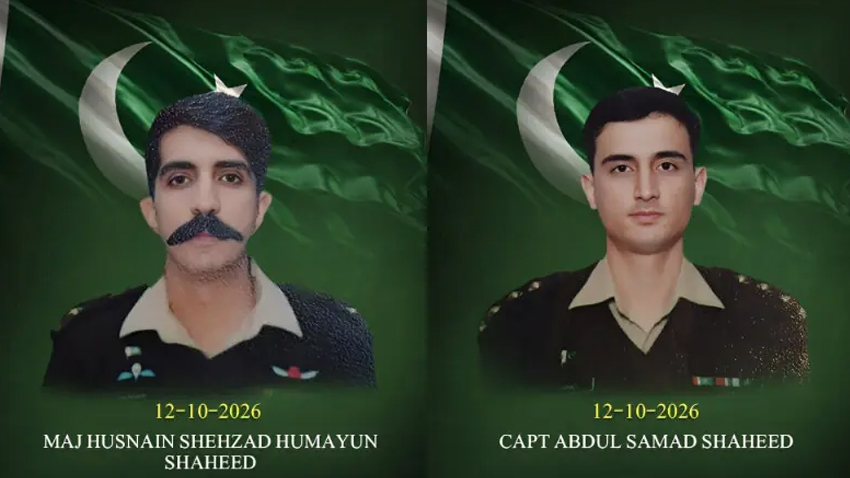
Two Pakistan Army Aviation pilots lost their lives when a Mushshak training aircraft crashed near Nawan Killi in Quetta on Monday.
The Inter-Services Public Relations (ISPR) said the accident occurred around midday on October 12, 2026, after the aircraft developed a technical fault during flight. The pilots were identified as Major Husnain Shehzad Humayun and Captain Abdul Samad.
Major Humayun was an instructor pilot, while Captain Abdul Samad was a student pilot undergoing training. Both officers embraced martyrdom in the crash, according to the ISPR statement.
ISPR confirms technical fault
The military’s media wing said the Mushshak training aircraft belonged to Pakistan Army Aviation and crashed near Nawan Killi after developing a technical fault.
The initial statement did not specify which part of the aircraft malfunctioned or what caused the problem.
Further official details would be needed to establish the precise nature of the technical fault and the circumstances leading to the crash.
President Zardari expresses grief over pilots’ deaths
President Asif Ali Zardari expressed deep sorrow over the deaths of the two pilots and extended his condolences to their bereaved families.
He prayed for the elevation of the martyrs’ ranks and for strength and patience for their loved ones as they cope with the loss.
Prime Minister Shehbaz Sharif offers condolences
Prime Minister Shehbaz Sharif also expressed grief over the martyrdom of Major Humayun and Captain Abdul Samad.
He extended his condolences to the bereaved families and prayed for the elevation of the officers’ ranks.
The president’s and prime minister’s messages followed the deaths of the two officers during the training flight.
Interior Minister Mohsin Naqvi pays tribute
Interior Minister Mohsin Naqvi also expressed sorrow over the deaths of the two pilots.
“In this hour of sorrow, we stand with the martyrs’ bereaved families,” Naqvi was quoted as saying in a statement.
Also Read: FIA launches helpline to guide passengers on travel documents
The deaths have brought grief to the officers’ families and colleagues, while the precise circumstances of the aircraft’s technical fault remain unclear.
Previous military aircraft crashes in Pakistan
The latest crash follows other fatal military aviation accidents reported in Pakistan.
In June 2026, a Pakistan Army Aviation Mi-17 helicopter crashed near Muzaffarabad during take-off after reportedly developing a technical fault. All personnel on board were reported killed. The military said an inquiry had been ordered to determine the exact cause of the accident.
Later that month, a Pakistan Air Force trainer aircraft crashed near Mardan during a routine training sortie. Both pilots on board were martyred. They were identified as Flight Lieutenant Muhammad Qasim Abdullah of the Pakistan Air Force and Lieutenant Taha Abbasi of the Pakistan Navy.
In September 2025, an Army Aviation Mi-17 helicopter crashed near Hudor village in the Chilas area of Diamer district, Gilgit-Baltistan. All five crew members were martyred after the aircraft reportedly developed a technical fault during a routine training flight.
These incidents involved different aircraft and circumstances. The available information does not establish a common cause linking the crashes.
Aviation safety remains important
The Quetta incident highlights the importance of aircraft maintenance and safety procedures during military training flights.
Training missions help pilots develop and maintain the skills needed for their duties. However, a technical fault during flight can have serious consequences. In the latest incident, the ISPR attributed the crash to a technical fault but did not provide details about the malfunction.
Further official information may clarify what happened before the aircraft went down and whether any additional safety measures are needed. Until those details are released, conclusions about the precise cause should remain limited to the information confirmed by the authorities.


