The well that bought paradise: The inspiring story of Hazrat Usman Ghani (RA) and Bir Rumah
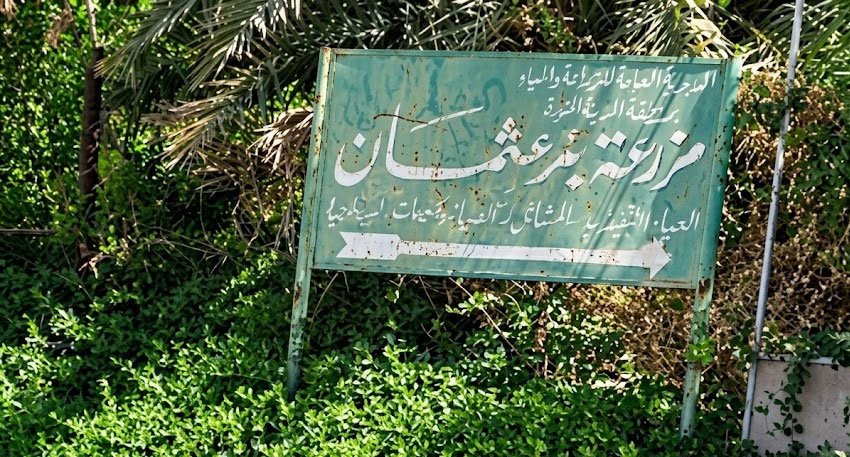
The sun blazed over Madinah, turning the desert landscape into a sea of shimmering heat. Day after day, the people of the young Islamic city faced a challenge that touched every home and every family — the shortage of water.
The Muhajireen, who had migrated from Makkah for the sake of Islam, had left behind their homes, businesses and possessions. Although the Ansar welcomed them with open hearts, resources remained limited. As the population of Madinah grew, access to clean drinking water became one of the community's greatest concerns.
Among the wells scattered around the city, one stood out above all others. It was known as Bir Rumah. Its water was sweet, fresh and far better than that of the surrounding wells. Travelers sought it, families depended on it, and anyone who tasted its water preferred it over all others.
However, there was a problem.
The well belonged to a wealthy Jewish owner who sold the water for profit. Every bucket came with a price. For wealthy people, this was manageable, but for many poor Muslims it became a heavy burden. Families often had to choose between spending their limited money on food or water.
Children sometimes went to sleep thirsty. Mothers carefully rationed every drop they collected. Elderly people struggled under the scorching sun to secure enough water for their daily needs.
The hardship eventually reached the attention of the Prophet Muhammad ﷺ.
One day, while sitting among his companions in Masjid al-Nabawi, the Prophet ﷺ spoke words that would echo throughout history:
"Who will buy the Well of Rumah and make it available for the Muslims, and Allah will reward him with a spring in Paradise?"
The companions listened attentively. Every one of them desired the reward mentioned by the Prophet ﷺ. Yet purchasing the well required a substantial amount of wealth, something beyond the means of most people.
Among those present was Hazrat Usman ibn Affan (RA).
Hazrat Usman (RA) was already known for his remarkable generosity. He was one of the wealthiest merchants in Arabia, but his wealth never controlled his heart. Whenever Islam needed support, he responded without hesitation.
The words of the Prophet ﷺ deeply touched him.
That night, while the city rested beneath the stars, Hazrat Usman (RA) thought about the suffering of the people and the reward promised by Allah. By morning, his decision had been made.
He went directly to the owner of Bir Rumah and offered to purchase the well.
The owner immediately refused.
The well was his most profitable asset, and selling it entirely would mean losing a steady source of income.
Hazrat Usman (RA) remained calm.
Instead of insisting on buying the entire well, he proposed a unique solution.
"What if you sell me half of it?" he suggested.
The owner was surprised.
Hazrat Usman (RA) explained that the ownership would alternate. One day the well would belong to the owner, and the next day it would belong to him.
Seeing no apparent risk, the owner agreed and sold half of the well for a substantial sum.
The arrangement began immediately.
Whenever it was Hazrat Usman's day, he announced that anyone could take as much water as they wished free of charge.
The people of Madinah were overjoyed.
Families came with large containers, water skins and storage vessels. They collected enough water not only for that day but for several days ahead. Poor families who had struggled for months finally had easy access to clean water.
As a result, when the owner's day arrived, very few people needed to buy water.
His business quickly declined.
Within a short period, he realised that maintaining half ownership no longer benefited him. Eventually, he approached Hazrat Usman (RA) and offered to sell the remaining share.
Hazrat Usman (RA) gladly accepted.
The entire well now belonged to him.
But instead of keeping it as a private asset, he immediately dedicated it to the Muslims as a charitable endowment.
From that day forward, no one had to pay for water from Bir Rumah.
Rich and poor stood side by side.
The Muhajir and the Ansari drank from the same source.
Travelers, widows, children and labourers all benefited equally.
The people of Madinah prayed for Hazrat Usman (RA), asking Allah to reward him abundantly for his generosity.
Yet this was only one example of his remarkable character.
Years later, during the expedition of Tabuk, when the Muslim army faced severe financial difficulties, Hazrat Usman (RA) donated hundreds of camels, horses and vast amounts of wealth to support the cause of Islam.
His generosity became legendary among the companions.
The story of Bir Rumah, however, remains one of his most beautiful acts because it addressed a basic human need: water.
Today, more than fourteen centuries later, the story continues to inspire Muslims around the world. It reminds us that true success is not measured by how much wealth a person accumulates, but by how much benefit they bring to others.
What began as a single well in the desert became a lasting symbol of faith, compassion and selfless generosity.
And through that noble act, Hazrat Usman Ghani (RA) earned a place in history as one of Islam's greatest benefactors, a man who used his wealth not for personal glory, but to serve humanity and seek the pleasure of Allah.