

Sindh food safety concerns grow over flour, cooking oil and ghee quality
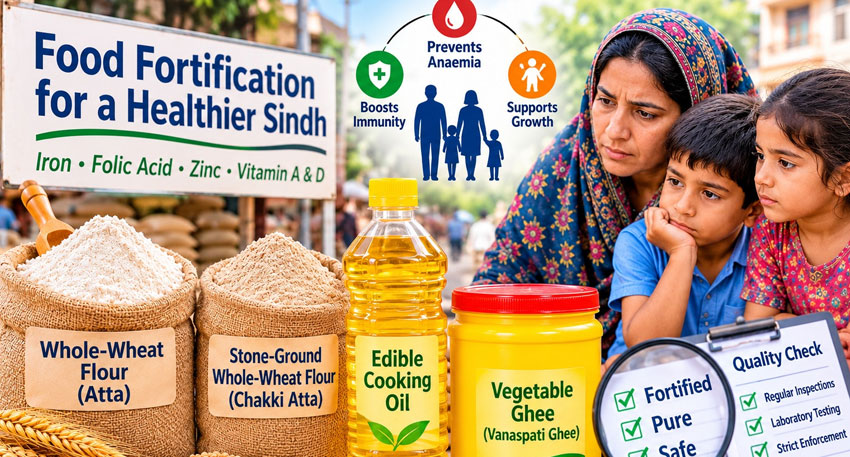
Questions over food fortification and quality monitoring in Sindh are raising public health concerns, as millions of families depend on flour, cooking oil and vegetable ghee for their daily meals.
Despite existing food safety laws, concerns remain about proper implementation, regular inspections and laboratory testing to ensure that essential food products meet nutritional and quality standards.
Weak food fortification raises health concerns
Wheat flour is an important source of daily nutrition for Pakistani households. Its fortification with iron, folic acid, zinc and vitamin B12 can help prevent nutritional deficiencies and improve public health.
Iron deficiency can cause anaemia, weakness and tiredness, while a lack of folic acid during pregnancy can increase the risk of birth defects. Zinc deficiency can also affect immunity, growth and child development.
However, simply buying flour does not guarantee that consumers receive these nutritional benefits. Proper fortification, quality control and regular laboratory testing are necessary to ensure compliance with prescribed standards.
Cooking oil and ghee quality also under scrutiny
Edible cooking oil and vegetable ghee are also widely consumed across Sindh. Their fortification with vitamins A and D helps protect against deficiencies that can affect eyesight, immunity, bone health and normal growth.
Poor-quality ingredients, adulteration and failure to meet fortification requirements can put consumers at risk.
The Sindh Food Fortification Act 2021 makes the addition of essential micronutrients to wheat flour, edible oil and ghee mandatory. However, effective implementation and monitoring remain crucial.
Authorities urged to strengthen inspections
There are calls for more frequent market inspections, independent laboratory testing and strict action against manufacturers violating food safety standards.
Authorities should also make inspection findings public and help consumers identify properly fortified products.
Low-income families are particularly vulnerable because they rely heavily on affordable staple foods and have limited ways to check their nutritional quality.
Strong enforcement and transparent monitoring are essential to protect public health and ensure safe food for everyone.


