
Rs40bn allocated for Punjab electric bus charging network
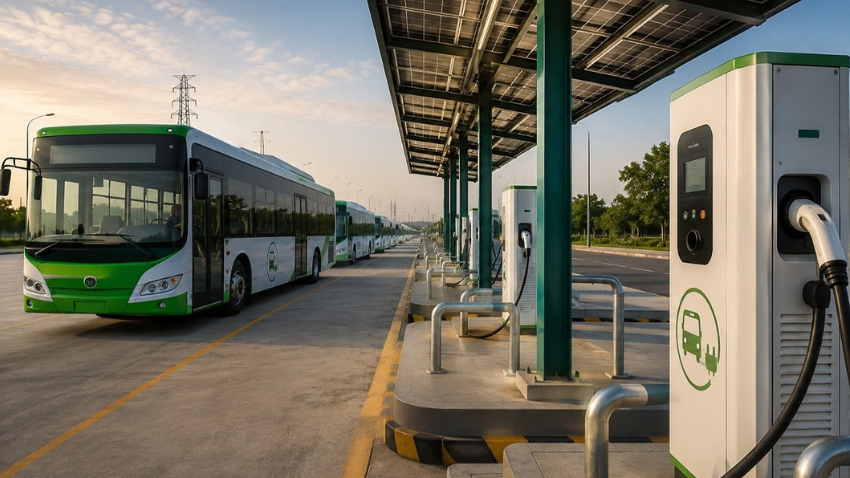
The Punjab government has allocated Rs40 billion in the current fiscal year to develop charging infrastructure for its growing fleet of electric buses. The investment is aimed at supporting the province’s plan to expand environmentally friendly public transport to more districts.
Punjab Transport Minister Bilal Akbar Khan said the charging infrastructure will be developed in phases. Until the dedicated charging network is completed, newly inducted electric buses will be charged using electricity supplied by WAPDA.
The minister said the government has decided to expand electric bus services beyond major cities and introduce them in smaller districts to provide better transport facilities across Punjab.
During the first phase, electric buses will begin operating on 13 routes in Khanewal, Khushab, Bhakkar, Attock, Mandi Bahauddin, and Hafizabad. Khushab will receive 15 buses, while Khanewal, Bhakkar, Attock, Mandi Bahauddin, and Hafizabad will each receive nine buses.
The government has also announced plans to introduce electric buses in 14 more districts by the end of July. Chiniot, Layyah, Okara, and Sialkot will each receive 10 buses, while Gujranwala and Multan will each receive 12 buses.
Also Read: Pakistan adds 3 major airports to privatization plan
Murree, Gujrat, Sheikhupura, Vehari, Kasur, Lodhran, Nankana Sahib, and Narowal will each receive 11 electric buses under the same expansion programme.
According to official sources, another 488 electric buses are expected to arrive in Pakistan by the end of August 2026. These buses will gradually be deployed across different districts to further strengthen Punjab’s public transport network.
At present, around 400 electric buses are operating across 18 districts of Punjab. The provincial government plans to increase the fleet to 1,900 buses in 2026.
However, official data shows that Punjab currently has charging facilities for only 41 electric buses. This makes the timely development of charging infrastructure one of the biggest challenges to the successful expansion of the province’s electric bus network.