
Petrol price cut in Pakistan: how much you can save
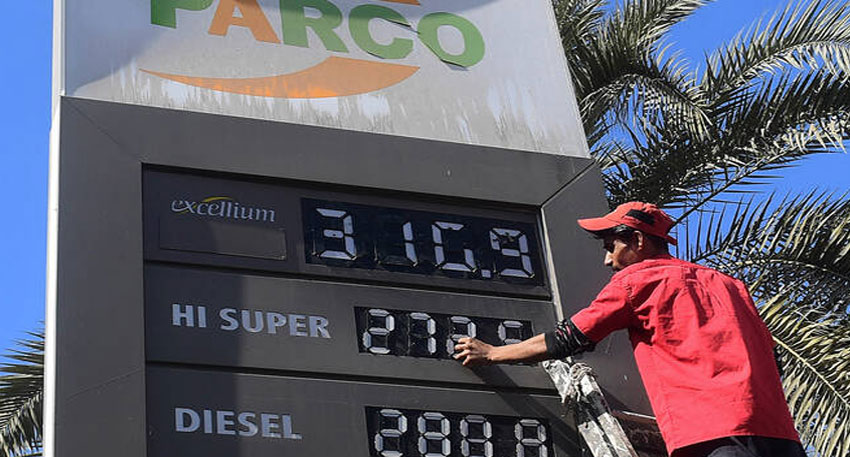
The federal government has announced a major reduction in petroleum prices, providing long-awaited relief to millions of motorists and transport operators across Pakistan.
Under the revised rates, petrol prices have been reduced by Rs 74 per litre, bringing the new price down to Rs 299 per litre from Rs 373 per litre. High-speed diesel has also been cut by Rs 67 per litre, falling from Rs 378 per litre to Rs 311 per litre.
The move is expected to reduce transportation costs and ease financial pressure on households already struggling with rising living expenses.
New fuel prices in Pakistan
Fuel type Previous price Reduction New price
Petrol Rs 373/litre Rs 74/litre Rs 299/litre
Diesel Rs 378/litre Rs 67/litre Rs 311/litre
Motorcycle owners to benefit the most
Motorcycles remain Pakistan's most widely used mode of transport, meaning the fuel price cut will provide immediate relief to students, office workers, delivery riders and small business owners.
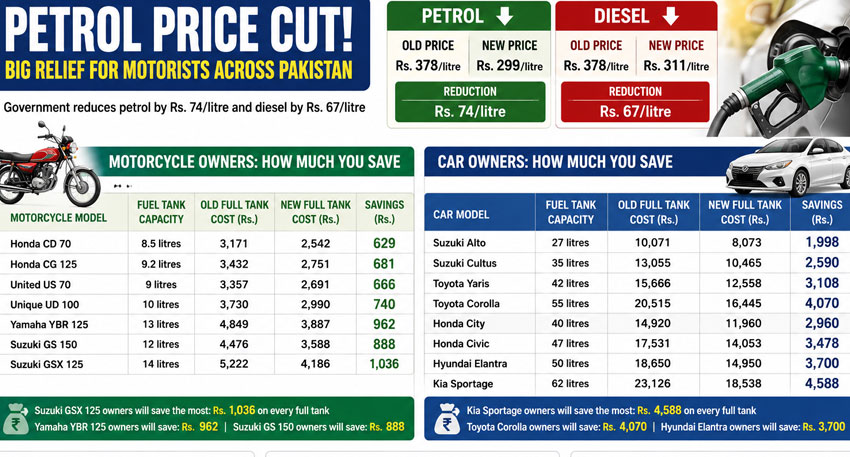
The savings on a full tank vary depending on fuel tank capacity.
Honda CD 70 owners will save around Rs 629 per tank.
Honda CG 125 owners will save approximately Rs 681.
Yamaha YBR 125 users will save nearly Rs 962.
Suzuki GSX 125 owners will see the biggest reduction, saving about Rs 1036 per full tank.
Car owners can save more than Rs 4500
Because cars have larger fuel tanks, the savings are even more significant.
Suzuki Alto owners can save around Rs 1998 per full tank.
Honda City drivers can save about Rs 2960.
Toyota Corolla owners will save approximately Rs 4070.
Kia Sportage owners stand to benefit the most, saving nearly Rs 4588 every time they fill their tank.
The savings are calculated using a simple formula:
Fuel tank capacity × Rs 74 = Total savings per full tank
For example, a Toyota Corolla with a 55-litre fuel tank saves:
55 × 74 = Rs 4070
Wider impact on transport and inflation
The fuel price reduction is expected to benefit not only private vehicle owners but also ride-hailing drivers, delivery services and transport companies.
Industry experts believe lower fuel costs could eventually lead to reduced public transport fares and lower logistics expenses, potentially helping ease inflationary pressures and reducing the cost of goods in the coming weeks.
However, the full impact will depend on how quickly transporters and businesses pass on the savings to consumers.