

Pakistan Navy seizes $96m narcotics in two Arabian Sea operations: ISPR
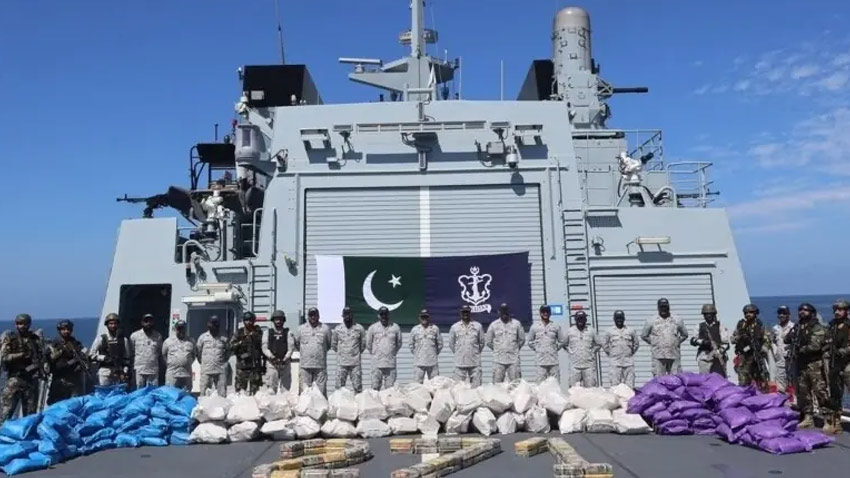
Pakistan Navy makes major narcotics seizure
Pakistan Navy Ship Yarmook has seized a large quantity of narcotics during two separate counter-narcotics operations in the Arabian Sea, according to the Inter-Services Public Relations (ISPR).
The operations were carried out at considerable distances from the Pakistani coast while the naval ship was deployed in the Arabian Sea. The latest seizure highlights the role of maritime forces in monitoring sea routes and preventing the movement of illegal drugs through the region.
Two dhows intercepted during operations
During the operations, Pakistan Navy personnel intercepted two dhows and carried out detailed searches of the vessels. The searches led to the recovery of approximately 850kg of ice and 2,000kg of hashish.
According to ISPR, the drugs were hidden inside concealed compartments in the vessels. The discovery of the concealed narcotics allowed the Navy to take the illegal cargo into custody before it could be moved further through maritime routes.
Narcotics valued at around $96 million
The seized drugs have been estimated to be worth approximately $96 million. The large valuation makes the seizure a significant counter-narcotics operation for the Pakistan Navy.
The narcotics have been taken into custody and will subsequently be handed over to the relevant authorities. The concerned authorities will deal with the seized drugs under applicable legal procedures, including disposal and further investigation.
Operations carried out far from Pakistani coast
ISPR said the operations were conducted at extended distances from the Pakistani coastline. This shows that the Navy’s counter-narcotics activities are not limited to waters close to the country’s shores.
Naval vessels operating in the Arabian Sea can play an important role in identifying and stopping suspicious maritime activity. The operations involving Yarmook also underline the importance of maintaining surveillance over busy sea routes that could potentially be exploited for illegal trafficking.
Navy highlights maritime security role
According to ISPR, the successful operations demonstrated the Pakistan Navy’s sustained presence and vigilance in the region. The Navy has continued to take part in efforts aimed at preventing illicit activities at sea.
Also Read: Police arrest eight suspects over alleged plan to disrupt peace in Kotli
Drug trafficking through maritime routes remains a major security concern because illegal cargo can be concealed inside commercial or smaller vessels and transported over long distances. The recovery of narcotics from concealed compartments shows the importance of detailed searches and continued monitoring of vessels operating in the Arabian Sea.
Seized drugs to be handed over to authorities
The seized narcotics will be transferred to the relevant authorities for further legal action. The handover will allow the concerned agencies to proceed with investigations and other legal requirements linked to the seizure.
Authorities can also examine the seized cargo and available evidence to determine its origin, intended destination and possible links to wider trafficking networks. No further details about the suspected owners or operators of the dhows were provided in the statement.
Pakistan Navy stresses commitment to regional security
ISPR said the operations reflected the Pakistan Navy’s continued commitment to regional maritime security. The Navy’s role includes monitoring activities at sea and supporting efforts against illicit trafficking.
Such operations can also contribute to wider regional efforts to prevent illegal drugs from reaching markets through maritime routes. The latest seizure therefore has significance beyond the quantity of drugs recovered, as it also highlights the continuing security challenges faced in the Arabian Sea.
Why the seizure matters
The recovery of 850kg of ice and 2,000kg of hashish represents a substantial quantity of illegal drugs. The operation also shows how narcotics traffickers can attempt to use concealed compartments inside vessels to move drugs by sea.
Regular patrols, vessel inspections and intelligence-based operations can help detect such activity. Cooperation between naval forces and civilian law enforcement agencies is also important after drugs are seized, particularly for investigation and prosecution.


