

Goods transporters’ strike disrupts cargo and essential supplies
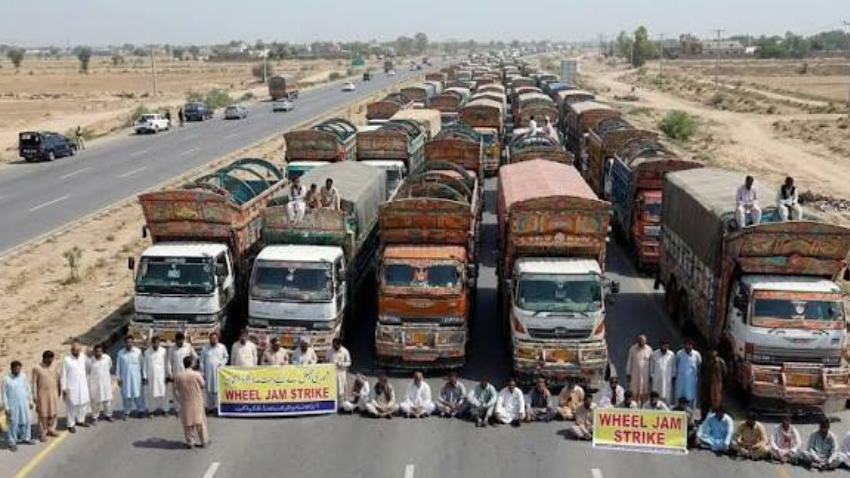
The wheel-jam strike has raised concerns about further pressure on Pakistan’s supply chain if the dispute between transporters and the government continues.
Transporters launched the strike last week to protest against what they describe as unfair taxation, rising operational costs, and the failure to implement transport-related policies.
Cargo and food supplies face disruption
The ongoing strike has severely affected the transportation of imported and exported goods. The movement of food and other essential items has also been disrupted, according to reports.
If the strike continues for a prolonged period, supply shortages could affect markets and businesses in several cities. The disruption could also increase transportation costs, which may eventually affect the prices paid by consumers.
Transporters demand concrete action
The goods transporters say they are ready to continue negotiations with the government. However, they have made it clear that the protest will not end until they see concrete steps towards addressing their demands.
The transporters are seeking action on issues including taxation, rising operational costs and the implementation of transport-related policies. They say assurances alone will not be enough to end the wheel-jam strike.
Government promises continued dialogue
Federal Minister Abdul Aleem Khan has assured a delegation of transporters that the government is serious about resolving the issue.
He said the government would continue dialogue with the protesting transporters to find a solution. However, no timeline has been announced for the next round of talks.
The absence of a clear deadline for a settlement means uncertainty remains over how long the strike could continue. Both sides will need to reach an agreement to restore the normal movement of goods across the country.
Petroleum dealers issue separate warning
Meanwhile, petroleum dealers have also issued a 72-hour deadline to the government, warning of further action if their demands are not addressed. According to their announcement, petrol stations across Pakistan will remain closed from 6:00am on August 15 if the issue remains unresolved.
Also Read: Twin cities hit by flood scare as Nullah Lai reaches 22 feet
The development has added to concerns about possible disruptions to the supply of petroleum products. A closure of petrol stations, combined with the ongoing goods transporters’ strike, could create further difficulties for businesses and the public.
Concerns grow over shortages and price hikes
The continued disruption of goods transport could affect the availability of essential items in markets.
Food supplies, imported goods and other products depend on regular transportation between ports, warehouses, markets and cities. Any prolonged interruption could result in delays and supply shortages.
There are also concerns that higher transportation costs and limited availability of goods could contribute to price increases. However, the full impact will depend on how long the strike continues and whether talks between the government and transporters lead to a settlement.
Why the strike matters
The goods transport sector plays a key role in moving food, fuel, industrial products and imported cargo across Pakistan.
A prolonged strike can affect businesses, manufacturers, traders and consumers. The disruption is particularly significant because transporters are responsible for connecting ports and production centres with markets across the country.
The situation has also drawn greater attention because petroleum dealers have separately threatened to shut petrol stations. Together, the two developments could increase pressure on the government to resolve the outstanding issues.
What happens next?
The focus is now on whether fresh talks between the government and goods transporters can produce a breakthrough. Transporters have indicated that they are willing to negotiate but want practical action and approval of their demands.
The government has also expressed its willingness to continue dialogue. Until an agreement is reached, the strike is likely to continue affecting the movement of cargo and essential supplies.


