

Pakistan urges UN to create unified global rules for digital assets
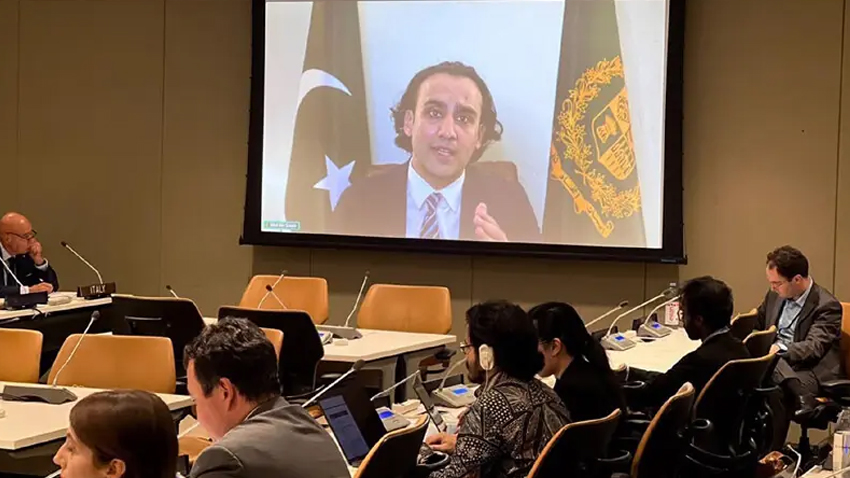
Pakistan urges global action on digital assets
Speaking virtually at a United Nations briefing, Minister of State and Pakistan Virtual Assets Regulatory Authority (PVARA) Chairman Bilal Bin Saqib called for stronger global rules for digital assets. He said countries need proper institutions to manage the fast-changing world of digital finance.
He said coordinated governance is important to ensure that new financial technologies improve economic inclusion and efficiency. Without common rules, the benefits and risks of digital assets could be handled very differently across countries.
Digital finance could expand access
The UN session focused on digital assets and blockchain technology and their role in sustainable development. It was organised by Pakistan’s Permanent Mission to the United Nations with the United Nations Development Programme (UNDP), United Nations Conference on Trade and Development (UNCTAD) and the Office of the Secretary-General’s Envoy on Technology.
Saqib said digital assets, tokenisation and distributed ledger technologies could help emerging economies improve their financial systems. He said these technologies could make financial services more accessible, efficient and inclusive.
“The question before this room is not whether these technologies will scale. They will. The question is: who will shape them, and in whose interest?” he asked.
Focus on people left outside banking
Saqib said ordinary people should remain at the centre of discussions about digital finance. He highlighted that around 1.4 billion adults worldwide remain outside the formal financial system, while many others face costly remittances, slow payments and limited access to credit.
He said digital finance could offer benefits beyond simple payments. Digital identity and verifiable financial records could help small businesses, farmers and women entrepreneurs show their economic activity without depending only on traditional collateral or paperwork.
Tokenisation could also help attract investment by dividing assets into smaller portions. This could create new opportunities for investment in areas such as infrastructure and renewable energy projects.
Pakistan warns against technology without regulation
Saqib also warned that technology should not be seen as an automatic solution to financial problems. He pointed to risks including market volatility, illegal financial activity, concentration of power and a growing gap between countries with strong regulatory systems and those without them.
“The choice before every member state is not regulate or don’t regulate. It is simpler, and starker than that: to govern the future, or be governed by it.”
He said regulation must develop alongside new technology. He warned that rules introduced too late may fail to protect consumers and markets, while excessive regulation based mainly on fear could push digital activity into less transparent areas.
Pakistan is pushing for common global rules as digital assets become more important in finance. The main challenge will be finding a balance between innovation, public access and strong protection against financial risks.
Also read: PM Shehbaz announces Rs100 per litre relief for bikes, autos and cars
Also read: Big news about hybrid and electric vehicle prices under new auto policy


