

National Assembly saves Rs8.6bn after cutting 302 posts
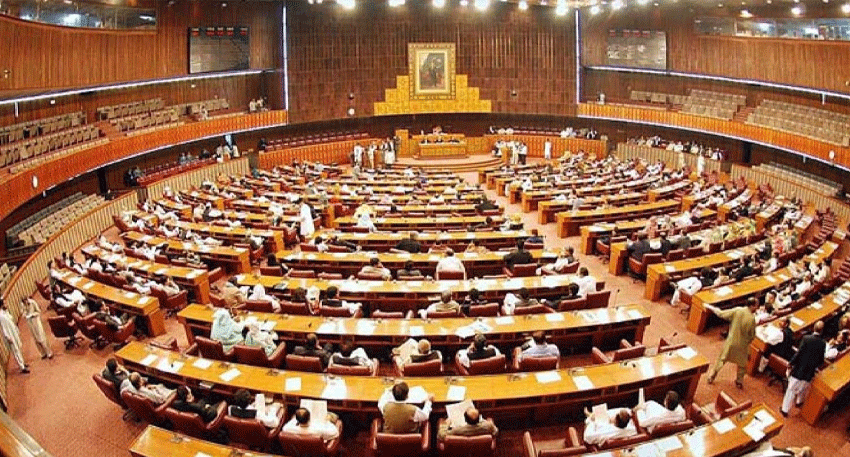
National Assembly records major savings
The National Assembly Secretariat has reported significant financial and administrative savings after reforms introduced over the past two years.
According to a background briefing, the secretariat abolished 302 posts and returned Rs8.6 billion to the national exchequer from combined allocations of Rs29 billion for fiscal years 2024-25 and 2025-26.
The amount returned represents about 30% of the allocations for those two years. Officials said further savings are expected during the current fiscal year.
The National Assembly Secretariat has an annual budget of Rs17 billion for the current fiscal year.
A senior official said the secretariat expects to achieve major savings from this year’s allocation as well.
The reforms have also reduced the size of the workforce by nearly 20%, according to the briefing.
Appointment system also changed
The changes were not limited to reducing posts and controlling spending. The National Assembly has also changed its system for appointing employees.
Previously, discretionary powers played a major role in appointments. Under the new system, appointments are being handled through formal procedures based on laws and service rules.
The aim is to make recruitment more transparent and reduce political pressure on the Speaker during appointment decisions.
The reforms introduced by National Assembly Speaker Sardar Ayaz Sadiq have also given employees a clearer service structure.
Under the new arrangements, employees will be required to submit annual returns and wealth statements.
These statements will be made public by the Federal Board of Revenue, similar to the system followed for other civil servants.
Federal rightsizing effort faces questions
The National Assembly’s reported savings come as the federal government continues its own rightsizing exercise to reduce the size and cost of the public sector.
However, the federal government has so far struggled to show clear financial savings from the exercise.
Finance Minister Muhammad Aurangzeb chaired a meeting of the sub-committee on rightsizing to review progress and discuss ways to speed up implementation.
According to the Finance Ministry, Waves 1 to 4 of the rightsizing programme have largely progressed after cabinet approval.
Recommendations for Waves 5 and 6 have also been prepared and sent to relevant authorities, while work on Waves 7 and 8 is continuing.
However, the official statement did not provide specific figures showing how much money the government has actually saved through the measures.
The finance minister directed officials to move faster and clearly calculate recurring savings from approved reforms.
He also stressed that the financial impact of rightsizing should be properly reflected in the national budget and medium-term fiscal framework.
Also Read:Oil prices hold near weekly peak as US-Iran tensions cloud Hormuz hopes
Limited reforms at federal level
The government has been trying to reduce the size of the federal administration, but major structural changes have yet to emerge.
Instead, several short-term measures have been introduced, including executive allowance and All-Pakistan Service Provincial Disparity allowance.
Critics argue that such measures could widen differences among government employees rather than solving deeper problems within the civil service.
The cabinet committee on rightsizing has so far taken a gradual approach, with reforms being introduced in stages rather than through a major restructuring.
The contrast with the National Assembly is therefore significant because the secretariat has reported specific figures for abolished posts and money returned to the exchequer.


