

NADRA makes pension verification easier with PakID app
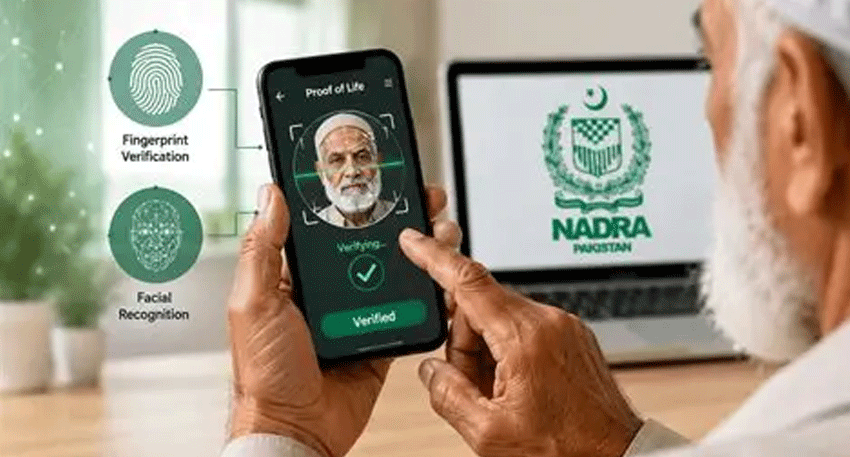
Pensioners can get certificate from home
The National Database and Registration Authority has introduced the free Proof of Life Certificate facility to make pension verification easier for elderly and vulnerable citizens.
The service allows eligible pensioners to complete their life verification without repeatedly visiting banks or pension offices. The facility is particularly useful for people who have difficulty travelling because of age, illness or limited mobility.
Pensioners can use the PakID mobile application to complete the required verification process from their homes. This is expected to save time and reduce the difficulties associated with traditional paper-based verification.
The service was introduced under special directives of Prime Minister Muhammad Shehbaz Sharif in cooperation with the Ministry of Interior and Narcotics Control, Ministry of Defence, Controller General of Accounts and Military Accountant General.
The initiative covers several service channels, giving pensioners more than one way to complete their verification.
How to use the PakID mobile app
The PakID mobile app is one of the simplest options available under the new system.
Eligible pensioners can use the application to complete the prescribed identity verification process and obtain their Proof of Life Certificate digitally.
Pensioners who cannot operate the application themselves can also seek help from a family member. According to NADRA, a family member can complete the required verification through their own PakID account on behalf of the pensioner.
This option could be especially useful for elderly people who are unfamiliar with smartphones or digital applications.
The service is being offered without a fee, meaning pensioners do not have to pay NADRA for obtaining the Proof of Life Certificate through the available official channels.
More than 5,000 e-Sahulat franchises available
Pensioners who cannot use the PakID application can visit other service points across the country.
NADRA said the facility is available at more than 5,000 e-Sahulat franchises. These centres provide another option for pensioners who need assistance with the verification process.
The certificate can also be obtained from more than 988 NADRA Registration Centres and around 500 Union Councils.
At these locations, pensioners are being given priority service so they do not have to spend long periods waiting in regular queues.
This arrangement is aimed at making the process easier for senior citizens and people who may find lengthy visits to government offices difficult.
https://english.sunonews.tv/pakistan/social-issues/pakistan-launches-nationwide-crackdown-on-illegal-call-centres/1787304602-19094
Special services for people with limited mobility
NADRA has also included mobile services in the initiative for pensioners who cannot easily travel to a centre.
The Proof of Life facility is available through NADRA Mobile Registration Vans, Biker Service and Main Pack Service.
These options are intended to improve access for people living with limited mobility or those who face difficulties reaching fixed service centres.
The expanded service network means pensioners can choose the method that best suits their circumstances instead of depending only on physical visits to banks or pension offices.
For families caring for elderly pensioners, the availability of home-based and assisted verification could also reduce the burden of completing recurring pension requirements.
National Pensioners Register introduced
The Proof of Life facility is part of a wider digital reform by NADRA involving the National Pensioners Register.
The register was initially created for pensioners administered by the Controller General of Accounts and Military Accountant General.
It provides an authenticated digital record that can help authorities verify a pensioner’s identity and life status more efficiently.
NADRA said the system is designed to reduce repeated reporting by pensioners and their families to different government institutions.
Under the new arrangement, information recorded in NADRA’s systems can be shared digitally with the relevant pension authorities.
For example, if a health facility reports the death of a primary or secondary pensioner through NADRA’s Death Notification Tool, or the death is recorded in the Civil Registration Management System, the relevant pension controller can receive a daily digital notification.
This could help pension authorities receive important information more quickly and reduce reliance on manual reporting.
Also Read:Pakistan launches nationwide crackdown on illegal call centres
Changes affecting family pensions can also be reported
The system is also designed to identify certain changes that may affect the eligibility of secondary or family pensioners.
Changes related to conditions such as age or marital status can be communicated to the relevant pension controllers when such information is reflected in NADRA’s registration records.
However, NADRA has made it clear that the final decision regarding a pension remains with the authorised pension authority.
The digital register does not itself decide whether a pension should continue, change or stop. Such decisions will continue to be made under the applicable pension rules by the relevant authorities.
Banks can verify pensioners digitally
NADRA has also introduced a separate verification facility for authorised banks.
Through the National Pensioners Register, participating banks can directly check a pensioner’s Proof of Life status.
The system could reduce the need for pensioners to repeatedly appear in person at banks simply to confirm that they are alive and eligible to continue receiving their pension.
It can also reduce dependence on physical documents and paper-based verification.
For pensioners, this means a potentially simpler process. For banks and pension authorities, it provides access to more current and authenticated information.
Service may expand to more pensioners
NADRA plans to expand the National Pensioners Register in a later phase.
The expansion is expected to include pensioners associated with other federal and provincial government departments, public-sector organisations and private-sector institutions.
The wider system will depend on the completion of required agreements and institutional arrangements between the relevant organisations.
If implemented broadly, the digital system could create a more connected pension verification process across different institutions.


