

Lahore Basant 2027 dates confirmed as DC imposes limits on kites, strings
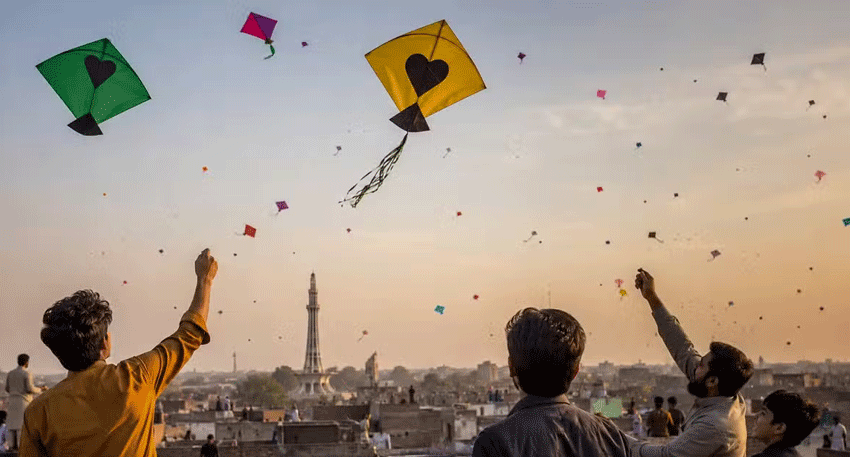
The district administration has allowed kite-flying during the festival, but only with approved materials and in permitted areas. The decision also sets rules for manufacturers, traders, sellers and the public.
Basant returns under new rules
Basant returned to Lahore earlier in 2026 after an 18-year break. The Punjab Assembly passed the Punjab Regulation of Kite Flying Bill, 2025, on December 24, 2025, allowing deputy commissioners to permit kite-flying on selected days and at approved locations under specific conditions.
Punjab Chief Minister Maryam Nawaz had announced that the next festival would take place from March 12 to 14, 2027. The Lahore deputy commissioner has now formalised the dates through an official notification.
Registration and sale of kite materials
The notification allows the manufacture of approved kite-flying materials from September 5, 2026, to March 14, 2027, provided manufacturers have valid digital registration. Trading, purchasing, transporting and storing these materials will be allowed from February 1 to March 14, 2027.
Sales to the public will be permitted from February 10 to March 14, 2027, through registered sellers only. Manufacturers, traders and sellers must register with the deputy commissioner through the government’s eBiz application.
Strict limits on kites and strings
The notification sets size limits for both patang and gudda kites. A patang must not exceed four-and-a-half githi in size, 35 inches in width and 30 inches in length, while a gudda must not exceed one-and-a-half tawa, 40 inches in width and 34 inches in length.
The kite string, known as dor, must be cotton-based, contain no more than nine threads and have a minimum count of 28. It must be wound in the shape of a pinna and coated with maanjha containing glass powder of at least 350 mesh.
Only specified materials, including laundry starch (maya), 350-mesh glass powder and rice flour, may be used to prepare or coat the string. Other chemicals, adhesives, hardeners, metallic substances and strengthening materials are prohibited.
Dangerous materials and safety measures banned
The district administration has prohibited the manufacture, sale, transport, storage, possession and use of charkhi, sharp maanjha, metallic wire, nylon or plastic dandi, and strings coated with harmful materials. Registered businesses must display their registration certificates clearly and maintain complete records of their stock, sales and movement of materials.
Registered kite-flying associations must coordinate with the deputy commissioner and relevant officials to ensure safe celebrations. Motorcyclists must also follow the prescribed safety measures, including installing safety rods, while government departments and police have been directed to help enforce the rules.
Basant 2027 will bring kite-flying back to Lahore under a detailed set of restrictions. The rules aim to allow celebrations while reducing the risks posed by dangerous strings and unregistered materials.
The success of the festival will depend on how well the rules are enforced and whether sellers and the public follow them. Safety measures for motorcyclists and strict action against banned materials will be especially important.
Also read: Lahore Basant 2027 plan outlines kite flying and manufacturing rules


