

Why is India afraid of Pakistan’s ‘Dar-e-Nijat’? French media raises questions
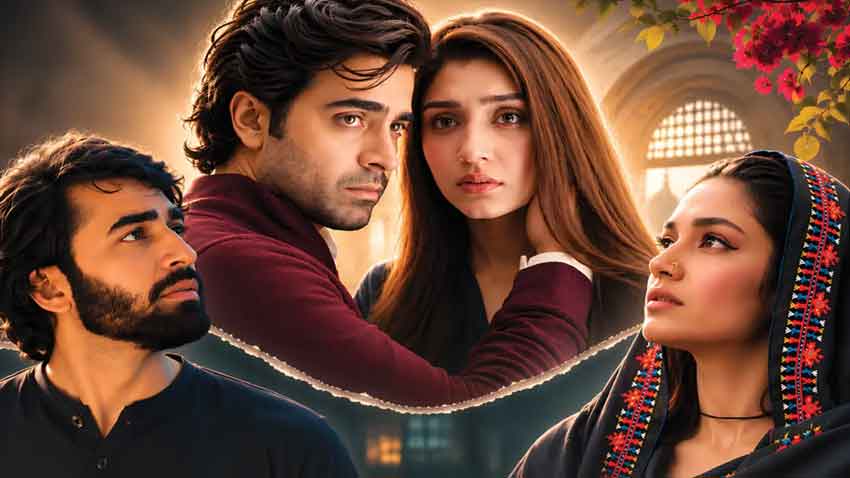
The growing popularity of Pakistani entertainment in India has sparked debate, particularly after calls to restrict Pakistani productions. France 24 English has also highlighted the issue in its Press Review under the headline, “Why is India so afraid of Pakistan's new Netflix series?”
The report discusses the controversy surrounding Jo Bachay Hain Sang Samait Lo and the demands in India to block Pakistani entertainment content. The issue has now attracted attention beyond South Asia and become a topic of international discussion.
Abu Bakar and Zaryab become popular in India
The characters Abu Bakar and Zaryab from Dar-e-Nijat have become popular among Indian viewers, especially young people. Clips and reels featuring the characters are widely shared on social media, making the drama familiar to many Indian users.
Independent Urdu spoke to several young Indians to understand why they enjoy the Pakistani drama and what makes its characters so attractive. Their responses showed that the story’s message of kindness, respect and good behaviour has played an important role in its popularity.
Arhan, a sociology student from New Delhi who shared only his first name, praised Abu Bakar’s personality and described him as a caring and loyal husband.
“Abu Bakar is, in essence, a gentle, loving, and caring husband. He is an incredibly loyal hero,” he said.
He added that Abu Bakar’s respectful behaviour towards women makes him different from many other television characters.
“Above all, he never raises his voice at a woman, nor does he ever behave disrespectfully toward her. He is someone who tolerates everything.”
Arhan also criticised the negative behaviour of the heroine’s former boyfriend, saying that his character represents a toxic mindset. According to him, the character presents Islam negatively by focusing only on strict demands and a limited understanding of religion.
He explained that Abu Bakar follows his faith naturally and shows its positive values through his actions. This approach is one of the reasons why the character has connected with young viewers.
Indian viewers praise the drama’s message
Dar-e-Nijat started airing on a private Pakistani television channel on August 1, 2026. The drama is written by Umera Ahmed and directed by Saqib Khan.
Its popularity has grown through social media, where short clips have reached a large number of Indian users. The drama has also attracted viewers in Bangladesh, Dubai and the Maldives.
Another young viewer, Guldasta, said she first discovered Abu Bakar through Instagram Reels. She described him as a “green flag”, a term commonly used by young people for someone who shows positive qualities in a relationship.
She said the character presents an important message about religion, respect and relationships.
“True religion is about being a good human being — exercising patience and restraint, not raising one’s voice at a woman over every little thing, and not reducing a woman to merely a physical object. At its core, it is about mutual respect and caring for one another,” she said.
Guldasta added that Abu Bakar represents more than just a good husband because his character reflects several positive human qualities. She also revealed that even her Hindu friends watch the drama.
“This character is not just a ‘good man’; he embodies a whole world of virtues. Even my Hindu friends watch this drama. It highlights fundamental human qualities, including ethics, that people often forget or begin to overlook.”
Pakistani and Indian dramas attract viewers
Zayed, another young student, pointed out the differences between Indian and Pakistani television dramas. He said Indian serials often focus on family disputes and domestic conflicts, while Pakistani dramas generally follow different storytelling approaches.
He also noted that Indian films enjoy popularity in Pakistan, while Pakistani dramas have built a large audience in India. This shows that entertainment from both countries continues to attract viewers across borders.
Humanity and respect have no borders
When asked why people from different countries connect with the same characters, Guldasta said that humanity and good behaviour are not limited by national boundaries. She believes that people naturally appreciate values such as kindness, patience and respect.
“I think, being a human and having morality is far beyond the borders can divide,” she said.
She added that people are drawn to these qualities because basic human values should be common to everyone.
“It is just that people are trying to relate because morality is something that should be basic to everybody.”
The popularity of Dar-e-Nijat in India shows that good stories can attract viewers regardless of national borders. Its characters have connected with young people because they highlight kindness, loyalty and respect.
The growing interest also shows that audiences want meaningful stories rather than entertainment based only on conflict. Calls to restrict Pakistani productions may create controversy, but the drama’s popularity suggests that viewers continue to discover and appreciate content from across the border.
Also read: Pakistan watching ‘Dar-e-Nijaat’ less than Indian audiences, says Sherry Rehman


