

Pakistan moves to set new safety standards for EV batteries
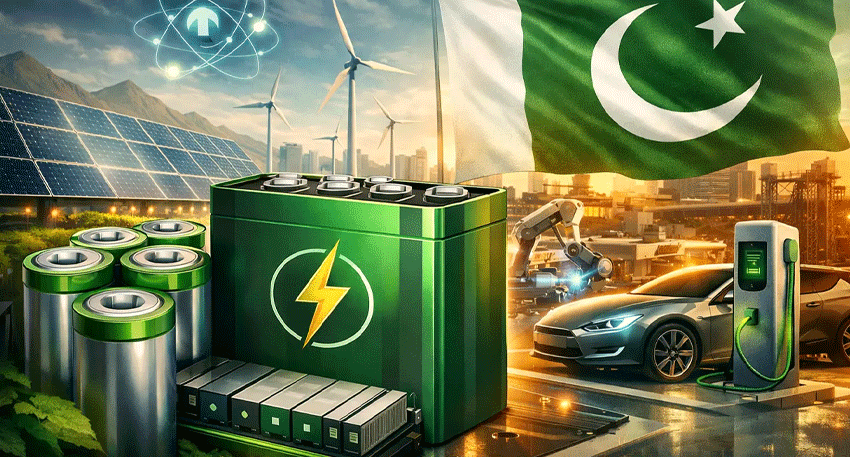
Pakistan prepares EV battery standards
The Ministry of Industries has directed the Pakistan Standards and Quality Control Authority (PSQCA) to start preparing standards for lithium-ion batteries used in electric vehicles.
The move comes as Pakistan works on the Next Generation Energy Storage Policy 2026-2033. The policy is expected to provide a broader framework for battery storage, production and safety in the country.
Engineering Development Board (EDB) Chief Executive Hammad Mansoor is expected to present an updated version of the policy at an upcoming meeting with relevant stakeholders.
A senior ministry official said PSQCA has been asked to develop the required battery standards while the wider policy is still being finalised.
The official explained that Pakistan currently has standards mainly for basic lithium batteries used in products such as mobile phones and laptops. Electric vehicles require much more advanced batteries because they operate with higher voltage and greater capacity.
EV makers seek local battery production
The development could also support Pakistan’s growing electric vehicle industry. Several EV assemblers have expressed interest in working with the EDB to establish facilities for lithium-ion battery assembly or cell production.
Officials believe proper standards are also necessary to make sure imported EV batteries meet safety and durability requirements.
The lack of specific standards has become an important issue as more electric vehicles enter the Pakistani market. Without clear rules, manufacturers and importers may follow different safety practices.
The proposed framework is expected to create common requirements for battery manufacturers, assemblers and importers. This could also provide greater confidence to consumers considering electric vehicles.
Tougher safety tests planned for batteries
One major part of the proposed standards will focus on cell safety and abuse testing. Lithium-ion cells would need to pass extreme stress tests, including mechanical crushing, overcharging and thermal abuse.
These tests are designed to check whether batteries can withstand serious damage without catching fire. Such requirements are especially important because damaged lithium-ion batteries can generate significant heat.
The proposed standards will also cover the physical strength of battery packs. Pakistan currently does not have dedicated baseline standards for the container integrity of batteries used in four-wheel vehicles.
Another important area will be the Battery Management System, commonly known as BMS. The system monitors battery conditions and helps protect cells from unsafe voltage levels.
Officials say smart BMS systems need very fast cutoffs because overvoltage and undervoltage can cause battery cells to swell. Clear regulations could therefore help reduce safety risks and improve battery performance.
Fire protection and weather resistance
The proposed rules are also expected to address thermal defects and fire containment. Batteries would need systems capable of preventing heat from spreading between individual cell modules when one cell fails.
The finished battery packs could require materials such as aerogel or fire-resistant epoxy sheets to limit heat transfer. This requirement is aimed at reducing the risk of a single battery failure developing into a larger fire.
The standards are also being designed around Pakistan’s local climate and road conditions. This includes requirements for thermal performance under high temperatures and protection against dust and water.
The proposed framework includes “Pakistani Road Durability” requirements. Under the plan, a battery pack would have to survive a ‘1-metre’ drop onto bare concrete without developing cracks, leaks or internal damage.
Also Read:Pakistan’s $2.5bn ML-1 railway work set to begin in January
Protection against floods and monsoon conditions
Weather protection is another key part of the proposed EV battery standards. Battery packs would need suitable dust shields and protection against water exposure.
The requirements are particularly relevant for Pakistan because several parts of the country regularly face heavy monsoon rains and flooding. Electric vehicle batteries would therefore need protection against water entering critical components.
The standards could help ensure that imported and locally assembled batteries are better suited to Pakistani conditions. They may also encourage manufacturers to design products specifically for the country’s environment.
What the policy could mean for Pakistan
The proposed EV battery standards could become an important step for Pakistan’s electric vehicle sector. Clear safety rules may help manufacturers, importers and consumers understand what batteries must meet before entering the market.
The policy could also support local battery assembly and eventually cell manufacturing. However, the plan's success will depend on how quickly the standards are finalised and adopted.
For consumers, stronger battery requirements could mean safer and more durable electric vehicles. For the industry, they could provide clearer rules and encourage investment in local battery production.