
Pakistan’s $2.5bn ML-1 railway work set to begin in January
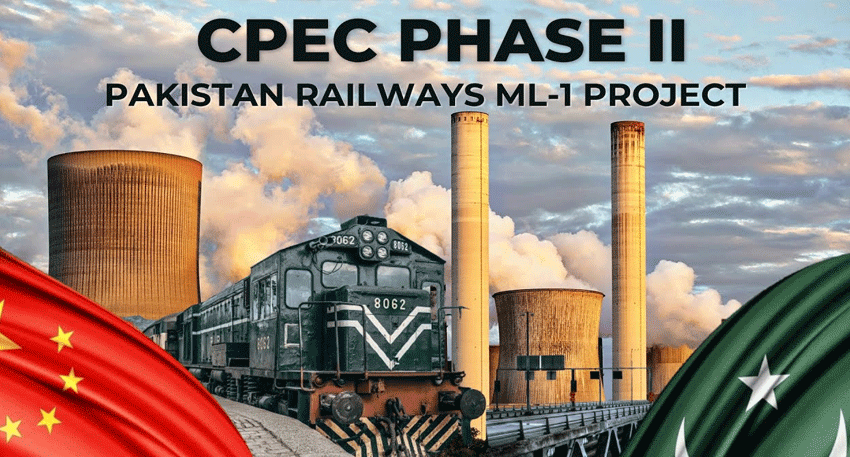
The railway administration is now speeding up preparations to meet the target set by Prime Minister Shehbaz Sharif.
Officials are working on market consultations, tender preparations and other processes needed before construction can begin.
Railways Minister Hanif Abbasi said the government was making every effort to start the project as early as possible.
“We are trying our level best to launch this project as early as possible. The prime minister wants its commencement by January next year by all means,” he said.
Contractors to join market consultations
Pakistan Railways has scheduled an online market engagement session for September 8.
Local and international contractors, consultants and other experts will be invited to discuss the project’s readiness and procurement process.
The discussions will also examine developments since March and the strategy for moving towards construction.
According to officials, international tendering, bidding, contractor and consultant shortlisting and contract awards could take around four to five months.
Despite the tight schedule, Pakistan Railways says it will try to complete these steps quickly enough for construction to start in January.
First phase focuses on Karachi-Rohri
The first phase of ML-1 will cover approximately 480 kilometres between Karachi and Rohri, also known as the Sukkur section.
The plan includes construction of new up and down railway tracks and fencing along both sides of the route.
The fencing is intended to prevent people, animals and vehicles from entering railway tracks illegally, improving safety for passengers and trains.
The project is expected to take around two-and-a-half to three years to complete.
The Karachi-Rohri corridor is particularly important because it carries a major share of Pakistan’s railway traffic.
Officials say the route handles around 76 percent of passenger traffic and 98 percent of freight traffic.
It also connects several major cities, population centres and industrial areas, making its improvement important for both passengers and businesses.
Why ML-1 is considered important
Pakistan Railways has identified the Karachi-Rohri route as a priority because of the poor condition of existing tracks.
A railway official said the Karachi-Rohri and Rohri-Multan sections have experienced many derailments and accidents because of ageing infrastructure.
“These are the most critical railway sections where most derailments and accidents take place due to the existing decaying track,” the official said.
The official added that repairing the old tracks repeatedly has also involved significant costs.
Under the planned upgrade, trains could eventually operate at speeds of up to 160 kilometres per hour.
This could reduce travel times and improve the reliability of passenger and freight services.
Wider upgrades planned under ML-1
The project goes beyond laying new railway tracks.
Its planned scope includes reconstruction work, limited route realignments, bridges, culverts, railway stations, freight yards and other structures.
Work will cover the Keamari-Landhi-Hyderabad, Hyderabad-Nawabshah and Nawabshah-Rohri sections.
The programme also includes improvements to signalling and telecommunications along the railway corridor.
Walton Academy is also expected to be upgraded as part of the broader plan.
Consultancy services for project management, design and supervision are also included.
Officials are considering modern digital systems and climate-resilient solutions to make the upgraded railway infrastructure more sustainable.
Funding and project preparation
The Asian Development Bank is expected to provide financing for the project.
Pakistan is also exploring possible co-financing from other international institutions, including the Asian Infrastructure Investment Bank, the World Bank, and the Islamic Development Bank.
During the upcoming market consultations, authorities will discuss several technical and financial issues with potential contractors and consultants.
These include contract package sizes, qualification requirements, joint ventures, bidding timelines, risk sharing, and construction while railway services continue to operate.
Local industry participation and the use of modern technology will also be discussed.
The government wants the consultation process to help identify possible problems before formal bidding begins.
Also Read:Riyadh Air: Another international airline launches flights to Pakistan
Railway officials push for faster progress
A meeting on the ML-1 project was held at Pakistan Railways headquarters to review preparations for the Karachi-Rohri upgrade.
Railway Board Chairman Syed Mazhar Ali Shah chaired the meeting, which was attended by international consultants and senior railway officials.
The meeting reviewed the project’s preparation, progress and the next steps required to move towards implementation.
Shah directed officials to complete the project review phase by October 30, 2026.
He also ordered weekly monitoring to ensure that delays do not affect the planned schedule.
Pakistan Railways said expert opinions, international experience and proposals from the market would be considered before final decisions are made.
Focus on transparency and competition
Officials have stressed that the project preparation and implementation process should remain transparent and competitive.
The railway administration said contractors and consultants would be selected according to merit and relevant requirements.
Railways Minister Hanif Abbasi described ML-1 as an important foundation for modernising Pakistan Railways.
“The upgradation of the project will significantly improve train speeds, passenger facilities and the overall performance of Pakistan Railways,” he said.
The government believes the project can improve railway services while supporting trade, freight movement and connectivity between major parts of the country.