

Pakistan Car sales rise 11% to 15,558 units in August 2026
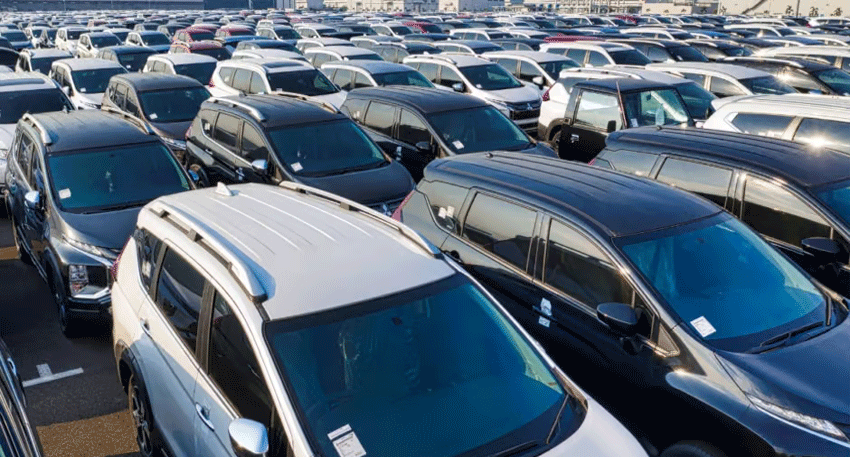
Pakistan’s car sales grew annually in August, but the sharp monthly decline highlighted continued uncertainty in the auto market. Topline Securities Ltd shared the figures in a report based on data from the Pakistan Automotive Manufacturers Association (PAMA).
Total car sales reached 15,558 units during the month. This was higher than the same period last year, but lower than the 19,734 units sold in July, reflecting a significant month-on-month slowdown.
The figures exclude sales of Sazgar Engineering Works (SAZEW), as the company’s data was not available when the report was prepared. Excluding SAZEW, car sales increased 20% year-on-year but declined 19% month-on-month in August.
FY27 car sales show strong annual growth
Despite the monthly decline, cumulative car sales during the first two months of fiscal year 2026-27 reached 35,376 units. This represents a 41% increase compared with the same period of the previous fiscal year.
The annual growth suggests that overall demand has improved compared with last year. However, the monthly decline indicates that the recovery remains uneven and sensitive to market conditions.
Topline Securities attributed the monthly fall mainly to uncertainty surrounding the new auto policy. The brokerage also pointed to an uncertain regional environment that could affect supply chains and vehicle production.
The auto policy is being closely watched by manufacturers, dealers and buyers because changes in regulations can influence investment, production plans and vehicle prices. Uncertainty in this area may encourage some buyers to delay purchasing decisions.
Indus Motor records annual sales growth
Indus Motor Company (INDU) sold 4,029 vehicles in August, recording a 19% year-on-year increase. However, its sales declined 21% compared with the previous month.
The company’s Corolla, Yaris and Cross models remained important contributors to its performance. Combined sales of these models rose 21% year-on-year to 3,079 units.
Fortuner and IMV sales also showed positive movement. Their combined sales increased 12% year-on-year and 18% month-on-month to 950 units during August.
The figures indicate that demand was not equally weak across all vehicle categories. Some models continued to attract buyers despite the overall monthly decline in the market.
Honda Atlas sees major annual increase
Honda Atlas Cars (HCAR) recorded a significant increase in annual sales during August. The company sold 2,633 units, representing a 2.5-fold rise compared with the same month last year.
Every month, Honda’s sales remained broadly stable. This made the company one of the stronger performers in the market during the month.
City and Civic sales reached 2,529 units, rising 3.7-fold year-on-year and 1% month-on-month. The performance was supported mainly by these two models.
However, sales of the BR-V and HR-V remained under pressure. Their combined sales fell 79% year-on-year and 28% month-on-month to 80 units.
The mixed results show that demand differed considerably between model categories. While sedan sales improved, sales of some crossover and SUV models remained weak.
Pak Suzuki remains the largest contributor
Pakistan Suzuki Motor Company (PSMC) reported sales of 7,633 units in August. Its sales increased 7% year-on-year but declined 25% compared with July.
The company’s performance was largely supported by the Alto, which recorded sales of 5,339 units. Alto sales rose 27% year-on-year, showing continued demand for the popular small car.
However, Cultus sales declined 40% year-on-year to 296 units. The contrasting performance of the two models reflects changing consumer preferences within the small-car segment.
Pak Suzuki’s overall sales remained higher than those of the other major car manufacturers included in the report. However, its monthly decline contributed significantly to the broader fall in industry sales.
Also Read:SBP holds interest rate at 11.5pc as global tensions rise
Hyundai sales fall despite monthly improvement
Hyundai Nishat Motors recorded a 39% year-on-year decline in sales during August. The company sold 742 units, although this was 5% higher than its sales in July.
The figures suggest that Hyundai’s monthly performance improved slightly, but its annual sales remained under pressure. The company’s results added to the mixed picture across Pakistan’s auto industry.
Different manufacturers are experiencing varying levels of demand, depending on their model lineups, pricing and market position. This has made the sector’s recovery less uniform than the overall annual growth figure might suggest.
Two- and three-wheeler sales continue to grow
The two- and three-wheeler segment performed better than the passenger car market during August. Sales increased 20% year-on-year and 3% month-on-month to 178,119 units.
Excluding SAZEW, sales in this category rose 22% year-on-year and 4% month-on-month. The figures point to stronger demand for motorcycles and other affordable forms of transport.
Two- and three-wheelers are widely used for personal travel, delivery services and small businesses. Their relatively lower purchase and running costs can make them more attractive when household budgets remain under pressure.
The growth in this segment provides a positive sign for the wider automotive industry. However, it also highlights the difference between demand for affordable transport and demand for passenger cars.
Tractor, truck and bus sales show mixed results
Tractor sales reached 1,052 units in August, increasing 6% year-on-year but declining 15% month-on-month. The figures indicate modest annual improvement alongside a monthly slowdown.
Meanwhile, truck and bus sales rose 31% year-on-year to 875 units. Every month, however, sales fell 5%.
The commercial vehicle segment may be influenced by business activity, transport demand and investment conditions. Annual growth in truck and bus sales suggests some improvement, although the monthly decline shows that market conditions remain mixed.


