

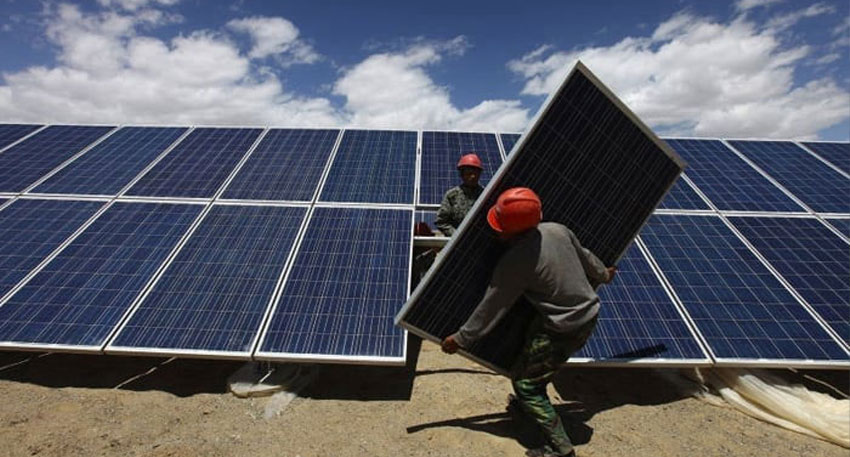
Federal Minister for Energy Awais Leghari has strongly rejected the impression that the government is discouraging solar energy adoption. He said the government fully supports solar power but wants to manage it carefully.
He explained that unplanned growth of rooftop solar systems can create problems for the national grid. According to him, electricity demand rises sharply in the evening when solar power generation suddenly drops, which can cause instability.
The minister said the government’s goal is to ensure that the cost burden does not shift unfairly to people who are not using solar systems. He stressed that balanced policies are necessary to protect all consumers.
On the energy supply side, Leghari revealed that LNG imports have been badly affected. He said disruptions started after QatarEnergy declared force majeure during the US-Israel war involving Iran, forcing Pakistan to control demand.
Read more: Sri Lanka raises petroleum prices by Rs81 to Rs398 per litre
He added that temporary and limited restrictions may be applied in some sectors, but important sectors like fertilizers will remain protected because of their role in food security.
The minister also rejected the idea of replacing gas-based power plants completely with coal. He said coal plants are already used for base load due to lower cost, but gas plants are still needed to manage peak demand and sudden changes in electricity use.
Addressing industrial concerns, Leghari said claims about industries leaving the national grid are incorrect. He said electricity demand has actually increased after the government introduced a captive power levy.
He shared that electricity demand grew strongly in early 2026, rising by 12.1pc in January and nearly 11pc in February. Industries have also benefited from a discounted electricity package priced around Rs23 per unit, saving nearly Rs12 billion.
Read more: How to cut petroleum use by 50%, here’s a step-by-step guide
In the end, the minister said Pakistan has managed to handle global energy shocks better because of its diverse power generation system, even though LNG supplies remain under pressure.
The government is trying to balance solar growth and system stability. Energy supply problems are making decisions more difficult. Policies are not against solar, but they are being controlled. The real challenge is managing demand without hurting consumers.


