

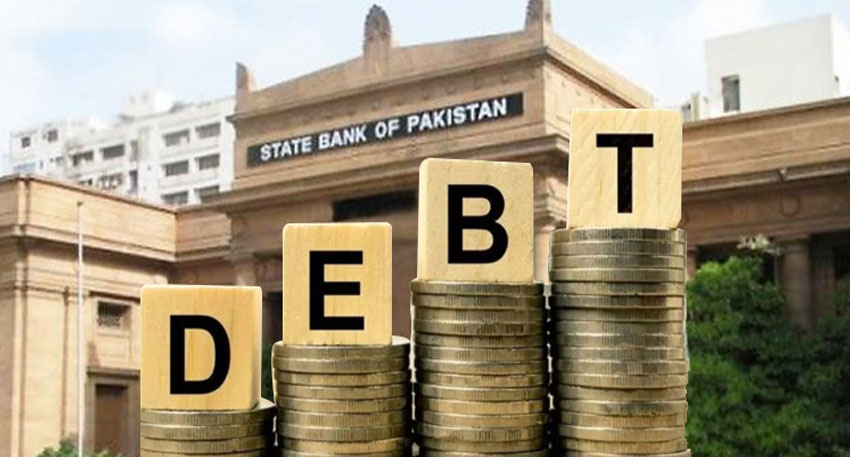
The State Bank of Pakistan reported a sharp jump in federal government debt over the past two years. The total debt increased by Rs15,072 billion between March 2024 and February 2026. The rapid increase has caught attention across economic circles.
This means the government has been borrowing heavily to meet its expenses. On average, around Rs21 billion was added to the debt every single day.
Most of this increase came from borrowing within the country. Domestic debt alone went up by Rs14,004b during this period.
External borrowing also added to the total, but at a smaller level. The government increased foreign debt by Rs1,068b.
Earlier, the total debt stood at Rs64,810b in February 2024. Within two years, the government’s financial burden expanded significantly.
Read more: Pakistan repays $2 billion UAE deposit as new Saudi deal reshapes outlook
Data shows that borrowing kept rising steadily until early 2026. The government mainly relied on local banks to meet its financial needs.
The reason behind this surge is growing fiscal pressure on the government. It had to pay high debt servicing costs while revenue growth remained limited.
To manage budget deficits, the government continued borrowing from different sources. These included domestic banks and international lenders.
Officials say borrowing was necessary to keep the economy stable. Funds from multilateral and bilateral partners were also used to support financial needs.
Why is Pakistan’s debt rising sharply?
Pakistan’s debt isn’t rising sharply because of one single issue—it’s a mix of ongoing financial pressures that keep pushing the government to borrow more almost every day.
One major reason is the budget deficit, which means the government spends more than it earns. When tax collection stays low and expenses remain high, the gap is filled through borrowing.
Another big factor is debt servicing, or paying back old loans with interest. A large portion of government income goes just to repay previous debt, so new loans are taken to cover remaining expenses.
Economic growth has also been slow, which limits revenue. When businesses don’t grow fast and incomes stay under pressure, tax collection does not increase enough to support government spending.
High interest rates make the situation worse. Borrowing becomes more expensive, so the total debt increases faster even if the government is not taking huge new loans.
The country also spends heavily on subsidies, energy support, and public sector operations. These are necessary in many cases, but they add to overall expenses and increase the need for borrowing.
Currency depreciation is another reason. When the Pakistani rupee weakens, foreign loans become more expensive to repay, increasing the total debt in rupee terms.
The government also relies heavily on domestic banks for quick financing. This makes borrowing easier in the short term, but it keeps adding to the total debt stock.
In simple terms, Pakistan is borrowing more because it has to manage old loans, cover daily expenses, and deal with slow income growth at the same time.
Debt is rising fast because expenses are much higher than income. Old loans are making the situation more difficult each year. Without strong economic growth and better tax collection, borrowing may keep increasing.


