

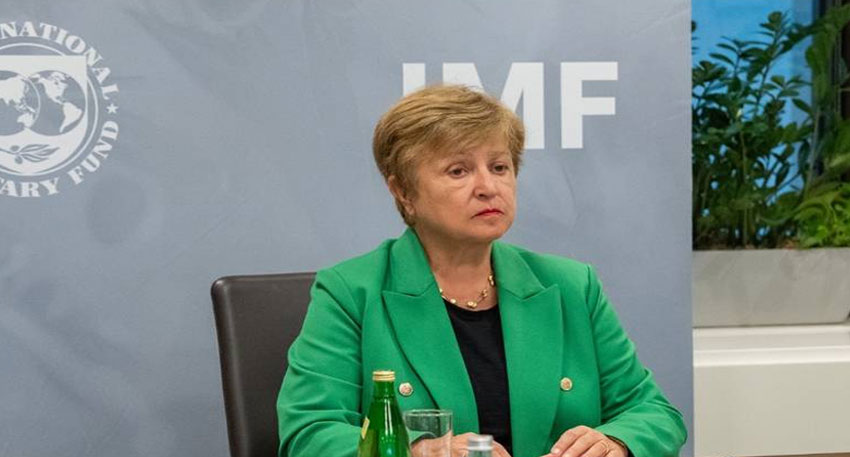
The Kristalina Georgieva, Managing Director of the International Monetary Fund (IMF), has warned that new conflicts in the Middle East are putting the global economy under significant strain. Addressing an event in Japan, Georgieva said that even after the war, the world economy will face serious challenges.
She highlighted the severe disruptions to critical oil and gas infrastructure during the conflict. According to Georgieva, maritime traffic through the Strait of Hormuz has fallen by nearly 90 percent. This strait is vital for global energy supplies, handling approximately 60 percent of oil and 11 percent of LNG imports.
The IMF chief cautioned that if the conflict continues, policymakers worldwide will face new and increasingly complex economic challenges. She emphasized that oil prices have already surged by as much as 50 percent due to the disruptions.
Also Read: Iranian drone strike hits Bahrain oil refinery
Georgieva stressed that these developments underscore the vulnerability of the global economy to geopolitical crises, particularly those affecting energy trade routes. She called for coordinated international responses to mitigate economic shocks, stabilize energy markets, and ensure that the global economy remains resilient amid ongoing tensions.
Experts say the combination of supply disruptions and rising energy costs could accelerate inflationary pressures and test economic recovery in multiple regions. Georgieva’s warnings signal the urgent need for policymakers to monitor the evolving situation closely and prepare strategies to reduce risks to global financial stability.


