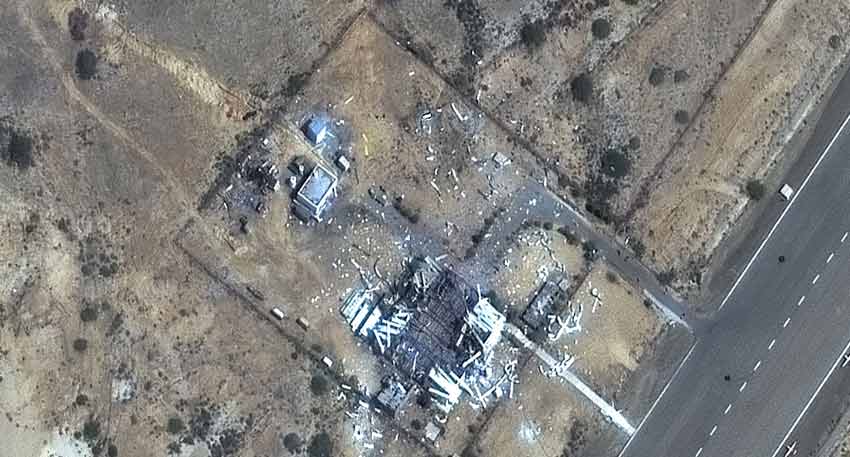
The strikes came in response to the US Military campaign that targeted and decimated Iranian leadership. In less than 48 hours, at least nine US positions were hit, many closer to Iran than its typical target, Israel, increasing the likelihood of successful strikes.
One of the most significant attacks occurred at the Port of Shu'ayba, where an Iranian missile strike set a makeshift US operations center ablaze just after 9 a.m. on Sunday.
Smoke was seen rising from the building, and a three-wide trailer was blackened inside. Six American service members were also killed in the attack.
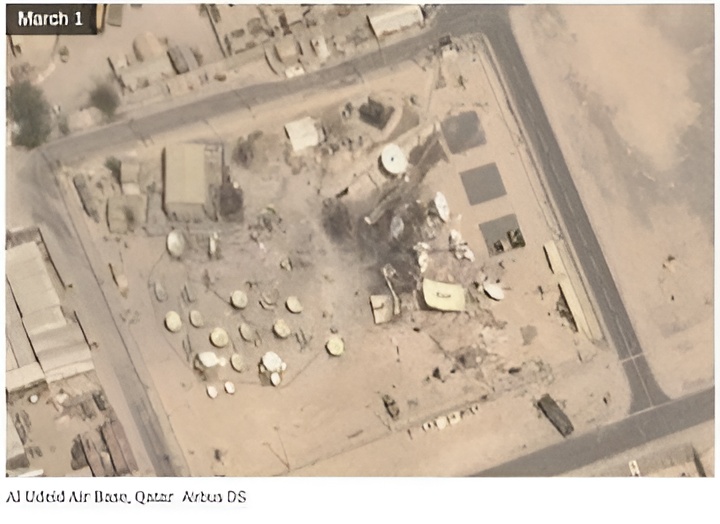
Another strike involved an Arash-2 drone crashing into US positions at Camp Buring, severely damaging buildings and narrowly missing American helicopters parked on-site.
.jpeg)
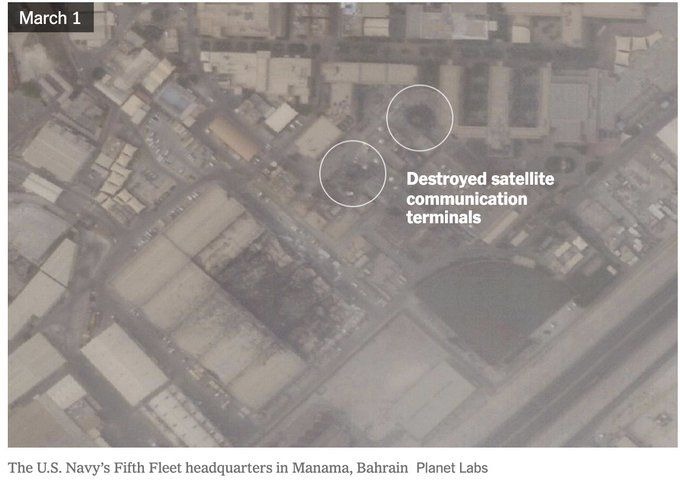
In Bahrain, a Shahid-10 drone hit the base hosting the US Navy’s Fifth Fleet, one of the largest naval formations globally. Satellite communication terminals and warehouses were destroyed, pointing to a strategic effort by Iran to cut off US bases from external communication.
Also Read: Gulf skies under siege as Iran’s Shahed 136 drones strike regional targets
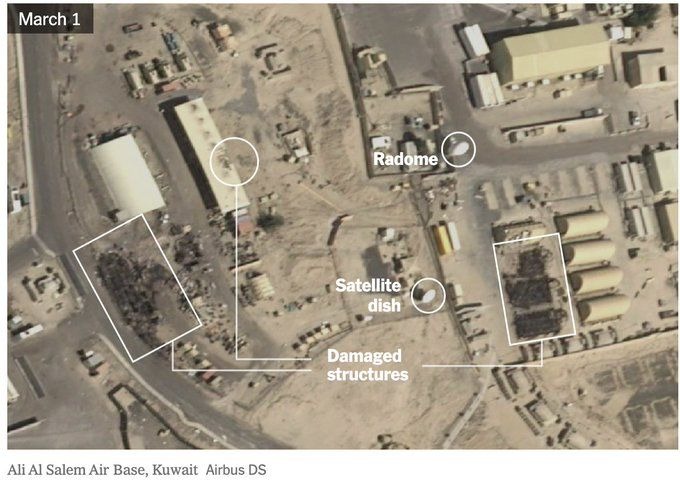
Overall, at least five satellite communication terminals were destroyed across the region, highlighting the scale of the assault. Iran deployed an unprecedented barrage of missiles and drones, while US patriot missiles and other advanced air defense systems intercepted most of the incoming threats.
However, the strikes that got through exposed vulnerabilities in the security of Gulf Arab states and underscored the risks to America’s critical infrastructure in the Middle East.