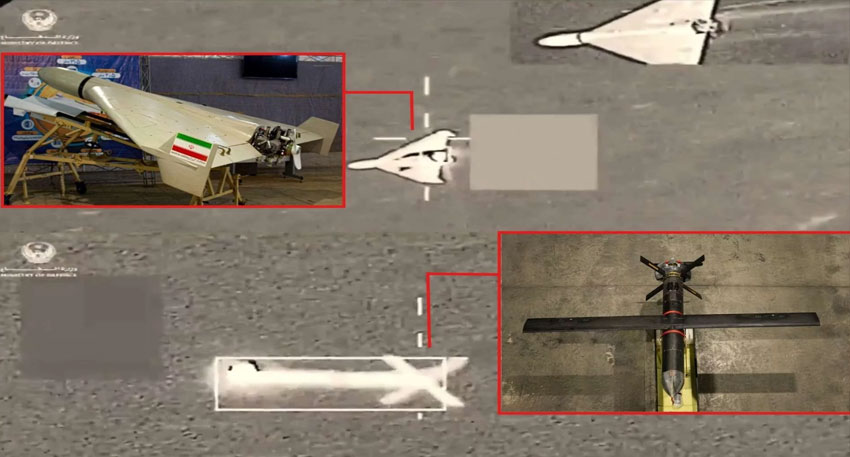
Over the past 48 hours, Iran’s distinctive Shahed 136 drones have expanded from the battlefields of Ukraine to the skies of the Gulf, targeting Bahrain, Kuwait and the United Arab Emirates. The attacks follow US-Israeli strikes on Tehran, signaling a sharp regional escalation.
Videos circulating from Bahrain show a delta-wing drone buzzing loudly before crashing into a residential tower at night, scattering fiery debris. Another clip appears to capture a drone diving into a radar dome inside the naval base that hosts the United States Fifth Fleet in Manama.
Hundreds launched, dozens penetrate
Regional officials report that more than 1,000 drones have been launched toward Gulf states since Saturday. The UAE said 689 drones targeted its territory, with 645 intercepted—leaving 44 that penetrated air defences, roughly 6 percent of the total. Strikes have also been reported near military facilities in Cyprus, including areas close to RAF Akrotiri.
Why the Shahed 136 matters
The Shahed 136 is about 3.5 metres long with a 2.5-metre wingspan and carries a 50kg warhead. It is relatively slow and noisy, earning comparisons to a “lawnmower in the sky,” but its low production cost—estimated around $50,000—makes it far cheaper than ballistic missiles. Its range can reach 2,000km, flying low to evade radar. While typically preprogrammed, evidence from Ukraine suggests some may be remotely piloted, enabling last-minute course changes.
Also Read: Israel orders preparation for strike on Iran’s new supreme leadership
Designed by Shahed Aviation Industries, which Washington links to the Islamic Revolutionary Guard Corps, the drone gained prominence after Russia used it extensively against Ukraine from late 2022, including mass swarm attacks intended to overwhelm air defences.
Energy infrastructure in focus
In Ukraine, Shahed strikes have proven effective against static infrastructure, contributing to power outages during winter. A similar tactic may be unfolding in the Gulf. Saudi Arabia’s Ras Tanura refinery—the kingdom’s largest—was damaged in a drone-related blaze, though officials have not confirmed the weapon type.
Also Read: Trump cuts off Spain trade over Iran strike base dispute
Security analysts warn that even limited penetration rates can create outsized psychological and economic effects, particularly if energy facilities are targeted. With regional tensions rising, Gulf air defence systems now face a sustained, low-cost drone challenge that may shape the next phase of the conflict.
Key facts at a glance
Estimated range: up to 2,000km
Warhead: approx 50kg
Estimated cost: around $50,000
Reported launches in 48 hours: 1,000+