

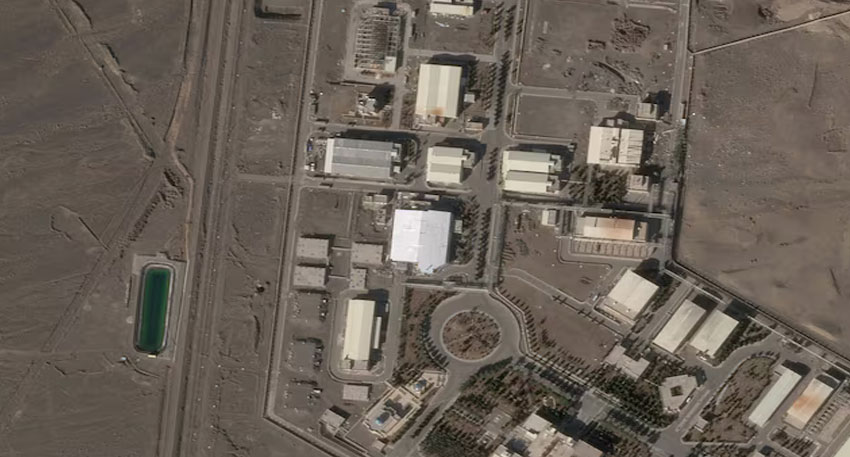
The head of the UN nuclear watchdog, Rafael Grossi, said there is no sign that recent Israeli and US strikes have hit Iran’s nuclear facilities. His statement came amid rising tension in the region.
Grossi, who leads the International Atomic Energy Agency, said inspectors have not found evidence that key nuclear sites were damaged in the reported attacks.
However, Iran’s envoy claimed that one site had been targeted a day earlier, according to Reuters. The exact location and level of damage were not clearly confirmed.
Iran’s nuclear programme has long been a major concern for both Israel and the United States. They argue that Iran is getting dangerously close to developing the ability to eventually build an atomic bomb. Tehran has repeatedly denied these accusations and insists its programme is for peaceful purposes.
The fresh comments from the UN watchdog may calm global markets and reduce immediate fears of a nuclear escalation. Still, tensions remain high as military actions and strong statements continue.
At the same time, what remains of Iran's atomic facilities after the two militaries attacked them in June appears to have been largely spared in this campaign so far.
"We have no indication that any of the nuclear installations ... have been damaged or hit," International Atomic Energy Agency chief Rafael Grossi said in a statement to a meeting of his agency's 35-nation Board of Governors.
Read more: Missiles target office of Israeli PM Netanyahu as Iran rejects US talks
While the IAEA's crisis-response centre has been unable to reach Iran's nuclear regulatory authorities, there has been some contact with Iranian officials, Grossi later told a press conference.
"We are, of course, in conversation with Iran, but at the moment, it's very limited. Until last Thursday, it was very intense," he said, adding that while the IAEA has no staff in Iran at the moment, it is watching satellite images closely.
Tehran has not let the IAEA return to its bombed facilities since they were attacked in June.
Moments after Grossi's speech, Iran's ambassador to the IAEA, Reza Najafi, told reporters outside the closed-door meeting that the nuclear complex at Natanz had been attacked.
"Again they attacked Iran's peaceful, safeguarded nuclear facilities yesterday," Najafi said. Asked by Reuters which facilities were hit, he replied: "Natanz" and left.
Natanz housed facilities including two uranium-enrichment plants that were attacked in June - an above-ground one the IAEA says was destroyed and an underground one that was at least badly damaged.
Read more: Kuwait confirms multiple US aircrafts crashed
Asked about Najafi's remarks, Grossi stood firm at his later press conference.
"I will not get into a polemic on that. We stand by what I said before. We haven't seen major military activity targeting the nuclear facilities. We have been looking at different satellite images," he said.
"There might be something there, but not significant or comparable in any way to what we saw last time."
Grossi was in Geneva for the last two rounds of Oman-mediated talks between Iran and the United States, discussing nuclear specifics with both sides.
"An understanding eluded the parties this time. I am sure we are, quite understandably, feeling a strong sense of frustration," Grossi told the board.
He called for dialogue to resume while repeating the IAEA's view that there is no credible indication of a coordinated nuclear weapons programme in Iran. Iran denies that its nuclear programme has military aims.


