

Iranian blogger receives death sentence in controversial case
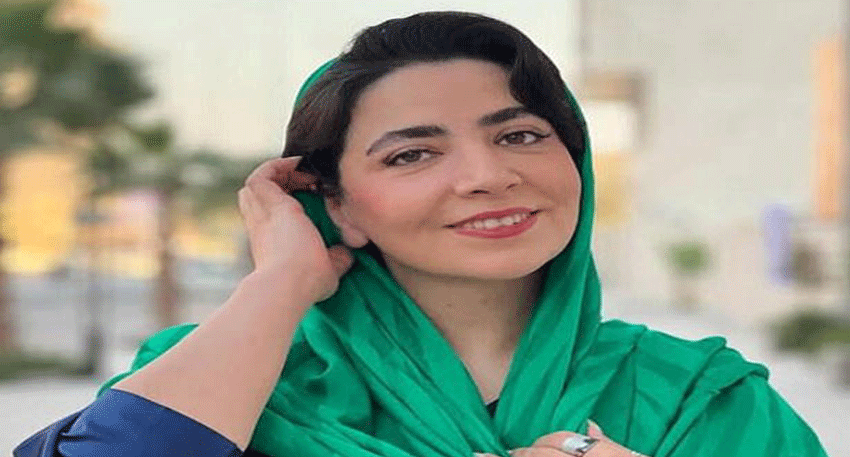
An Iranian blogger known as Souda, or Marzieh, Ebrahimi Shamsabadi has reportedly been sentenced to death by a Revolutionary Court in Bandar Abbas.
The case has drawn attention because of allegations involving online activity, criticism of Iran’s Supreme Leader and photographs allegedly sent to Persian-language media outlets outside the country.
The information was reported by Iran International and human rights organisations, including the Human Rights Activists News Agency, known as HRANA.
The reports say Ebrahimi Shamsabadi has been held at Bandar Abbas Prison since her arrest earlier this year.
Details about the case have emerged as concerns continue to grow over the use of capital punishment against political prisoners, protesters and people accused of security-related offences in Iran.
Charges reported against the blogger
According to information obtained by Iran International, Branch 3 of the Bandar Abbas Revolutionary Court convicted Ebrahimi Shamsabadi on several charges.
These reportedly include insulting Iran’s Supreme Leader, carrying out media and propaganda activities against national security, and conducting intelligence or security activities on behalf of what authorities described as hostile governments.
She was also accused of taking photographs of a location that had reportedly been hit by a missile.
The image was allegedly sent to a Persian-language media organisation based outside Iran. The reports do not independently establish the circumstances in which the photograph was taken or how it was used.
HRANA reported that the main death penalty charge was “corruption on earth”, a broad offence used under Iranian law in cases involving serious alleged crimes against national security and the state.
Iranian authorities have not been reported as publicly issuing a detailed statement responding to the allegations or the concerns raised by rights groups.
Court issues additional punishments
The reported death sentence was not the only punishment handed down in the case.
According to Iran International, the court also imposed prison terms ranging between two and five years. It reportedly ordered the confiscation of her property and restricted her access to certain government and public services.
Her lawyer was reportedly informed about the death sentence on August 23.
The judgment was said to have been issued by Judge Khajeh-Hassani of the Bandar Abbas Revolutionary Court.
The reports do not indicate that an execution date has been announced. It also remains unclear from the available information whether the sentence has been appealed or reviewed by a higher court.
Death sentences in Iran can be subject to further legal procedures, although the exact process depends on the charges and the court involved.
Final Instagram message raises concern
Before her arrest, Ebrahimi Shamsabadi reportedly shared a message on Instagram that has since attracted widespread attention.
The post, published on February 23, was reportedly the final publication on her account before her detention.
The message appeared on a black background alongside images of a white dove and a red rose.
She wrote, “If one day I leave this world, just know one thing – I chose the path I believed in.”
The message was reportedly viewed by around 10,000 followers. Its wording has led observers to believe that she may have feared arrest or serious punishment.
Reports also said the accompanying caption suggested that she was prepared to face death because of her opposition to the authorities.
However, the exact meaning of the post cannot be independently confirmed. It is also not clear whether she expected to be arrested at the time it was published.
Reports of solitary confinement and pressure
Human rights groups have raised concerns about Ebrahimi Shamsabadi’s treatment during detention.
According to reports, she was allegedly held in solitary confinement for 20 days and faced severe pressure during questioning.
Iran International reported that her family was not informed about her location or health condition during part of that period.
Such claims have not been independently verified by international observers. However, they have increased concern among rights organisations about the treatment of detainees in security-related cases.
The reported conditions are especially worrying because Ebrahimi Shamsabadi is said to have several health problems.
Also Read:Jemima Goldsmith begins a new chapter with Cameron O’Reilly
Health concerns in prison
HRANA reported that Ebrahimi Shamsabadi has been living with multiple sclerosis for approximately six years.
She is also reportedly suffering from psoriasis, narcolepsy and gastric colic.
A source familiar with her condition told HRANA that her health had deteriorated during her imprisonment.
Multiple sclerosis is a long-term condition that can affect the brain, spinal cord, movement and daily functioning. The severity of symptoms can vary from person to person, and stress or a lack of proper medical care may create additional difficulties.
The reports have raised questions about whether she is receiving appropriate treatment while in custody.
No detailed independent medical assessment of her current condition has been made public.
Background of Souda Ebrahimi Shamsabadi
Reports describe Ebrahimi Shamsabadi as a blogger from Iran who was born in Arak, grew up in Tehran and later lived in Bandar Abbas.
Some reports have listed her age as 32, while others have described her as 33.
She reportedly became known for sharing content connected to political and social issues. Her online activity allegedly included posts related to unrest, government actions and the treatment of protesters.
The charges against her appear to focus heavily on her media activity and alleged communication with foreign-based Persian-language outlets.
The Iranian government has previously accused some foreign-based media organisations of spreading propaganda or working against national security. Rights groups, however, have repeatedly criticised the use of such charges against journalists, bloggers and activists.


