

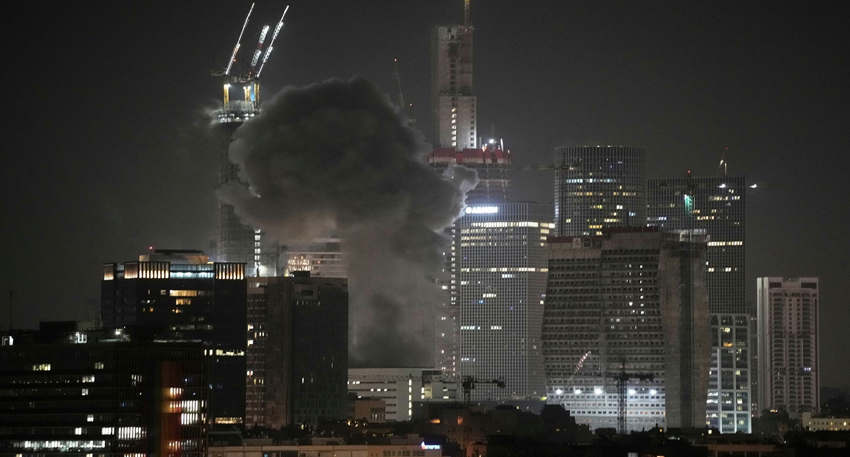
Iran has reportedly launched missile attacks on Tel Aviv, the commercial hub of Israel, triggering multiple explosions and fires in several locations across the city.
According to media reports, around 20 explosions were heard in Tel Aviv after the missile strikes. Emergency services rushed to affected areas as fires broke out at multiple sites, raising fears of further escalation in the already volatile Middle East conflict.
The missile attacks come amid rapidly increasing tensions between Iran and Israel, with both sides exchanging threats and military actions in recent days.
Fires Reported in Several Areas of Tel Aviv
Eyewitnesses and local media reported large plumes of smoke and flames rising from various locations following the missile strikes. Authorities have launched emergency response operations to control fires and assess potential damage.
While officials have not immediately confirmed the full extent of casualties or infrastructure damage, the attacks have intensified concerns over regional security and the possibility of a wider conflict.
Also Read: US sends B-2 bombers toward Iran, deploys 5,000 troops to Middle East
US Announces Deployment of Additional Troops to Middle East
Meanwhile, a report by The Wall Street Journal revealed that the United States has decided to deploy an additional 5,000 troops to the Middle East in response to the escalating crisis.
According to the report, the US Department of Defense plans to send thousands of US Marines and military personnel to strengthen its military presence and support regional allies.
The move is seen as part of Washington’s strategy to stabilize the region and deter further escalation amid rising hostilities involving Iran and Israel.
Growing Concerns Over Regional Stability
Security analysts warn that the latest missile strikes on Tel Aviv and the increased US military deployment could further heighten tensions across the Middle East.
Experts say the situation remains extremely sensitive, with the potential to impact regional security, global oil markets, and international diplomacy if the conflict expands.
Diplomatic observers are urging restraint from all sides while calling for urgent international efforts to prevent a broader war in the region.


