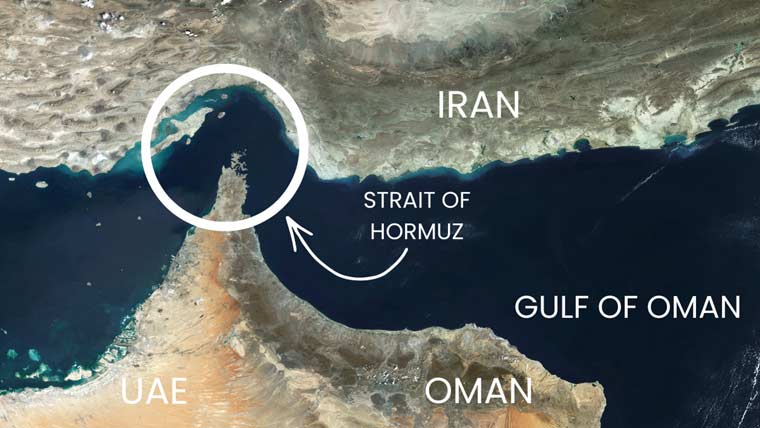
Following a ceasefire reportedly requested by Pakistan, Iran has once again announced the complete closure of the Strait of Hormuz, a critical global oil transit route. The move comes amid escalating tensions after Israeli attacks on Lebanon.
According to Iranian media reports, concerns have emerged about possible naval mines in parts of the Strait of Hormuz. In response, Iranian maritime authorities have designated alternative sea routes, while making it mandatory for vessels to coordinate with the Islamic Revolutionary Guard Corps (IRGC) for passage.
Oil Tankers Halted, Shipping Faces Disruption
Iranian news agency reports confirm that oil tankers have been stopped from passing through the strategic waterway. Initially, two oil tankers were allowed to pass after the ceasefire took effect, but following renewed Israeli strikes, all tanker movement has been suspended.
Shipping sources reveal that multiple vessels in the Gulf have received direct warnings from the Iranian Navy stating that prior permission from Iran is now required to transit through the Strait.
In a strongly worded message, Iranian naval authorities warned that any vessel attempting unauthorized entry into the waterway could be targeted and destroyed, significantly raising risks for international shipping.
Also Read: Inside Iran’s 10-point peace plan for talks with US in Pakistan
Toll Imposition and Global Notification
According to an American publication, Iran is also planning to impose toll charges on ships passing through the Strait of Hormuz. Tehran has reportedly informed intermediary and third-party countries about the evolving situation.
Response to Israel’s Attacks on Lebanon
Iran’s semi-official Fars News Agency stated that the closure is a direct response to Israeli military actions in Lebanon, which Tehran considers a violation of the ceasefire agreement.
Reports indicate that Israeli forces launched over 100 strikes within 10 minutes across Beirut, the Beqaa Valley, and southern Lebanon on the very first day of the ceasefire, further escalating tensions.
Ceasefire at Risk as Iran Issues Warning
A senior Iranian official, quoted by Tasnim News Agency, warned that continued Israeli attacks on Lebanon could force Iran to withdraw from the ceasefire agreement reached with the United States.
The official emphasized that the ceasefire framework included halting hostilities across all fronts, including Lebanon and Hezbollah positions. However, alleged violations by Israel have prompted Tehran to reassess its commitment.
Global Energy Markets on Edge
The Strait of Hormuz is one of the world’s most vital oil corridors, through which a significant portion of global oil supply passes. Any disruption in this route can immediately impact international oil prices and energy markets.
Experts warn that prolonged closure or restricted access could trigger supply shocks, increase fuel prices, and heighten geopolitical instability in the Middle East.