

Houthi attacks hit Saudi energy sites, leaving 73 injured
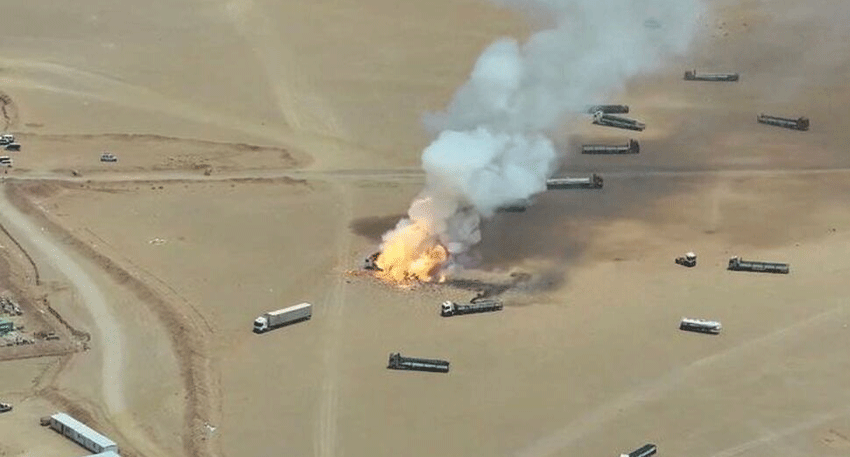
Saudi Arabia has faced a fresh security crisis after Houthi attacks struck several areas in the southern part of the kingdom.
The attacks affected energy facilities and caused fires, while emergency teams rushed to control the situation and assess the damage.
Saudi authorities said 73 civilians were injured. Women and children were among those hurt in the attacks.
The Saudi Energy Ministry said some operations at energy facilities were halted after the strikes. Officials are now working to deal with the effects and protect workers and facilities.
The latest attacks have raised concerns because Saudi Arabia is the world’s leading oil exporter. Any serious damage to its energy infrastructure could affect regional markets and global oil supplies.
#Statement | The Foreign Ministry expresses the Kingdom of Saudi Arabia’s strongest condemnation and denunciation of the terrorist Houthi militia’s targeting of civilian and economic assets in Abha, Khamis Mushait, Jazan, and Najran, which resulted in the injury of seventy-three… pic.twitter.com/qZ8XpGX1Ea
— Foreign Ministry 🇸🇦 (@KSAmofaEN) September 8, 2026
Saudi energy facilities affected by attacks
The Saudi Foreign Ministry strongly condemned what it described as attacks by the “terrorist Houthi militia” against civilian and economic sites.
The ministry said the attacks targeted locations in Abha, Khamis Mushait, Jazan and Najran. These areas are close to Yemen and have previously been affected by regional tensions.
Fires broke out at some of the targeted locations. Firefighters and other emergency workers were sent to the affected sites to put out the flames and check for further risks.
The Energy Ministry said authorities were handling the consequences of the attacks and taking steps to keep the facilities and their workers safe.
“The needed measures will be taken to ensure the safety of the facilities and workers and the continuation of work according to the approved operational plans,” the ministry said.
Saudi officials did not provide a full assessment of the damage. However, the disruption has added to concerns about the safety of energy infrastructure at a time when the Middle East is already facing serious instability.
Oil markets react as regional tensions grow
The attacks came as tensions across the Middle East continued to rise. The wider conflict involving the United States and Iran has already created concerns about oil supplies and major shipping routes.
Oil prices moved higher after the Saudi Energy Ministry released its statement.
Brent crude futures increased by about $1 to around $98 per barrel. US crude futures also gained more than $2, reaching around $93.65 per barrel.
The price move shows why global markets are closely watching attacks on Saudi energy facilities.
Saudi Arabia plays a major role in the international oil market. Any prolonged disruption to its production or processing facilities could create additional pressure on prices.
Earlier, the Financial Times reported that Aramco’s Jazan oil facilities had been hit in new strikes and that the damage was being assessed.
Reuters said it could not immediately verify the report, while Aramco had not issued a comment at the time.
Houthis warn of wider operation
The Houthis have also warned that the latest attacks could be followed by a larger operation.
Houthi military spokesperson Yahya Saree said the group would announce a broad operation deep inside Saudi territory in the coming hours.
He claimed that Saudi Arabia had taken “escalatory steps” by carrying out airstrikes against Yemen.
The Saudi-led coalition did not announce any recent airstrikes on Yemen. However, Yemen’s government forces have recently increased military operations against Houthi positions in several areas.
The coalition has promised a strong response to the latest attacks.
Colonel Turki al-Malki said the escalation was “dangerous” and that the coalition would take steps to confront the Houthis.
“The coalition will take all necessary operational measures to deter this terrorist militia and resolutely confront its hostile approach,” he said in a statement on X.
The Houthis control large parts of northern Yemen, including many of the country’s most populated areas. Their actions have increasingly affected both Saudi Arabia and important Red Sea shipping routes.
#بيان | استهداف عدد من منشآت ومرافق قطاع الطاقة في المنطقة الجنوبية من المملكة. pic.twitter.com/xmDe6pg4NQ
— وزارة الطاقة (@MoEnergy_Saudi) September 8, 2026
Pakistan condemns Houthi attacks
Pakistan has strongly condemned the attacks and expressed support for Saudi Arabia.
Prime Minister Shehbaz Sharif said he condemned the “cowardly attack by Houthis targeting civilian and energy facilities in the Kingdom of Saudi Arabia”.
He said the attacks had injured many people and that Pakistan stood in “unwavering solidarity” with Saudi leadership and its people.
“Such dastardly attacks threaten innocent lives as well as regional peace and security,” the prime minister said.
He also reaffirmed Pakistan’s support for Saudi Arabia’s sovereignty, security and territorial integrity. He prayed for the quick recovery of those injured.
Pakistan has previously condemned Houthi threats against Saudi Arabia and shipping through the Red Sea.
Islamabad has also warned that it has the right to defend its “maritime interests” if they are targeted in “any hostile act”.
I condemn in the strongest terms, the cowardly attack by Houthis targeting civilian and energy facilities in the Kingdom of Saudi Arabia, which have left many people injured.
— Shehbaz Sharif (@CMShehbaz) September 8, 2026
Pakistan stands in unwavering solidarity with the Custodian of the Two Holy Mosques, His Majesty King…
Also Read:Eiffel Tower closes after women staff protest over Hindu delegation visit
Defence cooperation adds another concern
The latest attacks come at a time when Saudi Arabia and its regional partners are strengthening cooperation to protect important shipping and energy routes.
Saudi Arabia recently announced plans for a multinational maritime defence coalition to protect shipping and energy supplies in the Red Sea.
Fourteen countries, including Pakistan, expressed support for the proposed coalition.
Pakistan, Saudi Arabia and Turkiye also signed a joint defence agreement in Makkah last month. Under the agreement, an attack against one of the three countries would be treated as an attack against all of them.
This new security arrangement could become increasingly important if attacks on Saudi territory or regional shipping continue.
Red Sea and Hormuz remain major flashpoints
The threat to Saudi energy facilities and shipping is happening alongside growing tensions around the Strait of Hormuz.
Iran has linked the reopening of the important waterway to talks with the United States. The situation has made the strait one of the biggest flashpoints in the wider Middle East conflict.
The Red Sea is also a major concern because attacks on ships can disrupt international trade and energy deliveries.
For Saudi Arabia, the latest Houthi attacks create an additional security challenge. For international markets, the bigger concern is whether the disruption remains limited or develops into a wider campaign against energy infrastructure.


