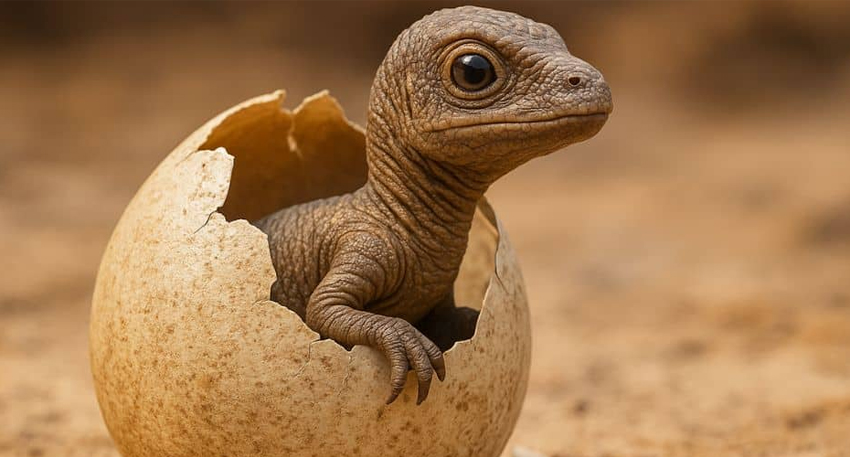
Paleontologists in southern France have uncovered one of the world’s most impressive dinosaur nesting sites, finding hundreds of fossilized eggs that are nearly 72 million years old.
The discovery was made at the Mèze fossil site, where winter excavations revealed a large number of dinosaur eggs preserved in Upper Cretaceous rock layers. Many of the eggs are still intact, with their shells and internal structures clearly visible after tens of millions of years.
Ancient Dinosaur Nursery
Alain Cabot, director and curator of the Musée-Parc des Dinosaures de Mèze, described the site as an “exceptional concentration” of eggs spread across about 15 square miles. More than 100 eggs were uncovered in just a few weeks, and scientists believe many more remain buried. The fossil layer shows that this area was used repeatedly as a nesting ground by dinosaurs.
Also Read: Scientists achieve accidental lead-to-gold breakthrough
Titanosaurs and Other Species
Most of the eggs belong to titanosaurs, the giant long-necked herbivores of the Late Cretaceous period. But researchers also found eggs from smaller species, suggesting that different dinosaurs shared the same nesting area.
Some notable discoveries include:
- Eggs from armored ankylosaurs
- Eggs from small carnivorous theropods, including the rare Prismatoolithus caboti
Scientists say this mix of species indicates a shared nesting habitat, similar to modern bird colonies where animals gather in safe spaces to raise their young.
Preserved by Ancient Floods
Geologists believe that periodic floods quickly covered the nests with sediment, protecting the eggs from damage and preserving them for millions of years. These floodplain conditions acted like natural time capsules, keeping the eggs intact from the age of dinosaurs.
The discovery has also attracted public attention after the museum shared updates online. Visitors can now watch ongoing excavations, observing scientists as they carefully uncover remains over 70 million years old.
The Mèze site offers a rare glimpse into dinosaur reproduction and behavior during the final period of the Cretaceous, giving scientists valuable insight into life millions of years ago.