

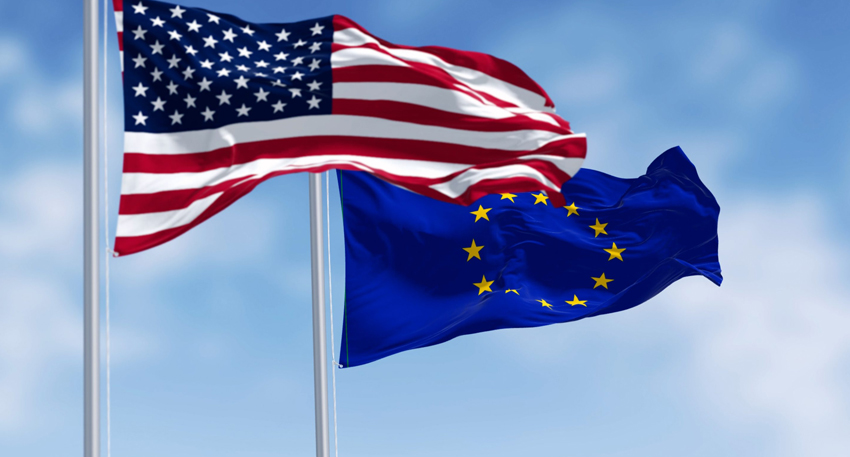
The European Union (EU) has officially halted the approval and implementation of a Trump-era EU-US trade deal, citing escalating tariff threats related to Greenland and Denmark that EU leaders say undermine European sovereignty and regional stability.
Bernd Lange, Chairman of the European Parliament’s International Trade Committee, announced that work on the agreement has been suspended due to what he described as continued and intensifying threats from US President Donald Trump toward Greenland, Denmark, and other European allies. He stated that the EU had “no alternative but to suspend work” on the deal until Washington shifts back to cooperation.
The suspension follows Trump’s recent warning that the United States could impose tariffs on seven EU countries and the United Kingdom if they refuse to allow US control over Greenland. Although Trump later stated that military force would not be used, he did not withdraw his plan to introduce 10% tariffs starting February 1, with possible increases up to 25%.
Also Read: Trump threatens eight European nations with tariffs over Greenland
The trade agreement, finalized in July during European Commission President Ursula von der Leyen’s visit to Scotland, aimed to stabilize transatlantic trade. It included a 15% cap on US tariffs for most EU imports, with some products such as generic pharmaceuticals exempt from duties. In exchange, the EU agreed to lower tariffs on select US agricultural and industrial goods.
The EU-US trade relationship, valued at $1.5 trillion annually, represents one of the world’s largest economic partnerships. In 2024 alone, the US imported over $600 billion in EU goods, while Europe purchased more than $360 billion in American exports.
Speaking at the World Economic Forum in Davos, von der Leyen expressed disappointment, emphasizing that trust is fundamental in both politics and business. Meanwhile, Lange warned that continued tariff pressure makes compromise impossible and threatens the foundation of EU-US relations.
EU leaders are expected to meet this week to coordinate a response, which could include retaliatory tariffs worth up to $110 billion on US products such as Boeing aircraft, soybeans, and Kentucky bourbon. The bloc is also considering deploying its Anti-Coercion Instrument, allowing broad restrictions on US goods and services if economic pressure persists.


