

US acknowledges Pakistan’s terrorism concerns over Afghanistan, offers support
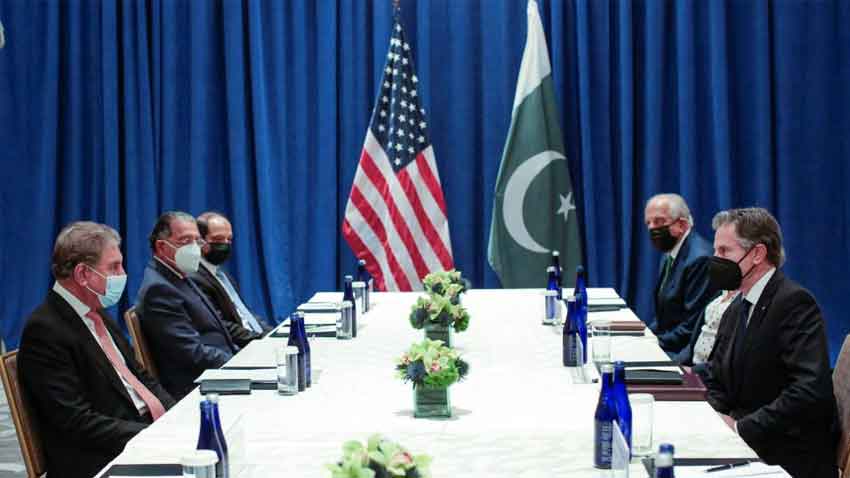
US acknowledges Pakistan’s security concerns
US Secretary of State Marco Rubio has said Washington understands Pakistan’s concerns about terrorist attacks coming from Afghanistan. He added that the United States would help if it could play a useful role in reducing tensions between the two neighbouring countries.
Rubio made these remarks during a press conference in Atlanta while responding to a question about relations between Pakistan and Afghanistan. He said Pakistan believes the Afghan Taliban have failed to stop armed groups operating from their territory.
“Pakistan is concerned about terrorist attacks that are being sponsored from the territory of Afghanistan. They feel as if the Taliban have not done enough to constrain those attacks, and they have taken action against it.
“We obviously have heard those concerns on their part. We obviously don’t want them to be targeted for terrorism. So if there’s a productive role for us to play, we would play it,” Rubio said.
He also said Washington did not “necessarily [have] the closest relationship” with the Afghan Taliban. However, he stressed that the United States opposes terrorism regardless of where it comes from or who becomes its target.
Pakistan demands action against terrorist groups
Pakistan has repeatedly asked the Afghan Taliban government to take clear action against terrorist groups operating from Afghan territory. Islamabad is particularly concerned about the banned Tehreek-i-Taliban Pakistan (TTP), which it says uses safe locations in Afghanistan to plan attacks inside Pakistan.
The Afghan Taliban have rejected Pakistan’s allegations that their territory is being used for attacks against its neighbour. However, they have avoided taking a clear position on the TTP and other armed groups.
Pakistan’s Information Ministry criticised the Afghan Taliban on Saturday over their response to the ongoing tensions. It accused the Afghan administration of failing to address terrorism originating from its territory.
The ministry issued its response after Afghan Taliban spokesperson Zabihullah Mujahid blamed Islamabad’s “wrong policies” for preventing an end to the conflict. Mujahid also denied that Kabul was responsible for the problems related to counterterrorism.
“The Taliban leadership continues to blame Islamabad’s policies while conveniently ignoring the single most important issue poisoning bilateral relations: its persistent failure to address terrorism emanating from Afghan soil,” the ministry said.
Islamabad also maintained that the “Taliban regime’s persistent refusal to address terrorism remains the principal obstacle to normal relations”.
Previous peace talks fail to resolve tensions
Pakistan and Afghanistan held several rounds of talks last year with the support of Qatar and Turkiye, but the discussions failed to produce a lasting solution. Pakistan said the Afghan Taliban representatives did not give clear assurances on the main security concerns.
China also took part in efforts to reduce tensions this year, but these attempts did not produce a breakthrough. Russia has more recently offered to help both countries reach an agreement if they request its involvement.
Russian special envoy for Afghanistan Zamir Kabulov renewed the offer after a Moscow Format meeting on October 5 ended without a joint statement. Differences between the Pakistani and Afghan Taliban delegations over references to terrorist groups operating from Afghanistan prevented an agreement.
Pakistan’s Foreign Office spokesperson Sajjad Haider Khan said talks with Afghanistan could not take place without conditions. He also rejected claims that Islamabad was unwilling to engage with Kabul and said Pakistan would welcome genuine efforts by friendly countries to resolve the dispute.
“At present, I am not aware of any separate, formal Russian mediation initiative being under discussion.”
Border clashes continue between neighbours
Despite diplomatic efforts, security tensions and occasional clashes continue along the Pakistan-Afghanistan border. In September, Pakistan carried out targeted airstrikes in border areas following terrorist attacks in Khyber Pakhtunkhwa.
The situation remained tense in October, when Pakistani security forces responded to firing from the Afghan side in Kurram and Angoor Adda in Lower South Waziristan. Security sources reported that the incidents added to the continuing strain between the two countries.
Rubio’s statement shows that the United States is aware of Pakistan’s security concerns and may be willing to support efforts to reduce tensions. However, Washington has not announced any specific plan to mediate between the two countries.
The main issue remains Pakistan’s demand for action against terrorist groups based in Afghanistan. Without clear steps to address this concern, diplomatic talks may continue without producing a lasting improvement in relations.
Also read: LPG crisis hits Pakistan ahead of winter as prices reach Rs700/kg


