

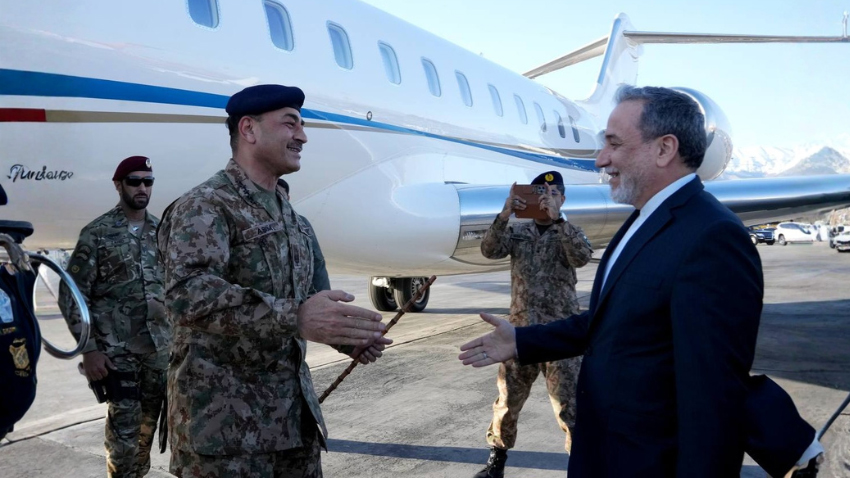
A high-level Pakistani delegation led by Chief of Army Staff and Chief of Defense Forces Field Marshal Asim Munir has arrived in Tehran as part of Pakistan’s efforts to mediate between the United States and Iran.
Interior Minister Mohsin Naqvi is also part of the delegation. According to the military’s media wing, the visit aims to continue diplomatic efforts to turn the current two-week ceasefire into a permanent peace agreement.
Sources say Pakistan is trying to arrange a second round of talks between Washington and Tehran. The negotiations are expected to take place in Islamabad by the end of next week. Officials and security agencies in Pakistan have reportedly been instructed to prepare security and administrative arrangements for the possible talks.
📸 Arrival of Pakistan’s Army Chief, General Asim Munir, in Tehran, welcomed by Foreign Minister @araghchi. pic.twitter.com/HWwvhAV0Nx
— Government of the Islamic Republic of Iran (@Iran_GOV) April 15, 2026
According to diplomatic sources, the expected US delegation will include Vice President JD Vance, special envoy Steve Witkoff and Jared Kushner, the son in law of President Donald Trump.
Also Read: Supreme Court orders PIA to pay 24 years pension to retired employee
The Iranian delegation is likely to include Parliament Speaker Mohammad Bagher Ghalibaf and Foreign Minister Abbas Araghchi. The latest developments come only days after the same delegations held long negotiations in Islamabad. Those talks lasted around 21 hours but failed to produce a final agreement.
The conflict began on February 28 when the United States and Israel launched a major bombing campaign against Iran. In response, Iran blocked the Strait of Hormuz and carried out attacks on Israeli targets and US bases across the region. Tensions reduced slightly on April 8 when Prime Minister Shehbaz Sharif helped broker a two-week ceasefire and invited both sides to Islamabad for peace talks.
However, the negotiations ended without an agreement as both sides disagreed on key issues including Iran’s nuclear and ballistic missile programs, sanctions on Iran and the reopening of the Strait of Hormuz.
Despite the lack of a deal, Pakistan has continued diplomatic contacts with both countries. Iranian Foreign Ministry spokesperson Esmaeil Baqaei confirmed that Tehran and Washington are exchanging messages through Pakistani mediators.
During a media briefing, Baqaei said several diplomatic messages had already been exchanged after the ceasefire. He also confirmed that Pakistan’s delegation would visit Tehran to deliver messages from the United States as part of the ongoing negotiation process.
Also Read: Strict penalties announced in Saudi Arabia for Hajj permit violations
According to Baqaei, the earlier Islamabad talks discussed several important issues including a complete ceasefire, lifting of sanctions on Iran and compensation for damages caused during the war. The issue of releasing Iran’s frozen assets was also raised during the talks, but no final decision was reached.
He added that future negotiations will focus on securing a permanent ceasefire between the two countries. However, reports about extending the current ceasefire remain uncertain.
A senior US official also confirmed that Washington has not formally agreed to extend the ceasefire yet, although communication between the two sides is continuing. Diplomatic sources say these ongoing contacts show that despite difficulties, both sides are still exploring the possibility of reaching an agreement.


